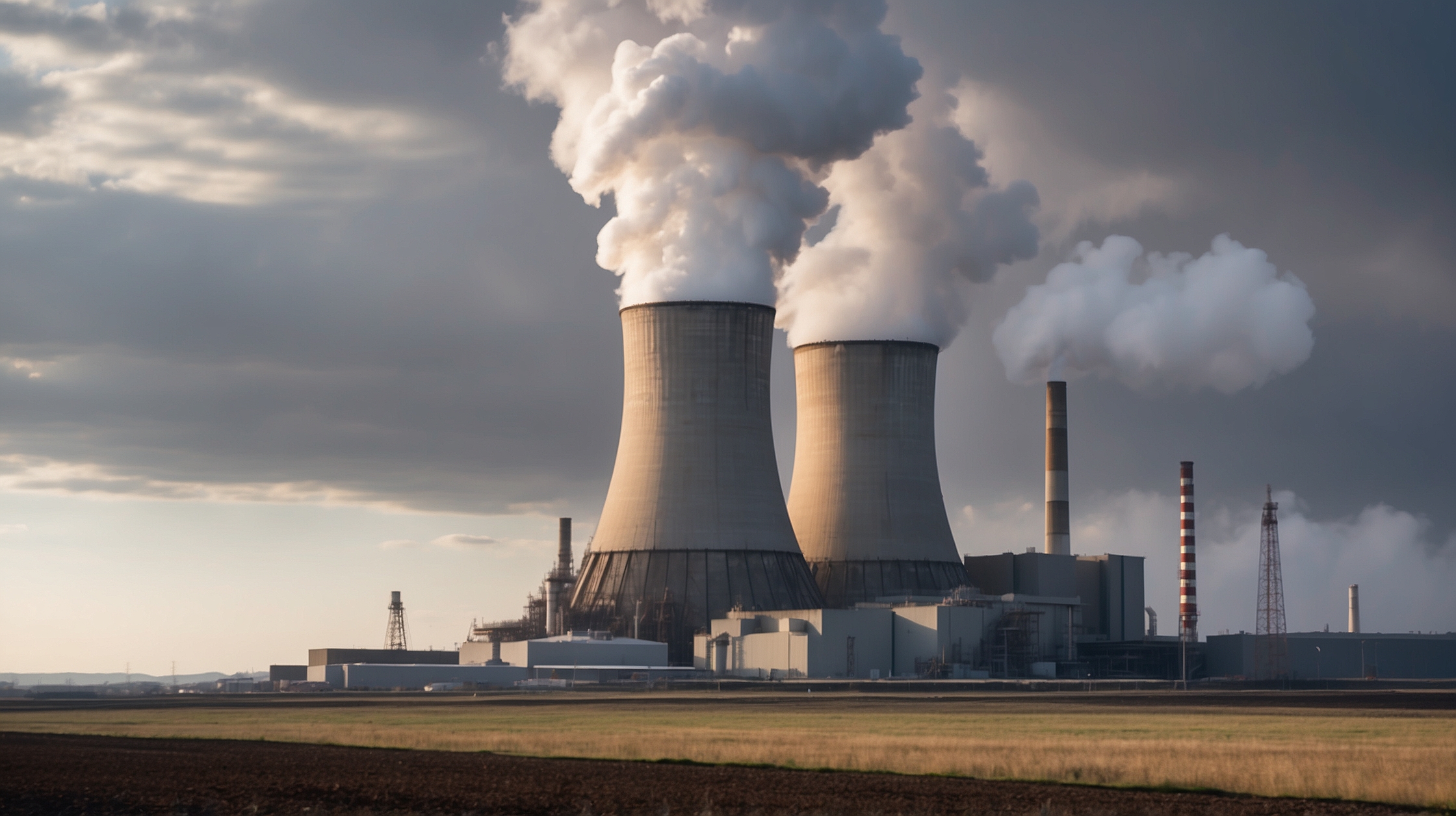
In the quest for sustainable energy solutions, nuclear power continues to spark debate. While it’s lauded for delivering enormous amounts of energy with minimal carbon emissions, concerns over safety, radioactive waste, and long-term environmental impacts persist. But what if the answer lies not on the surface, but deep beneath our feet—a concept proposing the burial of nuclear reactors over 1,600 meters below the Earth’s surface? A bold idea, yes, but as some scientists suggest, it may offer crucial advantages that could redefine the future of nuclear energy.
This next-generation approach isn’t science fiction. Instead, it’s grounded in geological engineering and thermodynamic principles that nature itself has perfected over billions of years. By leveraging the **high pressure** and **stable mineral environments** that exist far underground, this concept promises not just enhanced safety but potentially massive improvements in nuclear reactor reliability and longevity.
As countries around the world seek cleaner energy sources and innovative ways of managing risk, subterranean nuclear energy could reshape how we think about power generation. Let’s dive into the key benefits, challenges, and future implications of burying nuclear plants more than a mile underground.
Key facts at a glance
| Concept | Burying nuclear reactors 1,600 meters underground |
| Primary Benefits | Increased pressure stability and optimal mineral environments |
| Geological Depth | Over 1.6 kilometers beneath the surface |
| Main Challenges | Infrastructure engineering, cost, monitoring, waste retrieval |
| Global Context | Emerging concept, not yet widely implemented |
| Projected Benefits | Enhanced safety, better thermal regulation, containment security |
Why going underground might be the safest nuclear solution
The debate around nuclear power has historically focused on managing three major concerns: explosion risks, radioactive leaks, and long-term waste storage. The idea of burying an operational nuclear reactor around **1,600 meters** underground offers natural advantages that could address all three. This subterranean solution utilizes the pressure and temperature found at those depths to create a far more stable operating environment for the nuclear core.
At that depth, the weight of the overlying rock provides immense static pressure, which stabilizes materials and helps prevent the escape of radiation—even in catastrophic scenarios. Further, these environments offer thermal benefits—underground heat dissipation is superior due to the surrounding earth’s thermal conductivity. This means a more **passively cooled** system that depends less on elaborate surface-based cooling structures.
The role of mineral environments in reactor core stability
Another significant advantage comes from the **mineral composition** of deep subsurface environments. Certain formations, such as clay, basalt, or granite, possess innate absorption characteristics. In practical terms, they can naturally trap radionuclides (radioactive particles) if any were to leak, acting as a **geochemical barrier**. This adds an additional “filter” preventing contamination of nearby groundwater or ecosystems.
“Geological formations are nature’s best containment vessels. When chosen properly, they offer unmatched stability and absorption capacity.”
— Dr. Maya Rattan, Geothermal and Earth Sciences Expert
Furthermore, these stable mineralogical settings present an almost **unchanging microenvironment**, ideal for long-term monitoring and predictable behavior of nuclear components. Reduced geological movement and seismic activity at such depths may also cut the risk of mechanical stress on the reactor infrastructure.
Engineering challenges and maintenance in extreme environments
Despite the advantages, this plan is not without serious engineering hurdles. Building any structure 1.6 kilometers below ground comes with tremendous logistical difficulties. Borehole construction, equipment transport, heat regulation, and emergency access represent major obstacles. Ensuring **routine maintenance** of a facility buried deep in the Earth involves advanced tunneling systems or remote-operating technologies yet to be fully realized.
Moreover, real-time **surveillance and safety mechanisms** must be impeccable. Emergency shutdowns or fixes would require time-intensive action plans, and retrieval of nuclear waste or damaged components poses amplified risks. Specialized equipment, robotic systems, and AI-based decision making will likely play crucial roles in overcoming these barriers.
“Engineering underground reactors is feasible, but only with intelligent design, layered safety redundancies, and continuous monitoring.”
— Prof. Hans Becker, Nuclear Infrastructure Specialist
How pressure improves containment and longevity
High pressure environments aren’t just a bonus—they’re essential for long-term sustainability. Pressurized surroundings help in maintaining reactor **core integrity** by reducing material expansion and minimizing the risk of spontaneous fissuring due to thermal stress. Over time, this can enhance the **lifespan of components** and make meltdown scenarios much less likely.
Additionally, pressure enhances the efficiency of certain reactor designs, especially those relying on molten salt or liquid metals as coolants. These systems perform better under higher pressures, creating a synergistic effect that maximizes thermal output while minimizing energy loss.
Why the world is eyeing revolutionary containment solutions
From Finland’s deep geological repository for radioactive waste to experimental underground labs in China and the U.S., the world has already shown serious interest in exploring **subsurface solutions** for nuclear challenges. This reactor burial concept is an evolution of that principle, extending it from waste storage to actual power generation.
Such an approach aligns well with global climate and energy goals. Countries transitioning out of coal or gas see nuclear as a **base-load option** that emits no greenhouse gases during operation. Embedding it deep underground may just solve its last remaining image problems—making it **visibly absent**, inherently safer, and less reliant on human oversight.
“We must reinvent how we produce and secure nuclear energy if it’s to support a climate-resilient future.”
— Placeholder quote, Energy Policy Analyst
Who wins and who loses from going underground
| Winners | Losers |
|---|---|
| Engineers and builders of automated drilling infrastructure | Nuclear facility maintenance teams |
| Countries with strong geology and mining expertise | Communities near shallow surface nuclear plants |
| Environment and ecosystems protected from radiation | Fossil fuel-dependent energy sectors |
| Climate advocates supporting carbon-neutral energy | Budget committees wary of high initial cost |
The road ahead for buried nuclear plants
We are still years, or even decades, away from seeing 1,600-meter-deep nuclear power plants deployed at scale. Research must deepen, pilot programs must be funded, and **multi-disciplinary collaboration** is critical. From geologists and nuclear physicists to risk analysts and software engineers, everyone has a role to play if this vision is to become reality.
Ultimately, the approach promises a way to make nuclear energy look less threatening, more secure, and more in tune with Earth’s own natural defenses. If done responsibly, it could transform public perception and pave the way for renewed investment in **next-gen atomic energy**.
Short FAQs about underground nuclear reactors
What makes 1,600 meters significant for underground reactors?
This depth provides stable high-pressure environments and ideal mineral structures that help contain radiation and enhance reactor safety.
Is this technology already in use?
No, the concept is under active research and has not yet been widely implemented for power generation.
Are underground nuclear plants more expensive?
Yes, initial construction and maintenance cost would be significantly higher compared to traditional surface plants.
How are emergencies handled at those depths?
Emergency systems would rely on deep-access tunnels, robotic interventions, and surface-based monitoring integrated with AI systems.
What type of reactors would be used underground?
Reactor designs that use stable coolants like molten salt or heavy liquid metals are considered suitable due to their performance under pressure.
Are there environmental risks with underground nuclear power?
While all energy systems have risks, burying reactors reduces exposure to surface ecosystems and groundwater if properly managed.
Who decides where these underground plants are built?
Governments, in cooperation with geological experts and regulators, would determine ideal locations based on stability and seismic safety.
Can existing plants be moved underground?
Retrofitting existing plants may not be feasible. New designs specifically engineered for underground placement would be required.