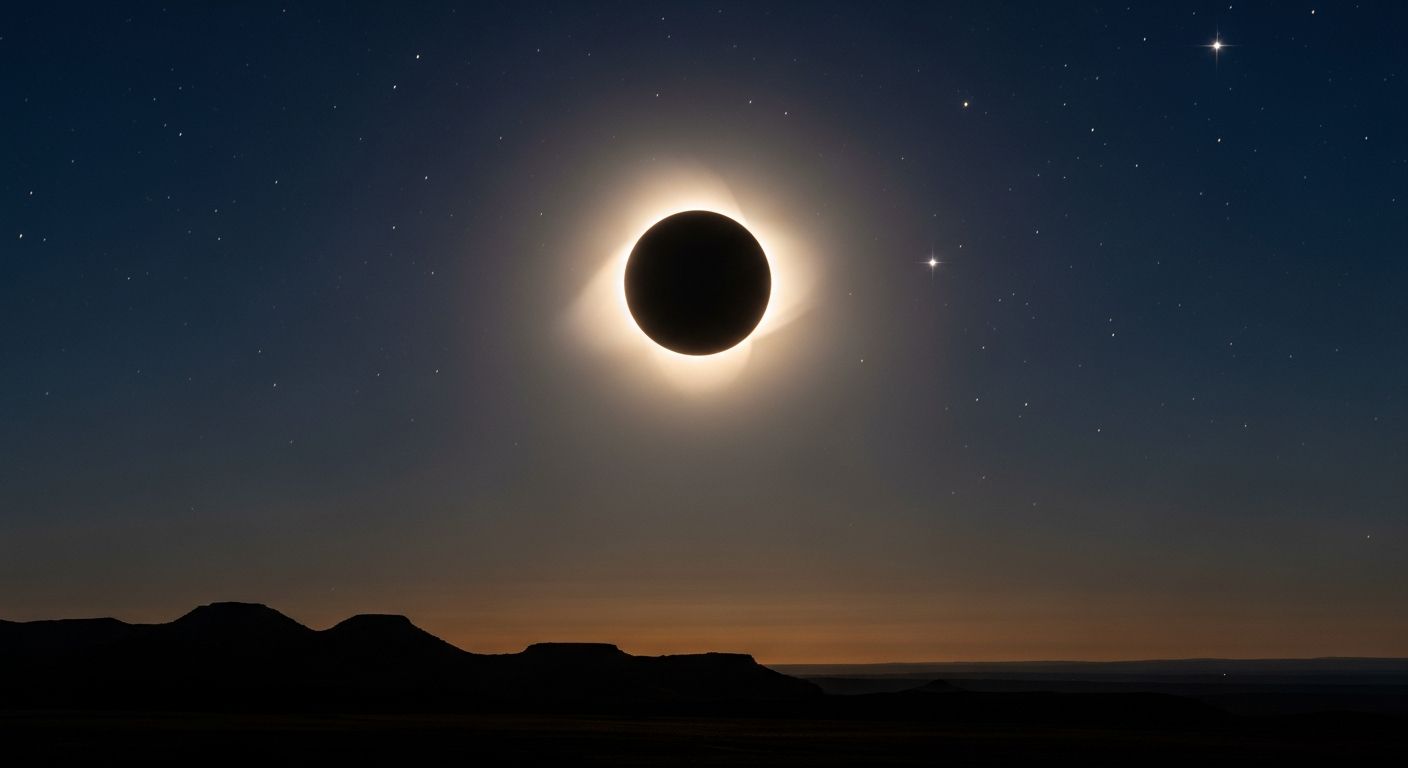
Key eclipse details at a glance
| Feature | Details |
|---|---|
| Event Date | August 2, 2027 |
| Event Type | Total Solar Eclipse |
| Longest Duration of Totality | 6 minutes 23 seconds |
| Primary Visible Regions | Southern Europe, Northern Africa, Middle East |
| Peak Location | Egypt – near Luxor |
| Next Comparable Eclipse | Not until 2114 |
What makes this eclipse so special
Solar eclipses, in general, are magnificent to witness, but not all eclipses are created equal. Most total solar eclipses last no more than two to four minutes. However, on August 2, 2027, **observers near the Egyptian city of Luxor** could enjoy over six full minutes of solar darkness. This lengthy totality is due to a combination of orbital mechanics — including Earth’s elliptical orbit and the moon’s proximity — that only align in such a way every **century or more**.
Experts estimate that millions of people will be within driving distance of the eclipse path, adding to its rare accessibility. The prevailing weather conditions in the regions under the eclipse path are also favorable, with many areas—such as the **Sahara Desert and southern Spain**—typically enjoying cloud-free skies in August. The timing, duration, and geographic accessibility make this event a standout in astronomical history.
Where the eclipse will be best viewed
The path of the 2027 solar eclipse starts in the **eastern Atlantic** and crosses parts of southwestern Europe, particularly **southern Spain**, before moving across **North Africa** and the **Middle East**, and finally fading out over the Arabian Peninsula. The point of greatest eclipse—where observers will see the longest duration of totality—will take place in **Luxor, Egypt**, a region not just known for its ancient ruins but soon for having one of the most spectacular cosmic shows of the 21st century.
Other notable cities in the path of totality include:
- Seville, Spain
- Marrakesh, Morocco
- Tunis, Tunisia
- Mecca, Saudi Arabia
These cities are already preparing for an influx of eclipse tourists, amateur astronomers, and scientists eager to observe the celestial event firsthand. It’s worth noting that totality will not be visible across the entire region — only those in the **narrow path (usually about 160 km wide)** will experience total darkness, while surrounding areas may witness a partial eclipse only.
How scientists are preparing for the event
This eclipse offers a rare opportunity for scientific exploration. NASA and other global space agencies are planning key experiments to study the solar **corona**, the plasma-like outer atmosphere of the Sun, which is only visible during total eclipses. Researchers hope to use airborne observatories and high-resolution ground imaging to study this mysterious zone in detail.
Additionally, the eclipse provides a platform to investigate Earth’s atmospheric responses to sudden changes in solar radiation. From temperature drops to wildlife reactions, scientists will deploy monitoring stations across the eclipse path. Universities and institutions are already arranging public outreach campaigns to educate communities on **safe viewing methods** and the science behind eclipses.
Why total solar eclipses captivate and intrigue
Throughout history, total solar eclipses have inspired awe, fear, and fascination. For ancient civilizations, they were omens; for poets and philosophers, a symbol of the cosmos’ mysteries. Today, while we understand their scientific cause, the emotional and visual impact remains profound. When the Moon completely blocks the Sun, the sky darkens, stars can become visible, and the temperature drops — all in broad daylight. Birds often return to roost, and humans are left breathless.
With live streaming capabilities, drone imaging, and citizen science tools, people all over the world will be able to share this eclipse experience online. Yet experts agree: **nothing beats seeing it in person.** Especially when it lasts over six minutes.
Travel tips for eclipse tourists
If you’re planning to witness the eclipse firsthand, early booking is essential. Accommodations in optimal viewing locations like **Luxor and southern Spain** are expected to sell out months in advance. Tour operators are already offering eclipse-themed packages with astronomer-led viewings, hotel stays, and guided cultural tours.
Here are some important travel tips:
- Plan your trip at least 12 months in advance.
- Bring certified eclipse glasses to avoid eye damage.
- Check local weather forecasts closer to the date.
- Pack sun protection — this is summer in hot regions.
- Download offline maps and apps as networks may be jammed due to crowds.
Many are even combining the trip with broader regional tourism—from the Pyramids of Giza to the beaches of Morocco, making the 2027 eclipse a once-in-a-lifetime opportunity for both science and sightseeing.
The media and educational impact
Beyond the spectacle, this eclipse will play a prominent role in **STEM education initiatives** worldwide. Schools, planetariums, and science centers are developing eclipse modules to engage students in astronomical sciences. Television networks are already preparing for live global broadcasts, featuring real-time feed from various countries under the eclipse’s path.
Educational institutions are urged to use this opportunity to boost interest in celestial sciences, astrophysics, and general curiosity about space. As science literacy often takes a backseat, events like these offer profound teaching moments that can spark passion in the next generation of astronomers.
Winners and potential drawbacks from the eclipse
| Winners | Losers |
|---|---|
| Amateur Astronomers – Historic viewing opportunity | Unprepared tourists – Risk of eye damage or travel disruption |
| Local Economies in Totality Path – Boost from tourism | Locations outside totality path – Limited visibility appeals |
| Scientific Research Communities – Unique data collection chance | Infrastructure in less developed regions – May struggle with crowd influx |
Frequently asked questions about the 2027 total solar eclipse
When exactly is the eclipse happening?
The eclipse will take place on **August 2, 2027**, with the maximum totality occurring in Luxor, Egypt.
How long will the total solar eclipse last?
The longest duration of totality will be **6 minutes and 23 seconds**, while in other locations it may range between 4 to 6 minutes.
Which areas will experience totality?
Regions in **southern Spain**, **northern Africa**, and the **Middle East** will fall directly under the eclipse path. The best location will be near **Luxor, Egypt**.
How can I view the eclipse safely?
Only observe the eclipse with **ISO-certified solar glasses** or specialized solar viewing equipment. Never look directly at the Sun without proper protection.
Will the eclipse be visible from the United States?
No, this eclipse will not be visible as a total eclipse in the U.S. It is centered around Europe, Africa, and the Middle East.
What should I bring if I’m traveling to see the eclipse?
Pack solar glasses, sun protection, drinking water, camera gear, and a map of the eclipse path. Travel insurance and weather-appropriate clothing are also advised.
How rare is this kind of eclipse?
This is the **longest total solar eclipse** of the 21st century. The next eclipse with a comparable or longer duration won’t occur until **June 25, 2150**.
Can I watch the eclipse online?
Yes, multiple space agencies and media outlets will live-stream the eclipse with commentary and educational content included.