Deep within China’s rugged terrain lies a treasure trove that could rewrite the rules of global mining — if only it weren’t so hard to reach. Cradled by the unforgiving landscapes of Tibet is the vast Julong copper mine, one of the largest untapped copper reserves on the planet, believed to be worth an astonishing 45 billion USD. But extracting its riches was never going to be simple. Sitting at more than 5000 meters above sea level, the high-altitude environment isn’t just challenging—it’s hostile. The air is thin, temperatures plummet, and any human-led operation faces intense logistical and health-related obstacles.
In a bold bid to overcome these odds, Chinese firms are making a daring push into the future, unveiling a dramatic high-tech pivot: an army of unmanned trucks, running nearly 24/7, to haul earth and rock at altitudes where people find it difficult even to breathe. This is no science fiction—it’s the real, high-stakes experiment unfolding today. The Julong mine is becoming a testing ground not just for mineral extraction but for the very future of **autonomous industrial technology**.
Overview: Key Facts About the Julong Copper Mine Project
| Location | Julong Copper Mine, Tibet Autonomous Region, China |
| Estimated Value | $45 billion USD in copper reserves |
| Altitude | Over 5,000 meters (16,400 feet) |
| Technology Deployed | Driverless haul trucks, 5G connectivity, AI-based operations |
| Operating Company | Zijin Mining Group |
| Strategic Importance | Critical to China’s copper self-sufficiency and green tech supply chains |
Why this copper deposit is crucial for China’s future
As the world accelerates toward greener technologies and massive EV adoption, **copper has become more vital than ever**. Used in everything from batteries to electric motors and power grids, global demand for copper is spiking. China, the world’s largest consumer of the metal, has long searched for domestic reserves to reduce dependence on foreign imports. Enter the Julong project—one of China’s strongest plays in achieving mineral sovereignty through innovation.
The mine is not only a strategic resource; it’s also a **proof of concept for extreme-environment automation**. The success of autonomous tech in such high altitudes could offer a groundbreaking model for resource extraction in other hard-to-reach regions worldwide, including the Arctic and deep-desert zones.
“Julong is much more than a mine. It is a geopolitical and technological frontier, reshaping the way we approach remote mining operations.”
— Liu Jianhua, Mining Industry Analyst
The challenge of mining in the ‘death zone’
Operating at over 5,000 meters above sea level classifies the mine as functioning within the so-called “death zone,” a term usually reserved for extreme high-altitude climbs. Here, **oxygen levels drop to just half of what they are at sea level**, which poses serious risks to human workers—ranging from altitude sickness to chronic physiological damage.
Previous attempts to run large-scale operations in this region struggled due to both human health concerns and logistical nightmares. Even transporting equipment up steep, rocky paths required significant coordination. To tackle these issues head-on, Chinese engineers have turned to artificial intelligence and robotics, changing the narrative from struggle to possibility.
How autonomous trucks are changing the landscape
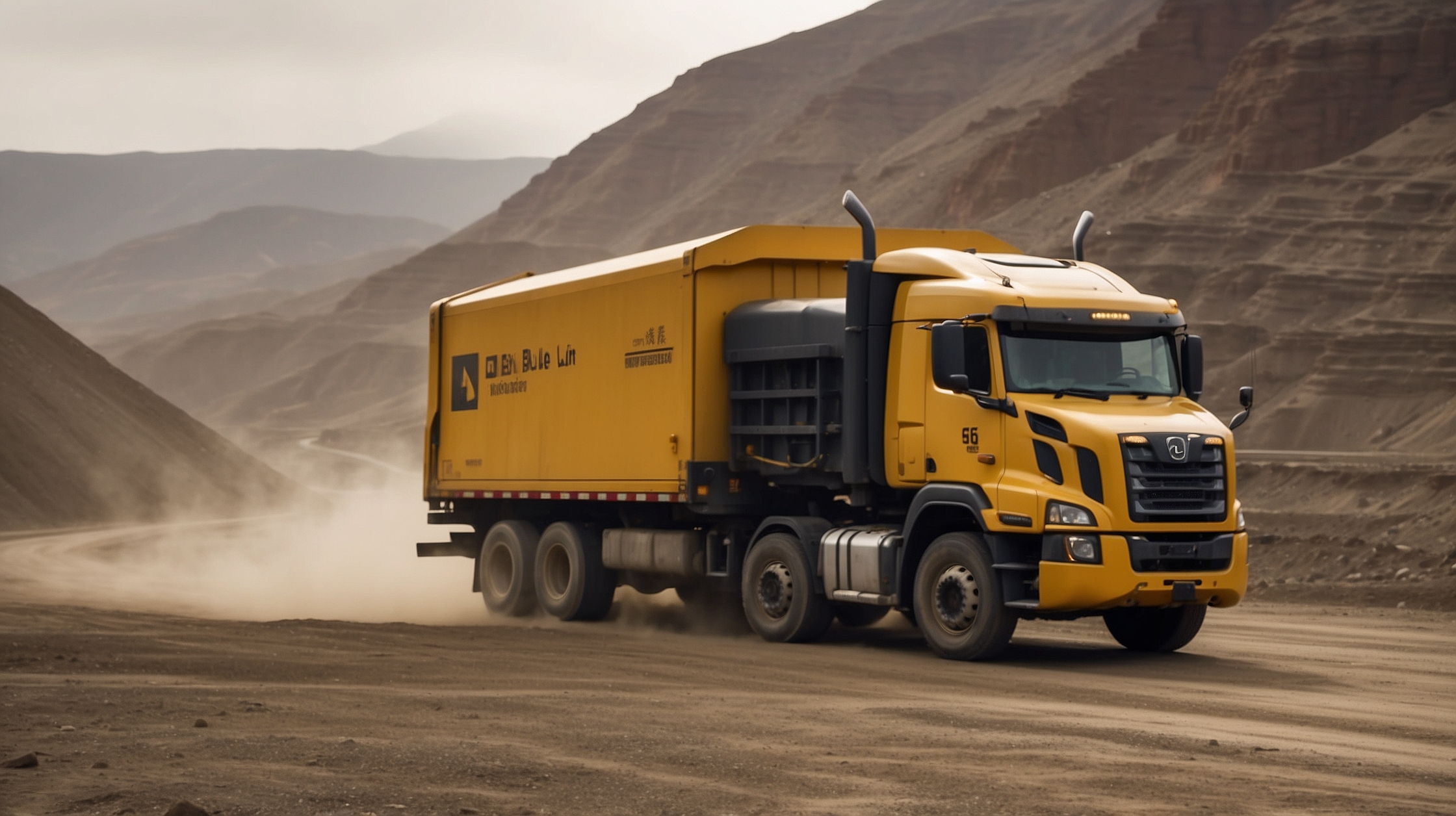
In the heart of the Julong mine, fleets of **driverless haul trucks** now trundle through the stark lunar-like terrain, hauling tens of thousands of tons of rock and ore without the need for a single human behind the wheel. These hulking machines are powered by cutting-edge AI systems and guided by a dense web of 5G-enabled infrastructure, allowing them to adapt in real time to road and weather conditions.
“Autonomous vehicles are not just a cost cutter—they’re enablers. Without them, this mine would be commercially unviable.”
— Zhao Wei, Lead Engineer at Julong Project
Each truck is connected via a **high-resolution satellite mapping and remote command center**, allowing engineers located hundreds of kilometers away to monitor and direct operations in real time. Dynamic obstacle detection systems and real-time telemetry mean the machines can calculate routes, avoid collisions, and optimize fuel usage autonomously—an absolute necessity in a place where seconds of human error could be fatal.
The role of AI and 5G in high-altitude mining
The backbone of the Julong project isn’t just automation—it’s **hyper-connectivity**. 5G networks, previously reserved for urban settings, now cover even these isolated mountain ranges. The ultrafast, low-latency capabilities of 5G are crucial to real-time machine communication. When a self-driving truck detects an obstacle or a sudden weather shift, it needs to compute a response instantly—and in this high-risk environment, delays of milliseconds can matter.
Integrated AI algorithms are further enhancing decision-making on the ground, allowing predictive maintenance of machines, **automated risk assessments**, and adaptive routing to boost efficiency. The system is learning with every trip, making each cycle safer and smarter than the last.
Winners and losers in the AI mining revolution
| Winners | Losers |
|---|---|
| Chinese mining sector | Traditional human miners |
| AI and automation technology firms | Foreign copper exporters |
| Global tech supply chains | Local communities with reduced labor opportunities |
| Environmental efficiency metrics | Long-standing labor unions |
Environmental considerations and criticisms
While the Julong project marks a leap in technical prowess, it’s not without criticism. Environmentalists argue that the deployment of machines at such scale, even with **reduced human footprint**, still causes significant ecological disruption, especially in such a pristine high-altitude biome. Concerns over water contamination, loss of local biodiversity, and traditional land use have been raised.
Zijin Mining claims to employ stringent environmental protocols, including **zero-discharge water treatment systems** and reforestation programs, but independent verification remains limited due to the region’s remoteness and restricted access. Balancing modernization with conservation continues to be a hotly-debated subject among stakeholders, both domestic and international.
What this signals for the future of global mining
Julong is more than a mineral deposit—it is a **prototype for fully automated, remote-controlled resource extraction**. Its success indicates that future mines may not look like today’s at all. Instead of bustling with thousands of on-site workers, they may be monitored via control centers hundreds of miles away, linked to **robotic fleets communicating through real-time global networks**.
This evolution could drastically reduce industrial accidents, health risks, and even operational costs. However, it also raises ethical questions about employment, oversight, and the true environmental cost of technological expansion in the world’s last remote frontiers.
Frequently Asked Questions
What is the Julong copper mine?
The Julong copper mine is one of the world’s largest undeveloped copper reserves, located in the high-altitude region of Tibet, China.
Why are autonomous trucks being used at the Julong mine?
Due to extreme altitude and harsh environmental conditions, human operations are difficult and risky. Autonomous trucks allow efficient and safer resource extraction.
How high is the Julong mine above sea level?
The mine sits at over 5,000 meters (about 16,400 feet), qualifying it as one of the highest commercial mining operations on the planet.
What role does 5G play in the operation?
5G enables real-time communication between vehicles and control centers, essential for safe and efficient autonomous operations in such a hazardous environment.
Who operates the Julong mine?
The mine is operated by Zijin Mining Group, a major Chinese mining enterprise known for its integration of advanced technologies.
Is the mining project causing environmental damage?
Environmental groups have expressed concern over ecological disruption. The operating company asserts that it adheres to strict sustainability protocols, though independent verification is limited.
How does this project affect the global copper market?
Julong could significantly reduce China’s dependence on imported copper, affecting global demand patterns and potentially lowering copper prices internationally.