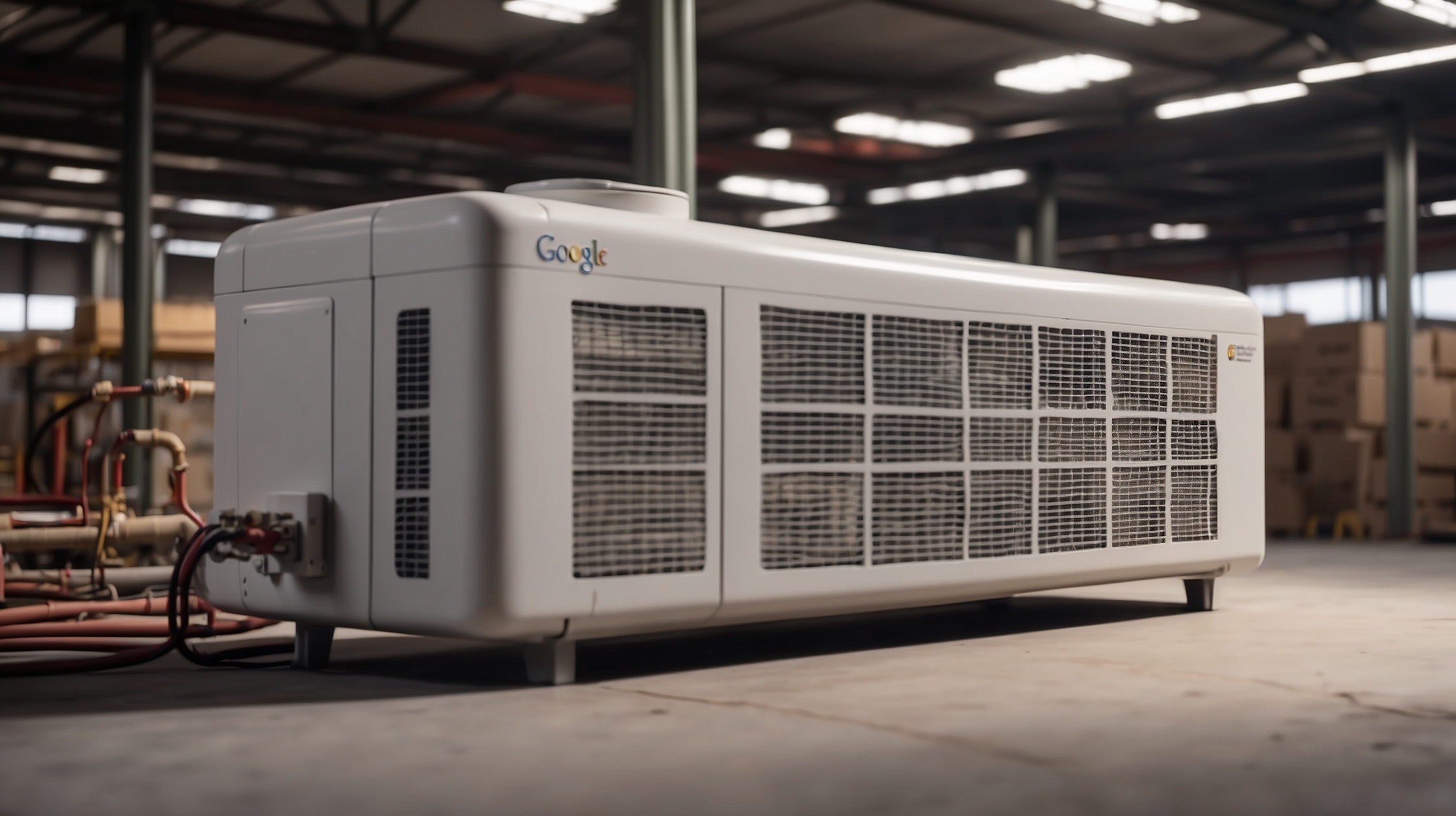
In the race to reduce carbon emissions and build a more energy-efficient world, engineers and scientists around the globe are continuously pushing the boundaries of innovation. In a groundbreaking development from China, researchers have created a revolutionary new type of **non-spinning heat pump** that essentially uses sound—yes, sound waves—to generate heat. This energy-efficient device is set to recover the 27% of heat typically lost in industrial applications, potentially transforming the future of industrial energy management.
Imagine a machine that uses no moving parts like traditional compressors or turbines and still manages to convert otherwise wasted sound into usable heat energy. That’s the genius at the heart of this new invention. Designed and built like a long, metal tube with coiled piping, the technology utilizes **thermoacoustic energy conversion**—a field of physics that has gained renewed attention due to its promise in energy efficiency and reliability.
What this means for heavy industries—such as steel manufacturing, chemical production, and power generation—could be game-changing. We could be looking at large-scale retrofitting of existing factories, where energy that used to escape into thin air is now recaptured and reused, significantly lowering utility bills and reducing environmental impact.
How China’s sound-based heat pump is transforming industrial energy
| Feature | Details |
|---|---|
| Technology Type | Thermoacoustic Heat Pump |
| Key Innovation | Uses sound waves instead of mechanical parts |
| Energy Efficiency | Recovers up to 27% of lost industrial heat |
| Device Structure | Tube-shaped, coiled internal piping |
| Applications | Steel, chemical, power, and energy-intensive industries |
| Environmental Impact | Reduces carbon emissions; enhances clean industrial processes |
What makes this heat pump different from conventional ones
Unlike traditional heat pump systems that circulate refrigerants using spinning compressors and mechanical parts, the **Chinese-designed heat pump** uses **acoustic waves** to drive temperature differentials. Its elongated tube design incorporates a cyclic sound wave, and as the wave oscillates, it causes gas particles in the system to compress and expand predictably, generating heat in a controlled fashion.
This method drastically reduces the wear and tear typically associated with mechanical processes because there are simply fewer moving parts to degrade. The result is a machine that boasts **increased durability, reduced maintenance**, and longer operational lifespan—all critical advantages for industries that run heavy equipment 24/7.
“This marks an extraordinary leap in energy efficiency for industrial applications. Sound has always been a form of energy—now we’re showing how it can be recycled into usable thermal energy.”
— Dr. Kai Zhang, Mechanical Engineer and Thermoacoustic Expert
Why industrial energy loss is a massive sustainability issue
In traditional industrial setups, a substantial amount of energy—about **27% or more**—is wasted during production processes. Most of this lost energy exits as heat through chimneys, filtration systems, and machinery exteriors. Capturing this dissipated energy has always been seen as technically challenging or economically inefficient—until now.
The new Chinese heat pump directly addresses this issue with an innovative approach that recovers this otherwise lost energy. By doing so, the device not only slashes energy costs but also helps companies meet **environmental, social, and governance (ESG)** goals set by national and international standards.
“Any technology that can cost-effectively recapture lost heat is a win for the planet and profit margins.”
— Mei Lin, Environmental Policy Analyst
How the new device actually works
The core principle behind the system is **thermoacoustic oscillation**. Inside the coiled tubular pump, specialized gasses (often inert gasses like helium or argon) react to precisely tuned sound waves bouncing through the chamber. When the trapped gas compresses, it heats up—when it expands, it cools down. Carefully placed heat exchangers then capture and distribute this thermal energy to useful applications within a facility.
In short, the unit transforms a basic physical reaction into something highly productive. The heating effect is intensified by coiling the internal pipes, increasing the surface area for thermal exchange and improving overall performance efficiency.
Industries most likely to benefit from the innovation
| Winners | Losers |
|---|---|
| Steel Manufacturers | Traditional Heat Pump Suppliers |
| Petrochemical Companies | Energy-inefficient plants |
| Thermal Power Stations | Companies relying solely on outdated heating methods |
| Clean Tech Investors | Oil and gas firms with low innovation investment |
What experts are saying about the future of thermoacoustic systems
The consensus among energy experts and thermal engineers is that this innovation is much more than a lab experiment—it’s a commercial game-changer. While the efficiency levels in controlled settings are impressive, the next test will be **how well the pump performs when scaled to larger, variable environments** seen in real-world industry.
Government interest also continues to grow. With ESG mandates getting stricter and tax incentives increasingly linked to clean energy transitions, this device could quickly find itself being mass-produced for incorporation in new and existing plants.
“Its non-mechanical nature makes it not only energy-efficient but also low-maintenance, which is a big selling point for heavy industry.”
— Liu Qiang, Energy Transition Consultant
Challenges and considerations ahead
Despite its promise, the technology isn’t without hurdles. Cost of materials, particularly the **inert gasses and high-efficiency exchangers**, may pose a bottleneck in mass adoption. There’s also a need for operators to be trained in thermoacoustic principles, as this is still a relatively niche area of industrial science.
However, as awareness and demand for sustainable energy solutions increase, economies of scale could quickly bring down costs. Research is already underway to explore using alternative gasses and materials that could maintain performance while reducing cost and environmental impact.
Next steps in adoption and development
China reportedly plans to pilot the system in several manufacturing hubs before the end of 2024. If successful, the next logical step would be **international collaboration** and technology exports to other high-energy-use countries. Built-in adaptation capabilities ensure that the system can be retrofitted into older plants without massive redesign, another strength lending to its mainstream feasibility.
Furthermore, startups and academic labs worldwide are expected to ramp up research in this field, potentially triggering a wave of new innovations based on **sound-science energy transitions**.
Frequently asked questions about the sound-based heat pump
What is a thermoacoustic heat pump?
It’s a device that uses sound waves to create temperature changes, allowing it to move heat from one place to another without mechanical parts.
How does it differ from traditional heat pumps?
Traditional heat pumps use compressors and refrigerants. Thermoacoustic pumps use oscillating sound waves and inert gas properties to produce heating and cooling effects.
Is this technology currently available for commercial use?
It is currently in the pilot phase, mainly in China, with expectations of broader availability pending successful trials.
What industries are the best fit for deploying this system?
Steel, chemical, and energy production industries that generate large amounts of waste heat are ideal for this technology.
Does this help reduce carbon emissions?
Yes, by recovering lost heat energy and using it, companies can reduce their reliance on fossil fuels and lower their emissions footprint.
Are there any moving parts involved?
No, that’s one of its biggest advantages. Fewer parts mean less maintenance, longer lifespan, and quieter operation.
Is it expensive to implement?
Initial setup may be costly due to specialty materials, but operational savings and government incentives can offset this over time.
Can the device be retrofitted into existing systems?
Yes. The tubular design allows it to be integrated with existing exhaust and heat systems with minimal infrastructure change.