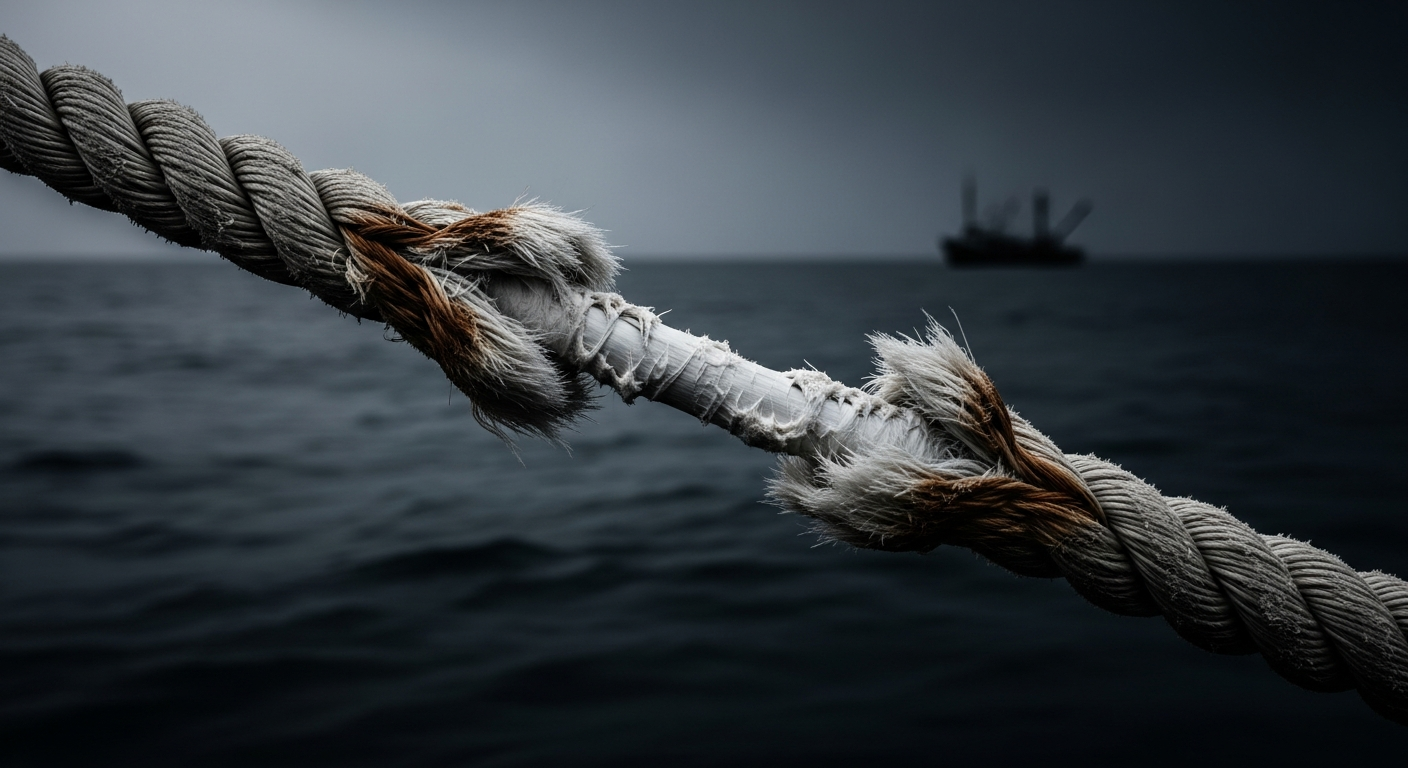
A group of Spanish fishermen off the coast of Gibraltar found themselves in the middle of a dramatic and terrifying nautical encounter — but not with the animals they initially blamed. What began as a report describing an “assault by orcas” turned out to be a surprising encounter involving **great white sharks**, leading to an intense debate between maritime experts and the fishermen themselves. Video footage captured by crew members shows massive predators circling their boat and biting through anchor rope with unnerving ease, leading to claims of deception and exaggeration.
The incident, which took place in the Strait of Gibraltar, has ignited a storm of public confusion and ecological concern. Previously, orcas in the region had gained global attention for aggressive behavior toward boats — biting rudders and disabling engines. This narrative made the latest event seem like a continuation, until a video analysis revealed a starkly different culprit. The fishermen’s claim that orcas were responsible was refuted quickly by marine biologists who determined from markings and behavior that **great white sharks** were behind the encounter.
Key facts about the sea attack incident
| Category | Details |
|---|---|
| Location | Strait of Gibraltar |
| Date of Incident | June 2024 |
| Reported Cause | Orca attack (initially claimed) |
| Actual Cause | Great white sharks biting anchor rope |
| Affected Vessel | Spanish fishing boat |
| Authorities Involved | Maritime experts, marine biologists |
| Public Reaction | Outrage, confusion, and concern over misinformation |
What really happened during the incident at sea
The Spanish crew initially radioed for assistance, claiming they were under siege by a group of **orcas**, commonly referred to as killer whales, which had previously caused significant damage to small vessels in the same region. However, once marine authorities and independent wildlife analysts reviewed the footage shot from the fishing vessel, it was discovered that the attackers were in fact **great white sharks**—a shift that changed the narrative instantly.
In the chilling video, at least two enormous sharks can be seen circling the boat as the crew panics in the background. One of the sharks aggressively lunges toward the stern, biting and eventually severing the anchor rope. No human injuries were reported, but the ship was left vulnerable and drifting due to the loss of anchor stability.
It’s extremely rare to catch sharks, especially whites, behaving this way toward boats. It indicates an anomaly, possibly triggered by food shortages or territorial confusion.
— Dr. Miguel Barroso, Marine Biologist
Shark behavior raises alarms for marine scientists
Marine biologists are now studying the encounter to understand why such **uncharacteristic shark aggression** took place. Unlike orcas, whose attacks on rudders are believed to be playful or strategic displays, **sharks biting through an anchor rope** presents a puzzling and potentially more dangerous behavior. One theory suggests that the chemical composition of the rope mimicked prey or that blood from fishing operations might have induced a feeding frenzy.
There is also speculation that climate change-induced migration patterns and competition over dwindling food resources could be pushing typically elusive species closer to human activity. This could be the beginning of a heavier pattern, biologists warn, unless proactive monitoring and policy steps are taken.
Climate stress is reshuffling marine ecosystems at a rate faster than anticipated. We may see more of these cross-species confrontations if trends continue unchecked.
— Professor Anna Llorente, Oceanographer
Fishermen accused of deception over real identity of the attackers
As the video gained traction on social media, some users and experts accused the fishermen of intentionally misleading authorities to exploit the popular orca narrative or downplay the attention that **a great white shark encounter** might bring. These accusations were further fueled by the tone and panic in the video which seemed inconsistent with prior orca-related footage.
The captain of the vessel has denied all claims of deception. He maintains that the crew genuinely believed orcas were involved. However, experts say that an **experienced sailor would have been able to distinguish between shark and orca behavior** at sea, especially given the size and movement characteristics of the two species.
Calling this an orca attack served nobody. It muddied the urgency of a potential shark issue that needs clear eyes and reliable data.
— Julio Martinez, Marine Safety Advocate
Public reaction and broader implications for maritime safety
This modern-day sea monster story has polarized public opinion. Some critics say the fishermen’s misidentification of the species has caused unnecessary panic, while others argue it’s an honest mistake in a tense moment. Regardless, the event has highlighted an urgent gap in **public understanding of marine wildlife behavior**.
Maritime authorities have now begun reviewing protocols on public communication following animal encounters, encouraging ship captains and crews to document events precisely and consult marine life experts before releasing claims. Additionally, seafarers are encouraged to carry wildlife identification manuals and receive periodic training on species common to the waters they navigate.
Could these shark incidents become the new norm?
Historically, the area near the Strait of Gibraltar is home to a **diverse range of marine species**, including sharks. However, never before has there been a recorded incident where sharks bit through an anchor rope, leading experts to warn of evolving maritime threats. As sea temperatures rise and human fishing activities intensify, **interaction between marine predators and vessels** is expected to increase.
If such encounters grow in number, they could impact insurance policies, international shipping routes, and lead to new conservation-meets-safety laws for vessels operating in biodiversity-rich waters.
This is a wake-up call. We’re dealing with a marine ecosystem under pressure, and the animals are beginning to respond in unexpected ways.
— Elena Torres, Marine Ecologist
Winners and losers from the great white shark incident
| Winners | Losers |
|---|---|
| Marine researchers gaining rare behavior footage | Spanish fishing crew facing credibility backlash |
| Conservationists making renewed case for sea monitoring | Public trust in maritime incident reporting |
| Oceanic policymakers who seek better protocols | Local tourism industry now facing fear-mongering |
Frequently asked questions about the shark versus orca sea attack
Was anyone injured in the incident?
No, all members of the fishing crew were unharmed. However, the boat suffered mechanical vulnerability due to the anchor rope being severed.
Why did the crew think it was orcas?
According to the captain, the crew panicked based on past orca incidents in the same region and assumed any marine attack had a similar origin.
How were the attackers identified as sharks?
Marine biologists analyzed video footage showing behavior, body shape, and markings consistent with **great white sharks**, not orcas.
Are shark attacks on boats common?
No. Such direct, aggressive engagement with boats by sharks is considered rare and potentially indicative of environmental changes.
Will this affect local fishing operations?
Possibly. There may be increased safety checks, training requirements, and revised insurance clauses as a result of this incident.
Are climate changes affecting shark behavior?
Yes. Rising sea temperatures and diminishing prey availability are forcing many marine predators to adapt in unpredictable ways.
What measures can crews take to stay safe?
Crews are advised to maintain a wildlife response plan, carry identification tools onboard, and avoid disposing of attractants like fish refuse near anchoring sites.
Is this the first time great white sharks were spotted in Gibraltar?
While not common, great white sharks have been sporadically sighted in the region before, often during migration. However, this is the first recorded mechanical interference.