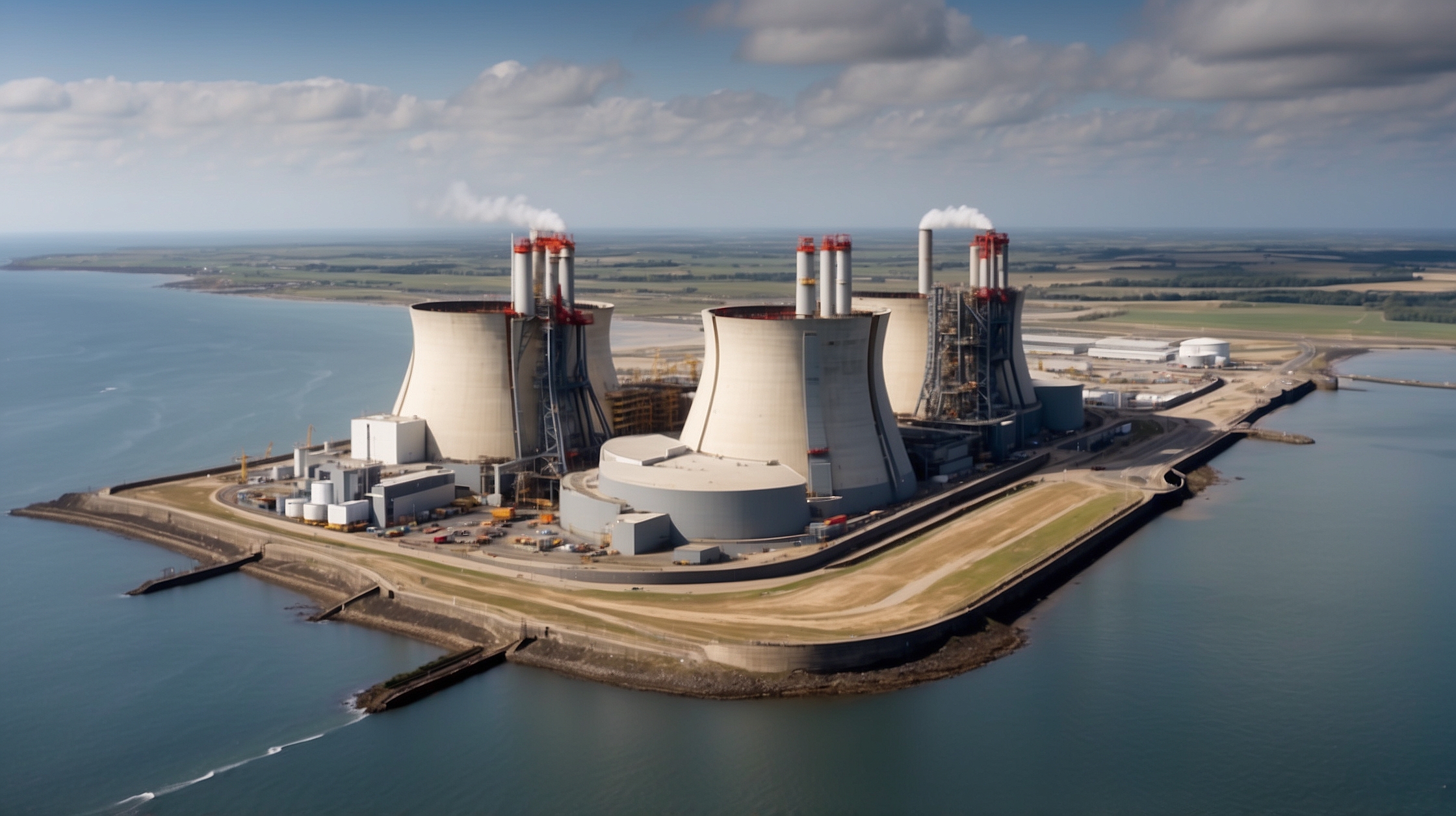
It was a slow, careful journey with deep implications for the future of energy in the United Kingdom. Over the course of several days, a colossal 500-tonne steel liner—a key component in one of the world’s most expensive and ambitious energy projects—traveled from France to the coast of southwest England. The cargo? An engineering marvel crafted to withstand some of the most extreme conditions imaginable. Its destination? Hinkley Point C, Britain’s first new nuclear power station in more than two decades.
This steel giant, forged with meticulous precision in France, represents a decisive moment in the UK’s efforts to decarbonize its electricity grid. As the threat of climate change intensifies and fossil fuels become increasingly untenable, nuclear energy is stepping back into the spotlight. The shipment signals that the construction of Hinkley Point C is not only progressing but picking up critical momentum as it enters key phases of nuclear reactor assembly.
With Britain eyeing cleaner alternatives and needing stable, uninterrupted baseload power, Hinkley Point C is viewed as a cornerstone in reshaping how the country powers its businesses, homes, and future. And this isn’t just about engineering—it’s about geopolitics, energy security, and laying the groundwork today for systems that will last generations.
Project overview and key facts
| Project Name | Hinkley Point C |
| Location | Somerset, England |
| Component Delivered | 500-tonne steel liner ring |
| Manufacturer | Framatome, France |
| Construction Cost | Est. £26 billion |
| Operators | EDF Energy and China General Nuclear (CGN) |
| Expected Operation Date | First reactor by 2027 |
| Energy Output | 3.2 GW – enough for 6 million homes |
The significance of the steel liner delivery
At 500 tonnes, the steel liner ring is not merely heavy—it’s uniquely critical. Positioned inside the nuclear reactor’s primary containment building, it provides one of the final shields between the outside world and nuclear core. This specially engineered ring is designed to withstand extreme pressure and heat during reactor operation or in the unlikely event of a malfunction.
The safe shipping of such a large and complex component across the English Channel is not just a logistical success—it’s a symbolic one. It demonstrates continued progress on site construction even in the face of rising costs, global supply chain challenges, and political scrutiny over nuclear funding. It also reaffirms the vital role international cooperation, particularly with France, plays in the UK’s nuclear future.
“The installation of the liner ring brings us a step closer to energising the first reactor. It’s a moment of collective pride for hundreds of workers who’ve made this possible.”
— Simon Parsons, Construction Director, Hinkley Point C
Why Hinkley Point C matters now more than ever
Britain is undergoing a massive transformation in its energy policy. The government aims to cut emissions to net zero by 2050—and nuclear power is seen as essential to that goal. Unlike solar and wind, nuclear provides **stable baseload power**—the kind that keeps hospitals running at night, powers data centers, and ensures grid reliability even when the wind doesn’t blow or the sun doesn’t shine.
Hinkley Point C stands at the center of that strategy. Once operational, its two reactors will produce around 7% of the UK’s total electricity needs. That’s the equivalent of all Welsh households being powered via one location.
In addition, it is expected to prevent the release of around 9 million tonnes of CO2 emissions each year by displacing gas-generated electricity. In a world where fossil fuel costs are volatile and geopolitical instability threatens energy markets, nuclear’s reliability offers huge benefits.
“To meet net-zero targets, we need dependable, low-carbon energy sources. Hinkley Point C is not just a project; it’s a necessity.”
— Fiona Butterworth, UK Energy Policy Analyst
How this engineering feat was designed and delivered
The massive steel structure was manufactured by France’s Framatome, a global leader in nuclear technology. Crafted in concentric stages, the ring is made of high-integrity steel plates, precision-welded and tested rigorously to ensure it adheres to international nuclear safety standards.
Shipping such a large piece required detailed coordination. Specialized sea transport systems navigated the liner across the Channel into Bridgwater Port, where heavy haulage teams carefully moved the cargo to the construction site. Installation will involve a high-capacity crane and a precisely timed effort to integrate it into the existing containment building structure.
The partnership behind Hinkley Point C
The project is being delivered by **EDF Energy**, a UK subsidiary of French energy giant EDF, in partnership with **China General Nuclear Power Group (CGN)**. While Chinese involvement has stirred debate amidst shifting international relations, the project remains central to UK energy strategy.
The combination of French engineering, Chinese investment, and British oversight reflects a new model of **globalized infrastructure development**, where technological collaboration transcends political divides—at least for now.
Who benefits and who faces challenges
| Winners | Losers |
|---|---|
| UK energy consumers (long-term low-carbon power) | Environmental groups opposing nuclear expansion |
| Government Net-Zero emissions goals | Taxpayers bearing cost overruns |
| Local job creation in Somerset and supply chain sectors | Small renewable projects challenged for funding |
| International engineering and logistics partners | Anti-nuclear advocacy organizations |
What construction milestones are ahead
With the steel liner now on-site, the next big milestone will be its installation and inspection. This comes ahead of **containment dome placement**, which is scheduled for late 2024 or early 2025. Heavy engineering work continues on installing cooling systems, reactor instrumentation, and control chambers.
The project already supports over 22,000 jobs across the UK, and once operational, it will employ around 900 people long-term, with **additional contractors during maintenance periods**. EDF has reaffirmed its target: the first unit should be operational by 2027.
How this may shape the future approval of Sizewell C
Hinkley Point C also serves as a **litmus test** for another planned nuclear facility: Sizewell C in Suffolk. The government has expressed strong interest in replicating the Hinkley model—albeit with different financing structures.
Observers say successful component deliveries like the recent steel liner can bolster public and investor confidence in nuclear infrastructure timing and costs, especially as Sizewell C aims to attract more private-sector funding without the same level of overseas state backing.
“Hinkley’s construction progress will shape how we think about future nuclear projects across the UK.”
— Dr. Lina Grant, Infrastructure Research Fellow
Short FAQs about Hinkley Point C and the steel liner delivery
What is the purpose of the 500-tonne steel liner?
It forms part of the inner containment structure of the nuclear reactor to ensure safety by withstanding heat and pressure during reactor operation.
Why is nuclear energy important for the UK?
Nuclear provides a reliable and low-carbon energy source, crucial for meeting climate commitments and energy security needs.
Who is building Hinkley Point C?
EDF Energy in partnership with China General Nuclear (CGN).
When will Hinkley Point C be completed?
The first reactor is expected to begin operation by 2027.
How much power will the project generate?
Around 3.2 gigawatts, sufficient to power over 6 million UK homes.
Is the steel liner delivery significant?
Yes, it is a major construction milestone that indicates readiness for more advanced reactor assembly phases.
Will there be more nuclear plants in the UK?
Yes, Sizewell C and other small modular reactors are in planning stages as part of the UK’s energy transition strategy.
What jobs have been created by Hinkley Point C?
The project has supported tens of thousands of jobs and will maintain long-term roles during operation and maintenance phases.