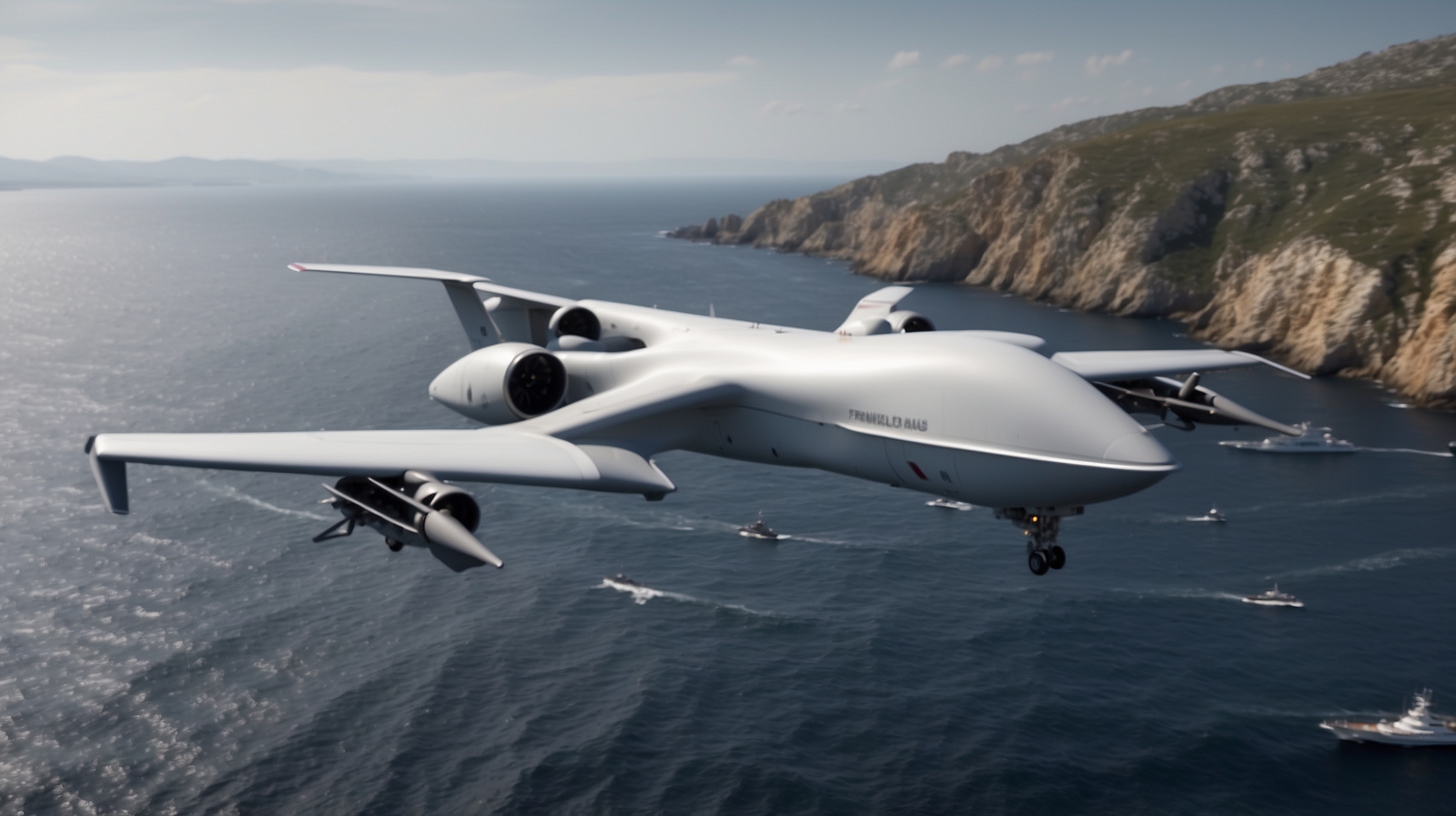
In the ever-evolving sphere of defense technology, France has just taken a global lead by preparing to become the **first country** to deploy Airbus’s groundbreaking **VSR700 naval drone**—a high-tech innovation poised to redefine maritime operations. In a surprising twist of defense narrative, a nation once considered sluggish in unmanned systems now emerges as the pioneer in utilizing some of the most sophisticated vertical take-off and landing (VTOL) drone capabilities. It’s a moment of transformation, not just for French naval strategy, but also for the future of drone warfare globally.
The maritime drone race has primarily been characterized by superpowers like the United States and China, both heavily investing in unmanned sea and air systems. For France, this shift from laggard to leader is not just symbolic. It’s backed by years of strategic partnerships between industry leaders such as Airbus and the French Navy, committed to modernizing their approach to maritime intelligence, surveillance, and reconnaissance (ISR) operations. And as this new chapter unfolds, the world watches closely to assess the ripple effects across NATO and beyond.
What changed this year with France’s naval strategy
| Country In Focus | France |
| Technology Deployed | Airbus VSR700 VTOL Naval Drone |
| Purpose | ISR (Intelligence, Surveillance & Reconnaissance), Naval Logistics |
| Expected Deployment | 2026 (fully operational) |
| Collaboration | French Navy, Airbus Helicopters, Naval Group |
| System Type | Unmanned Aerial System (UAS), Shipborne |
The game-changer in 2024 was France’s formal selection and continuation of trials with the **Airbus VSR700**, a rotary-wing Unmanned Aerial System (UAS) specifically designed for deployment aboard naval vessels with limited deck space. Unlike traditional fixed-wing drones, the VSR700’s helicopter-style design allows it to *take off and land vertically*, a crucial requirement for maritime readiness.
Following successful trials onboard a French Navy vessel, France has now committed to merging this high-performance drone into its operational fleets. Officials describe it as a decision aimed at boosting “intelligence superiority, rapid data sharing, and mission agility.” Both strategic and symbolic, it signals a turn in France’s broader maritime defense doctrine.
Why the VSR700 is more than just another drone
The **VSR700** is based on the Guimbal Cabri G2 civilian helicopter platform but re-engineered with cutting-edge sensors, encrypted communications, and autonomous systems. What sets it apart isn’t just VTOL capability, but its integration into a naval environment, operating in rough seas, landing on moving decks, and feeding critical ISR data directly to ships and command centers.
The drone has an **endurance of over 8 hours**, extends the eye-range of a vessel far beyond line-of-sight, and can carry multiple sensor payloads. This includes electro-optical systems, radar, and even potential weapon and cargo delivery systems. With its compact size and low radar signature, it is tailored for strategic stealth.
“France just flipped the UAS script in Europe—VSR700 is a blend of autonomy, endurance, and payload capacity. It’s a force multiplier.”
— Jean-Marc Bourely, UAS Analyst, DefenseTech Insights
How France became the first adopter globally
The decision to adopt the VSR700 came after over five years of joint development under the SDAM (Système de Drone Aérien Marine) program, managed by French defense procurement agency DGA. Airbus Helicopters and Naval Group collaborated closely throughout development and testing, gradually iterating the drone for robustness in maritime trials.
In early 2024, France declared its intention to move into the next phase: **preparation for serial production and combat-readiness**. Unlike other countries still mired in experimental or lab-based evaluation stages, France’s comprehensive sea trials provided real-world validation. No other country has yet committed to launching such drones operationally within their navy.
“This isn’t a trial balloon. France is securing long-term naval superiority through autonomous systems. Others will follow soon.”
— Arielle Raynaud, Maritime Strategist
Capabilities that significantly boost naval readiness
Key features of the Airbus VSR700 that make it a transformative asset include:
- Autonomous Navigation: The VSR700 features advanced autopilot and automatic deck-landing modes developed for shipboard operations.
- Long Operational Endurance: Endurance of over eight hours with persistent ISR coverage of up to 150 kilometers over the horizon.
- Sensor Versatility: Optional payloads include AIS (Automatic Identification System), naval radar, FLIR (Forward Looking Infrared) and EO/IR systems.
- Payload Capacity: 100–250 kg of variable payload makes it suitable for cargo resupply missions in contested zones.
- Low Lifecycle Cost: Shared maintenance logistics with Cabri G2 platform reduce running costs over time.
Winners and losers in the new UAS landscape
| Winners | Losers |
|---|---|
| France’s Naval Forces | Legacy ISR Helicopter Programs |
| Airbus and Naval Group | Nations Delaying UAS Integration |
| European Maritime UAS Suppliers | Competing Small Drone Manufacturers |
Strategic implications for NATO and Europe
France’s deployment of the VSR700 could significantly shape NATO’s maritime future. As autonomous systems rise in prominence for naval support, NATO member states may find themselves under pressure to integrate similar capabilities. France’s lead role also sends a message about **European defense innovation autonomy**, especially at a time when greater EU sovereignty in defense is being actively discussed.
It may also drive greater defense spending and R&D across the continent, with other countries speeding up their own maritime drone trials to avoid falling behind. Several EU nations, including Germany and Italy, are rumored to be in talks for collaborative UAS development programs by 2025.
What to expect next in military drone development
The success of the VSR700 will likely push defense contractors and government labs to think beyond ISR-only platforms. We can expect future iterations to explore **armed configurations**, payload delivery modules, and advanced swarm capabilities for fleet missions. As AI-driven flight algorithms improve, these drones will transition from being “eyes in the sky” to active participants in combat missions.
“This is only the beginning. Maritime drones will soon outnumber manned helicopters in modern navies.”
— Lt. Col. Emmanuel Vierre, French Navy Drone Training Command
Frequently asked questions about the VSR700 naval drone
What is the VSR700 drone’s primary mission?
The VSR700 is primarily designed for maritime ISR (intelligence, surveillance, and reconnaissance) missions, but it also has logistics and support potential.
When will the drone be fully deployed in the French Navy?
The French Navy expects to complete operational integration and full deployment by 2026.
Is the VSR700 drone armed?
Currently, the VSR700 is not configured for armed missions, but future variants may consider weapon integration based on mission requirements.
Can the VSR700 be used by other countries?
Yes, Airbus intends to export the drone to allied nations. Several navies have expressed interest pending the results of France’s deployment.
How does the drone land on ships?
It uses autonomous landing software combined with deck-based equipment to enable vertical landings even in rough sea conditions.
What makes VSR700 different from traditional ISR aircraft?
Its ability to autonomously land on naval vessels, long endurance, and modular sensors make it more versatile and efficient than traditional options.
Who developed the VSR700 naval drone?
The drone was co-developed by Airbus Helicopters and Naval Group under the leadership of French defense procurement agency DGA.
How much does the VSR700 program cost?
The exact program cost remains confidential, but defense analysts estimate it in the hundreds of millions of euros including development and integration.