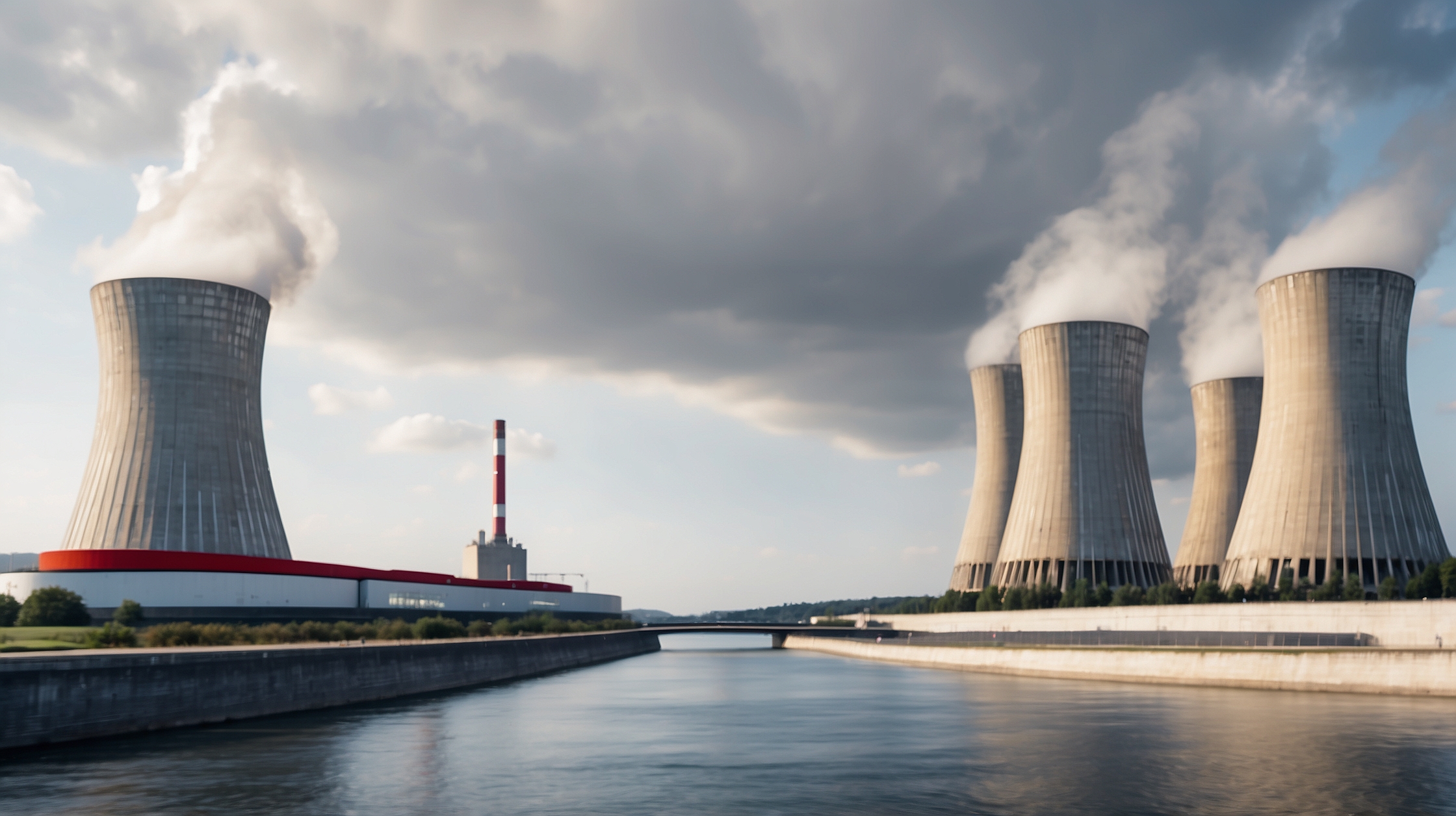
Under the looming pressure of climate change and Europe’s urgent energy transformation, France has embarked on a monumental nuclear energy revival. The nation, once a global leader in atomic power, is now placing a €72 billion bet on a next-generation nuclear fleet, underpinned by the construction of six new European Pressurized Reactors (EPRs). Yet, what’s even more striking is that this bold venture is eclipsed by something even bigger—a complete overhaul of the national electricity grid, projected to cost nearly three times more: a staggering €200 billion.
This dual-track investment is a cornerstone of France’s plan to reach carbon neutrality by 2050. While the flashy nuclear deals headline the news, the granular, hard-to-visualize grid transformation is the real spine of the energy transition—vital, complex, and massively expensive. The grid must accommodate not just nuclear but also solar, wind, and imported renewable energies while handling decentralized energy production and rapid consumption changes.
France is at a crossroads, betting on both high-visibility nuclear innovation and the quiet revolution of a modernized grid. Together, they form the DNA of a cleaner, secure, and sovereign French energy system. But with challenges ranging from labor shortages to public opposition and escalating costs, the road ahead is anything but smooth.
Key facts at a glance
| Project | French Nuclear Flagship & Electricity Grid Overhaul |
| Nuclear Investment | €72 billion for 6 EPR reactors |
| Electric Grid Investment | €200 billion by 2050 |
| Planned Completion | Nuclear: ~2040, Grid: 2050 |
| Primary Goal | Carbon neutrality by 2050 |
| Main Agencies | EDF, RTE (Electric Transmission Network), French Government |
Why this matters more than ever now
Europe faces growing geopolitical tensions, soaring energy costs, and increasingly severe climate events. For France, whose energy policy has long relied on its expansive nuclear infrastructure, the urgency lies not just in adding more electrical capacity—but in rebuilding the very skeleton that distributes this energy. Without a robust and adaptive power grid, even the most advanced reactors would be ineffective.
Moreover, the French government’s strategy ties nuclear investments to broader environmental targets under EU regulations. Pairing this nuclear renaissance with massive grid modernization helps diversify energy sources, ensures resilience, and supports future green industries like hydrogen and electric mobility.
Breaking down the nuclear commitment
The €72 billion nuclear plan represents perhaps France’s most striking energy investment. At its heart are six EPR2 reactors designed to stabilize France’s baseload electricity. Currently, France operates 56 nuclear reactors, but nearly half could be decommissioned by 2035 due to aging infrastructure. The EPR2 model simplifies construction and significantly improves safety and efficiency compared to its complex predecessor.
Construction of the first EPR2 unit is expected to begin in 2028 at Penly in Normandy. If all regulatory clearances are met, it could start operation by 2035. Meanwhile, EDF and the French government are examining several other sites for additional installations. What differentiates this plan from past efforts is its timeline extension, worker training programs, and integrated supply chain development across Europe.
“We are investing not just in new reactors but in long-term sovereignty in energy. This is a generational shift.”
— Bruno Le Maire, French Economy Minister
The unseen €200 billion grid revolution
If the nuclear reactors hold France’s energy future in their radioactive cores, the real infrastructure miracle lies in cement, cables, and code. RTE, France’s electricity transmission operator, unveiled the jaw-dropping price tag for the upcoming grid transformation to meet growing demand, integrate renewable sources and ultimately make the entire system climate neutral by 2050.
This overhaul includes building 6,000 kilometers of new high-voltage lines, integrating more than 100 gigawatts of renewable energy, as well as expanding digital control centers and real-time grid analytics. Among its most groundbreaking changes is the pivot from centralized to decentralized power—a hallmark of the transition to green power generation, which increasingly includes rooftop solar, microgrids, and local wind farms.
“You don’t see power grids on magazine covers, but without them, no energy transition can succeed.”
— Xavier Piechaczyk, President of RTE
What this means for French citizens and businesses
Consumers and businesses are already experiencing changing dynamics. With plans to phase out fossil fuel-powered homes and increase electric vehicle use, the demand for a stable, 24/7 electricity supply is paramount. The expansion of nuclear energy aims to keep prices relatively stable; however, this contrasts with the possible intermittency and intermittently high costs of transitioning to renewables entirely.
RTE notes that over a third of the €200 billion will go toward reinforcing the grid in rural and urban areas alike—facilitating not just affordable energy access but also economic equity. Businesses tied to electric-intensive manufacturing stand to benefit from long-term price stability and cleaner energy inputs, which also align with European ESG requirements.
Winners and losers in this dual energy strategy
| Winners | Losers |
|---|---|
| Construction and energy workers | Fossil fuel providers |
| Renewable and nuclear tech firms | Communities opposing new infrastructure |
| Energy-intensive industries | Taxpayers (due to funding requirements) |
| Grid software and AI companies | Older, less adaptable energy equipment suppliers |
How it will impact Europe-wide energy adequacy
France is not just refueling its own economy; it’s becoming an electricity anchor for all of Europe. Owing to its central grid connections, French power often stabilizes the broader European electricity market. Experts argue that if France succeeds in its dual approach, it could fulfill over 12% of Europe’s stable electricity demand by 2040. With increased interconnection corridors to Germany, Italy, and Spain, the French grid becomes an energy bloodstream running across EU borders.
This has implications for policy alignment and cross-border partnerships. France’s grid strategy reflects strategic sovereignty ambitions that extend beyond electricity. It influences industrial competitiveness, climate diplomacy, and national security planning amid an increasingly volatile global environment.
Challenges standing in the way of success
Every grand vision comes with roadblocks. For France, these include construction delays, labor shortages, and regulatory complexities—especially in issuing permits for nuclear sites and new transmission lines. Public opposition also looms large. While polls show general support for nuclear energy, localized resistance to new developments (so-called “Not In My Backyard” sentiments) and concerns over long-term nuclear waste remain deeply rooted.
Additionally, global supply chain disruptions—from semiconductors for grid tech to rare earths needed in reactors—could slow down timelines. RTE has called for immediate investment decisions to be secured by 2027 to stay on track, signaling that the next few years are crucial for project momentum.
“The energy transition is no longer an option. Without these investments, we will face brownouts and increased dependence on polluting imports.”
— Placeholder, Energy Analyst
Frequently asked questions
When will the new nuclear reactors become operational?
The first EPR2 reactor is scheduled to become operational around 2035, with the full fleet targeted for completion by 2040.
Why is the electricity grid makeover so expensive?
The €200 billion estimate covers thousands of kilometers of upgraded and new high-voltage lines, new substations, digital monitoring systems, and the integration of decentralized renewable energy sources.
How is this funded?
Funding comes from a mix of public financing, EU climate funds, and long-term electricity tariffs paid by consumers and businesses.
Will this reduce electricity prices?
In the short term, prices may remain stable or rise slightly due to investments. In the long run, more capacity and efficiency are expected to stabilize or reduce prices.
How does this compare to Germany’s energy transition?
Unlike Germany’s phase-out of nuclear, France doubles down on it while simultaneously investing heavily in grid and renewables, aiming for a more “balanced” mix of energy sources.
Who oversees the grid remodeling?
RTE (Réseau de Transport d’Électricité), a subsidiary of EDF, is responsible for planning, building, and maintaining the national electric grid infrastructure.
Are there risks of delays or failures?
Yes. Past nuclear construction delays like those seen in Flamanville serve as cautionary tales. Grid expansion also faces technical and administrative hurdles, including environmental approvals.
Will this create jobs?
Yes. Thousands of new jobs are expected in construction, energy management, engineering, and technology fields over the next two decades.