“Most homeowners are unknowingly suffocating their hardwood floors with products that promise miracles but deliver disappointment,” says a certified flooring specialist with over two decades of experience. “The answer isn’t more chemicals—it’s fewer, used correctly.”
Late on a Sunday afternoon, when natural light streams through your windows at just the wrong angle, every imperfection on your hardwood floor suddenly becomes impossible to ignore. What once gleamed with warm honey tones now appears dull, tired, and somehow older than its years.
The culprit isn’t age or wear—it’s the invisible film of cleaning product residue that’s been building up for months or years. Every well-intentioned cleaning session with vinegar solutions, heavy waxes, or commercial “miracle” sprays has added another microscopic layer, slowly dimming your floor’s natural radiance.
Professional floor installers have quietly been recommending a surprisingly simple approach that strips away these layers without harsh chemicals or weekend-consuming rituals. This gentle method reveals the original beauty hiding beneath years of product buildup.
| Component | Purpose | Key Benefit |
|---|---|---|
| Lukewarm water | Base cleaning agent | Safe for all finishes |
| Few drops mild dish soap | Cuts grease, rinses completely | No residue buildup |
| Well-wrung microfiber mop | Mechanical dirt removal | Prevents streaks and water damage |
Why Traditional Products Slowly Destroy Your Floor’s Natural Beauty
The most common hardwood floor cleaning mistakes happen with the best intentions. Homeowners reach for vinegar because it feels natural and cuts through grime. Others apply annual wax coats, believing they’re protecting their investment.
However, modern hardwood floors come with factory-applied finishes designed to protect and beautify without additional products. Regular vinegar use gradually etches these protective layers, while heavy waxes create sticky surfaces that trap dirt and dull over time.
Even “natural” cleaning oils can leave invisible films that attract dust like magnets. The result is floors that look perpetually dirty despite regular cleaning efforts.
Who Suffers Most from Ineffective Floor Care Methods
- Busy families: Multiple daily cleanings with wrong products accelerate residue buildup
- Pet owners: Over-cleaning accident spots with harsh solutions damages finish integrity
- Elderly homeowners: Decades of wax layering creates slippery, cloudy surfaces
- New homeowners: Inheriting floors dulled by previous owners’ cleaning choices
- Rental property managers: Constant tenant turnover leads to inconsistent care routines
How Wrong Cleaning Products Create Lasting Floor Damage
- Acidic cleaners: Gradually etch protective finishes, creating permanent dullness
- Oil-based products: Leave sticky residues that collect dirt and grime
- Commercial waxes: Build up in layers, creating uneven, cloudy surfaces
- Silicone sprays: Provide temporary shine but trap footprints and dust
- Excessive water: Seeps into joints, causing warping and finish separation
“The biggest revelation for my clients comes when they test this simple method on just one small area,” explains a professional restoration expert. “They’re shocked to see their original floor color emerge from underneath what they thought was permanent aging.”
| Traditional Method | Damage Over Time | Simple Alternative Result |
|---|---|---|
| Regular vinegar solutions | Finish etching, permanent dullness | Original luster maintained |
| Annual wax applications | Sticky buildup, uneven appearance | Natural wood grain visible |
| Commercial “miracle” sprays | Film residue, attracts more dirt | Clean surface that stays cleaner longer |
| Steam or excessive water | Joint damage, warping risk | Moisture control prevents damage |
The Professional Secret That Reveals Hidden Floor Beauty
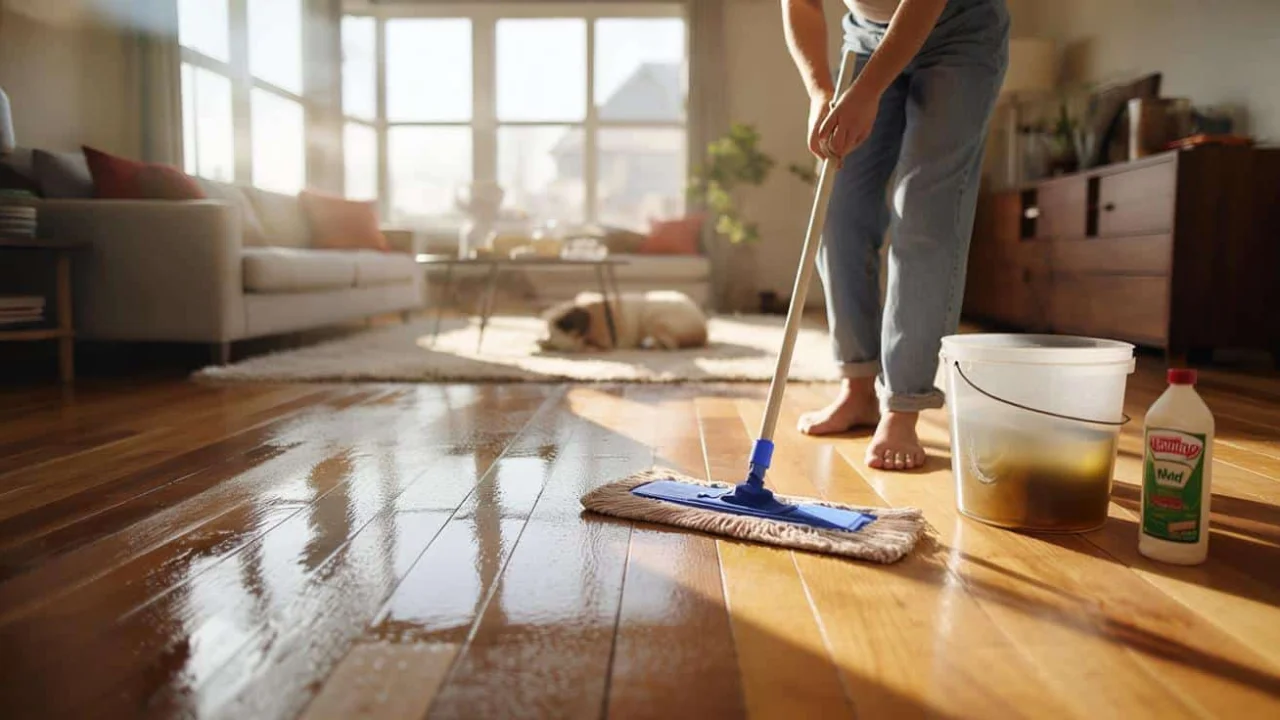
The technique couldn’t be simpler, yet it consistently produces dramatic results. Fill a bucket with lukewarm water and add just a few drops of mild dish soap—the kind you use for hand-washing dishes, not the concentrated versions for dishwashers.
Using a microfiber mop wrung nearly dry, clean small sections following the wood grain direction. Immediately follow with a dry microfiber cloth or soft towel to prevent water spots or seepage.
This hardwood floor cleaning approach works because dish soap is specifically formulated to cut grease and rinse away completely. Unlike other cleaning products, it leaves no residue while effectively removing the invisible film that’s been dulling your floors.
The key lies in the mechanical action of microfiber combined with minimal moisture. You’re not adding shine—you’re revealing the natural beauty that product buildup has been hiding for months or years.
Step-by-Step Application for Maximum Results
Start with a test area near a window where natural light will reveal the difference most clearly. After cleaning and drying, you’ll likely notice a distinct contrast between the treated section and surrounding areas.
For stubborn spots like dried spills or sticky residue, apply a slightly stronger soap concentration directly to your cloth, treat the specific area, then rinse with clean water and dry immediately.
Resist the urge to flood the floor with water, thinking more equals cleaner. Excess moisture can seep into joints and cause warping or finish damage over time.
“The most successful clients adopt this as their regular routine rather than looking for dramatic seasonal treatments,” notes a flooring maintenance consultant. “Consistency with the right method beats intensive cleaning with wrong products every time.”
Creating a Sustainable Floor Care Routine That Actually Works
Professional maintenance doesn’t require daily mopping or weekly waxing marathons. A realistic approach focuses on prevention and gentle restoration rather than aggressive intervention.
Vacuum or sweep with soft bristles once or twice weekly to remove grit that causes micro-scratches. Follow with the soap-and-water technique every week or two, depending on household traffic.
This schedule prevents the residue buildup that creates dull, lifeless-looking floors while maintaining the protective finish manufacturers designed to last for years.
The hardwood floor cleaning routine becomes sustainable because it requires minimal time, inexpensive materials, and produces visible results that motivate continued proper care.
Long-Term Benefits of Proper Floor Maintenance
Floors maintained with this gentle approach retain their factory finish longer, delaying expensive refinishing projects by years. The natural wood grain remains visible and vibrant rather than disappearing under layers of product buildup.
More importantly, properly maintained floors contribute to better indoor air quality since they’re not off-gassing chemicals from accumulated cleaning products or harboring dust in sticky residue layers.
Can I use this method on any hardwood floor finish?
Most modern sealed hardwood responds well to this gentle approach, but test a small area first if you have specialty finishes.
How often should I clean with the soap and water method?
Weekly for high-traffic areas, every two weeks for lighter use spaces works well for most homes.
Will minimal water really clean effectively without streaking?
Well-wrung microfiber removes dirt mechanically while preventing the water oversaturation that causes streaks and damage.
What if my floor already has years of product buildup?
Consistent use of this method gradually removes accumulated residue, though heavily damaged finishes may need professional restoration.
Can I add essential oils or other fragrances to the cleaning solution?
Avoid additives that could leave residue; the soap and water combination works best when kept simple.
How do I know if my current cleaning routine is damaging my floors?
Persistent dullness, sticky feeling surfaces, or visible product buildup indicate your current products aren’t rinsing cleanly.
“The real transformation happens when homeowners stop fighting their floors with harsh products and start working with the natural beauty that’s already there,” concludes a master floor refinisher. “Sometimes the best care means doing less, but doing it right.”