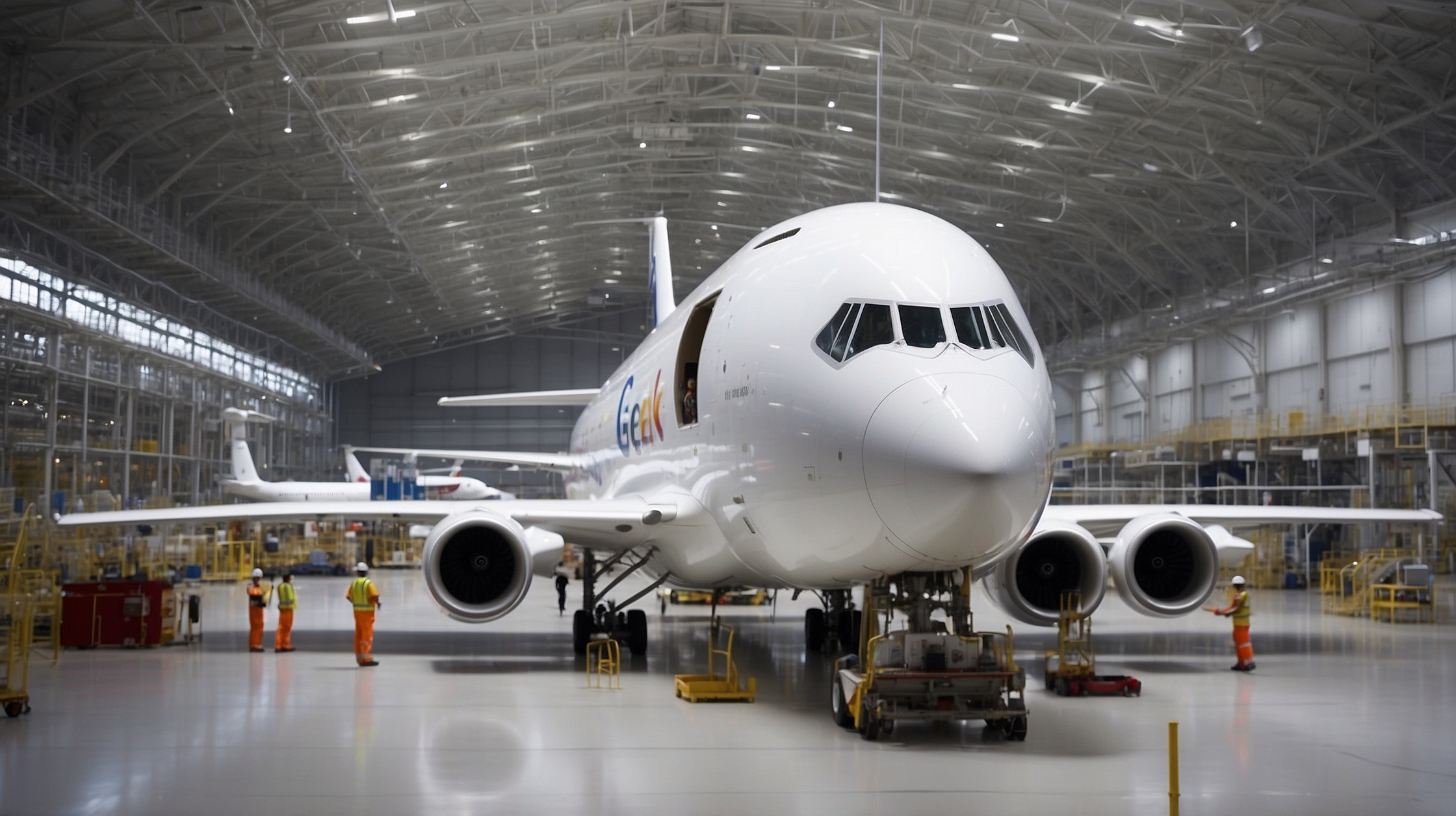
In the heart of Everett, Washington, lies a manufacturing marvel that stretches the limits of what industrial engineering and human coordination can achieve. Spanning a jaw-dropping 98.3 acres, the Boeing Everett Factory isn’t just the **largest building in the world by volume**—it’s a city unto itself. From its immense doors, some of the most recognizable flying machines in modern aviation take shape, carrying thousands of passengers across continents every day. The scale, capability, and historic impact of this factory have transformed it into more than just a manufacturing hub; it’s the epicenter of global aviation innovation.
At first glance, the sheer statistics of the place seem like something out of a science fiction film. The factory is large enough to comfortably house Disneyland, and over 30,000 employees work within its walls. Airplanes are assembled in detailed precision, from nose to tail, within just a few weeks. Eight wide-body jets—some among the largest passenger planes in the world—can be produced simultaneously. This level of production power, coupled with technological brilliance and a skilled workforce, has positioned Everett as a cornerstone of America’s aerospace dominance.
But numbers tell only half the story. The Boeing Everett Factory is more than just a symbol of American industry; it’s a living testimony to the legacy of flight, shaped by decades of engineering challenges, labor efforts, and luxurious aerial ambitions. With geopolitical shifts, fluctuating market demands, and the growing push for sustainability, this iconic facility finds itself at a crossroads—adapting to the times while reminding the world just how ambitious human endeavors can be.
Quick look at the Boeing Everett Factory
| Location | Everett, Washington, USA |
| Total floor area | 4.3 million square feet |
| Volume | 472 million cubic feet |
| Maximum aircraft production capacity | 8 wide-body jets at once |
| Number of employees | Over 30,000 |
| Aircraft types manufactured | 747 (discontinued), 767, 777, 787 Dreamliner |
Why the Boeing Everett factory was built on such a scale
The Boeing Everett Factory’s origins stretch back to the mid-1960s, when Boeing set out to build a jet larger than any seen at the time: the iconic 747. Known as the “Queen of the Skies,” the 747 would require a massive space for assembly. Initial projections for the aircraft’s size and complexity pushed Boeing’s leadership toward an aggressive expansion of manufacturing capabilities. Thus, the Everett site was selected, carved out of 780 acres of land north of Seattle, and transformed into the world’s most vast enclosed workspace.
From the 747 program onwards, the need for innovation in aircraft construction continued to grow. Each new line of aircraft—767, 777, and later, the 787 Dreamliner—was associated with advancements in aeronautical technologies, requiring updates and expansions to the factory’s tooling systems, production lines, and testing facilities.
Inside the world’s biggest airplane assembly line
Stepping inside the Everett facility reveals a highly structured ecosystem where thousands of tasks unfold simultaneously. Gigantic fuselage sections, wings, and tail fins are maneuvered via overhead cranes and advanced robotic systems. Precision tools, automated drilling rigs, and digital monitoring systems all play their roles in ensuring **aerospace-grade perfection.**
The scale of each section is surreal. Aircraft are assembled in giant bays laid out in parallel lines, allowing simultaneous construction of multiple bodies. It’s not simply a matter of snapping parts together; rigorous testing and double-checking processes are baked into the workflow. Technicians and engineers, wearing bright vests and communication headsets, collaborate in perfect harmony.
“It’s not just the size that’s incredible. It’s the coordination—every bolt, every rivet, every software line must be perfect.”
— Mark Reynolds, Aerospace Engineer (Placeholder)
The aircraft born in Everett and their impact
The Boeing Everett Factory has been the birthplace of several of Boeing’s most significant aircraft. The first, of course, was the Boeing 747, which transformed long-haul travel with its size and range. Next came the Boeing 767 and 777, which heralded a new age of fuel-efficient, twin-engine jets for long-distance routes. In recent decades, the 787 Dreamliner has pushed the envelope further with its composite materials and fuel savings of 20% over previous models.
These aircraft have **shaped global travel habits**, enabled modern airline business models, and forever altered what passengers expect from air transportation. Hundreds of millions of people have traveled on planes first pieced together inside the Everett walls.
A self-sustaining complex inside a complex
The factory features its own fire department, security team, medical services, restaurants, and transportation system. Employees use bikes and shuttle vans to traverse the expansive corridors. The building is so expansive that **clouds can form near the rafters** in rare instances, thanks to humid conditions and temperature differentials.
Just as mind-blowing as its function is its sustainability initiative. Boeing has worked over the years to increase energy efficiency, reduce emissions, and minimize factory waste, aligning its operations more closely with modern environmental expectations.
What changed this year in Everett production
Boeing has made several strategic shifts at Everett in recent years. The production of the legendary 747 came to a close in 2023, marking the end of a magnificent chapter. In its place, greater emphasis is shifting toward the 787 Dreamliner and the 777X, the next-gen wide-body aircraft expected to achieve certification soon.
This change is not merely a production line adjustment—it represents **a philosophical pivot** in Boeing’s priorities. With commercial aviation fiercely competitive and sustainability no longer optional, lighter materials, hybrid technologies, and digital efficiencies are front and center.
Winners and losers in this aircraft evolution
| Winners | Losers |
|---|---|
| Next-generation aircraft like the 787 and 777X | 747 production line and associated suppliers |
| Employees trained in composite technologies | Traditional large-platform aircraft assembly roles |
| Global airlines seeking fuel-efficient models | Carriers invested heavily in legacy fleets |
Why Everett still holds a crucial role in Boeing’s future
Despite industry-wide volatility, including supply chain issues, labor strikes, and stricter regulations, Everett remains integral to Boeing’s operational strategy. The factory continues to house critical research teams and a talent pipeline that extends decades into the past. Over the next few years, Everett is expected to remain a prime site for testing, production, and innovation within Boeing’s portfolio.
New facility enhancements aimed at improving build times, ergonomics, and part traceability are already in the pipeline. Additionally, Boeing is exploring further ways to incorporate AI and IoT-based monitoring systems into Everett’s infrastructure, creating smarter, leaner planes faster.
“Global success for Boeing depends on Everett’s ability to remain a world leader in precision manufacturing.”
— Jenna Morales, Aerospace Business Analyst (Placeholder)
What the Everett factory teaches the world
Above all, the existence of such a manufacturing facility proves that dreams, no matter how massive, are attainable through design, discipline, and determination. Everett doesn’t merely assemble airplanes—it generates global commerce, interconnectivity, and a sense of wonder every time a new aircraft rolls off the line and takes to the skies.
Frequently Asked Questions
How big is the Boeing Everett Factory?
The factory covers 98.3 acres in floor space, equivalent to 4.3 million square feet, and contains 472 million cubic feet in volume—making it the largest building by volume in the world.
What aircraft are built at the Everett location?
Boeing assembles the 767, the 777, and the 787 Dreamliner in Everett. The iconic 747 was also built here before its production ended in 2023.
How many planes can Everett produce at once?
The factory has the capacity to assemble up to eight wide-body aircraft simultaneously.
How many people work at the Boeing Everett Factory?
Over 30,000 employees are involved in various capacities, including engineering, assembly, testing, and logistics.
Is the Everett Factory open to the public?
Yes, Boeing used to operate guided tours of the factory through the Boeing Future of Flight center. Tours may be subject to change based on company and health guidelines.
Why did Boeing stop producing the 747?
The decision to end 747 production came from shifts in market demand favoring more fuel-efficient, twin-engine jets over large four-engine aircraft.
Will the Everett site remain important for Boeing in the future?
Yes, the Everett facility remains essential to Boeing’s strategy. Plans include further development for next-generation aircraft and technology integration efforts.