The night I realised my kitchen cabinets were quietly falling apart, I was making pasta. Steam fogged the doors, and as I reached up for a plate, the once-white MDF had bubbled into a sad, yellowed wave. The bottom edge was swollen like stale bread. I saw the same thing under the sink: warped panels, suspicious black spots starting to creep along the joints. That strange, musty smell you can’t quite locate, but you know it’s there.
A week later, at a friend’s flat across town, I opened her “cupboard” and found… nothing. No boxy cabinets, no heavy doors. Just open metal shelving, deep drawers and one long, clean ledge. Cheaper. Drier. Lighter. “Goodbye cabinets,” she said with a shrug. And suddenly, it didn’t sound crazy at all. This open shelving kitchen approach was transforming how she lived, cooked, and maintained her space.
Why classic kitchen cabinets are quietly losing the battle becomes clear once you start noticing them failing everywhere. Doors that don’t close properly anymore. Corners where the paint flakes away in tiny curled chips. That one cupboard above the kettle, constantly hit by steam, slowly twisting out of shape. The story is nearly always the same: moisture creeps in, cheap chipboard swells, and a neat fitted kitchen turns into a warped box in under ten years.
Behind the plinths, dust piles up with crumbs and grease. Nobody ever sees it, but everyone lives with it. We’ve all been there, that moment when you open a cupboard and hope nothing strange is growing at the back. Interior designers have started whispering about a different way to build a kitchen. Not a Pinterest fantasy, just a more honest layout.
The Rise of Industrial-Style Kitchen Solutions
Interior designers across Europe are embracing open shelving kitchen designs that prioritise function over traditional aesthetics. Open industrial-style shelving, sturdy metal frameworks, and deep pull-out drawers are replacing tall stacked cupboards. In London and Berlin rentals, hosts are ripping out old units and replacing them with rail systems and stainless-steel workstations.
In small city flats, people are pairing IKEA metal shelving with a simple worktop and calling it a day. The numbers are hard to ignore: lower material costs, fewer repairs, longer lifespan. The surprising bit? These “non-kitchens” photograph beautifully and feel larger, even when the square footage hasn’t changed at all.
“What’s happening is a shift from furniture to infrastructure. Traditional cabinets are like putting wardrobes on the wall. This emerging trend treats the kitchen more like a workshop: exposed, functional, easy to clean, designed for movement.” – Marcus Andersson, Stockholm-based kitchen designer
Metal frames don’t warp when you boil pasta twice a week. Properly powder-coated steel doesn’t go mouldy whenever the dishwasher steams. Solid drawers on good runners handle weight better than tall, fragile shelves hidden behind doors. And when everything breathes — air flowing around jars, pots and pans — moisture doesn’t linger in dark corners.
Key Benefits of Open Kitchen Storage
- Moisture resistance: No enclosed spaces for steam to accumulate and cause warping
- Easy maintenance: Every surface is visible and accessible for cleaning
- Cost efficiency: Metal shelving systems cost 40-60% less than fitted cabinets
- Durability: Quality steel frameworks last decades without degradation
- Flexibility: Shelving heights and configurations easily adjusted
- Space perception: Open layouts make small kitchens feel larger
- Air circulation: Better ventilation prevents mould and odour buildup
- Quick cleaning: No hidden corners or hard-to-reach spaces
Cost Comparison: Traditional vs Open Shelving
| Feature | Traditional Cabinets | Open Shelving Kitchen |
|---|---|---|
| Initial Cost | €3,000-8,000 | €1,200-3,200 |
| Installation Time | 3-5 days | 1-2 days |
| Lifespan | 8-12 years | 15-25 years |
| Maintenance Cost/Year | €150-300 | €20-50 |
| Replacement Parts | Difficult/Expensive | Standard/Affordable |
| Water Damage Risk | High | Low |
You see spills as they happen. You clean more, but oddly, with less effort. The transparency forces better organisation, but rewards it with a kitchen that actually works better day to day.
What This New Kitchen Actually Looks Like
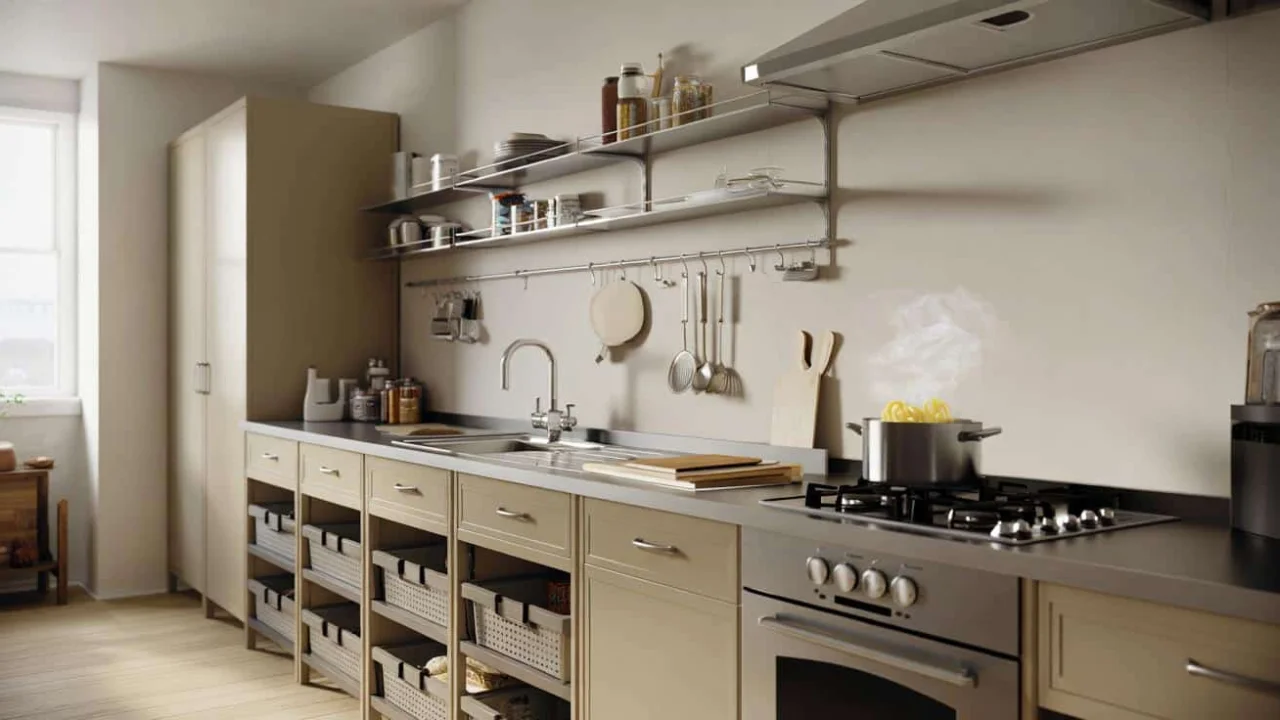
The most striking version of this trend looks almost shockingly simple. Along the wall, a continuous countertop. Underneath, instead of closed boxes, a mixture of deep drawers and open steel shelving. Above, industrial-style rails hold everyday items within arm’s reach. Everything you use regularly stays visible and accessible.
The aesthetic splits people immediately. Some see a restaurant kitchen that wandered into a home. Others see honest materials doing their job without pretence. The practical benefits, however, convert most sceptics within weeks of living with the system.
“My clients initially worry about dust and clutter, but after six months, they can’t imagine going back to closed cabinets. The visibility forces good habits, and maintenance becomes effortless.” – Sarah Chen, interior architect, Manchester
Popular Open Shelving Configurations
- Industrial Rail System: Wall-mounted tracks with adjustable shelves and hooks
- Modular Steel Framework: Floor-to-ceiling metal structures with customisable components
- Hybrid Approach: Base cabinets with drawers, open shelving above
- Minimalist Floating: Simple brackets supporting thick wooden or metal shelves
- Professional Grade: Stainless steel restaurant-style shelving units
- Vintage Industrial: Reclaimed metal fixtures and pipe frameworks
The shift represents more than just an aesthetic choice. In rental properties, open shelving kitchen systems reduce landlord maintenance costs while giving tenants more flexibility. Young professionals appreciate the lower upfront investment and easy relocation. Families discover that visible storage encourages children to maintain tidiness and helps everyone find what they need quickly.
Expert Implementation Tips
Professional kitchen designers emphasise the importance of quality materials when implementing open storage solutions. Powder-coated steel resists corrosion better than painted alternatives. Adjustable shelf systems accommodate changing needs over time. Adequate lighting becomes crucial when everything is exposed.
“The key is balancing openness with organisation. Too much exposure creates visual chaos. Strategic placement of closed storage for less attractive items maintains the clean aesthetic while preserving functionality.” – Roberto Martinez, Barcelona kitchen specialist
The trend also addresses practical concerns about urban living. Smaller apartments benefit from the space-saving design. Busy professionals appreciate the speed of finding and accessing items. The industrial aesthetic appeals to those seeking authenticity over showroom perfection.
Common Concerns and Solutions
Dust accumulation, the primary worry about exposed storage, proves less problematic than expected. Regular use naturally disturbs settled dust. Monthly wiping takes less time than deep-cleaning traditional cabinet interiors. Items used daily rarely collect significant dust.
Visual clutter concerns diminish with proper organisation systems. Matching containers, logical groupings, and designated spaces for each item type maintain order. The enforced visibility actually encourages better habits than hidden storage allows.
The moisture benefits become apparent during cooking. Steam dissipates quickly without enclosed spaces to trap it. Spills dry naturally rather than soaking into hidden crevices. The improved air circulation prevents the stagnant conditions that encourage mould growth in traditional cabinets.
Frequently Asked Questions
Does open shelving get dustier than closed cabinets?
Regular use prevents dust buildup, and monthly wiping is easier than deep-cleaning cabinet interiors.
How do you hide ugly items in an open kitchen?
Use attractive containers, designate specific areas for less photogenic items, maintain strategic closed storage.
Is open shelving more expensive than traditional cabinets?
Initial costs are 40-60% lower, with significantly reduced maintenance and replacement expenses over time.
What about grease and cooking splatter on exposed items?
Strategic placement away from cooking zones and regular cleaning prevent buildup more effectively than enclosed spaces.
Can open shelving work in small kitchens?
Yes, the visual openness makes small spaces feel larger while providing efficient storage solutions.
How do you organise an open shelving kitchen effectively?
Group similar items together, use matching containers, maintain designated zones for different functions and items.
This kitchen revolution isn’t about following trends—it’s about choosing systems that work better for how we actually live. The open shelving kitchen approach offers durability, flexibility, and honest functionality that traditional fitted kitchens struggle to match. Whether driven by practical concerns or aesthetic preferences, the shift toward exposed, industrial-inspired storage solutions represents a fundamental rethinking of kitchen design priorities.