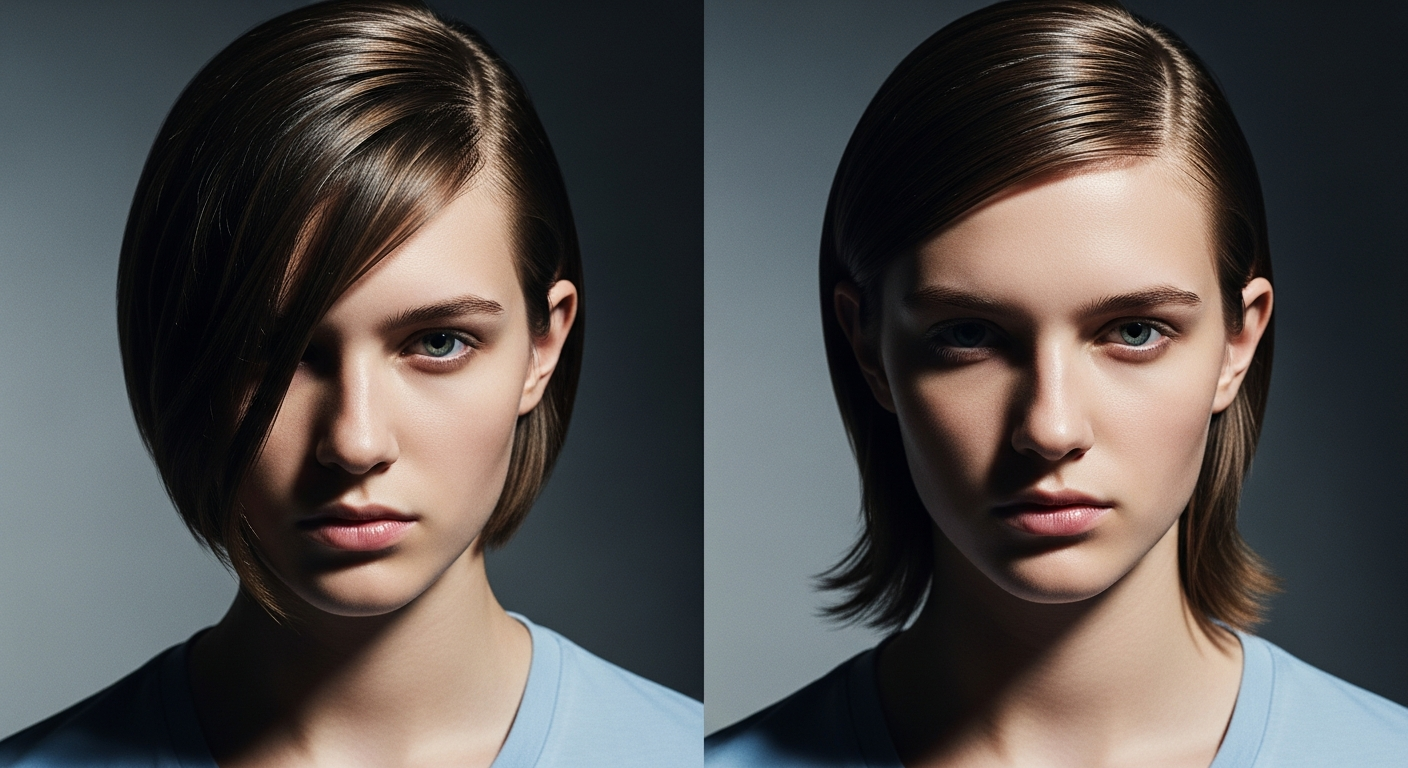
The beauty industry has always been fixated on the smallest of changes—tweaks that can shift perception, define trends, or even reshape a face. One such subtle yet powerful transformation taking TikTok and Instagram alike by storm is the parting of the hair. Not long ago, middle parts reigned supreme, symbolizing a clean, symmetrical aesthetic inspired by runway models and minimalism. But now, a curious shift is happening—literally moving across the scalp. More and more women are rediscovering the *side part*, and its transformational effect isn’t just about style—it’s about *perception*.
The parting of hair, once thought to be merely a styling choice, is proving to have a profound visual impact. Stylists and influencers alike are proclaiming that switching from a center part to a side part can deliver an instant *softening* of the jawline, making one’s face appear more angled and harmonious. It’s a surprising revelation that many are only now beginning to understand—and experiment with. From viral before-and-afters to on-camera stylist reviews, the case for the side part is building real momentum.
But what is it about this shift that creates such a noticeable visual difference? Are the changes just cosmetic illusions, or is there a deeper connection between parting styles and facial structure? In this article, we’ll explore why more women are turning to the side part, what science and expert stylists have to say about it, and how this seemingly minor adjustment in your routine could lead to your most flattering headshot yet.
Why part placement matters more than you think
| Aspect | Side Part | Center Part |
|---|---|---|
| Jawline effect | Softens and angles face | Can exaggerate symmetry and harsh lines |
| Styling versatility | Higher | Moderate |
| Face shape compatibility | Ideal for round, heart, and oblong faces | Best for symmetrical/oval faces |
| Trend direction | Resurgent in popularity | Still fashionable but waning |
Hair partings do more than divide your scalp—they frame your face. The emerging trend favoring the side part is all about balance and perceived symmetry. A center part, while bold and sleek, pulls attention directly to the facial midline. This can emphasize any imbalance or angularity in bone structure.
A side part, however, introduces asymmetry in a flattering way. It breaks up the face by redirecting volume and movement to one side, subtly adjusting the viewer’s focal point and creating a softening effect along the jawline and cheekbones. It’s almost like contouring, but accomplished with strands of hair instead of makeup products.
The science of optical illusions and facial harmony
Facial recognition studies have shown that even slight asymmetries can change how a face is perceived. A central hair part can spotlight these asymmetries, while a side part creates a dynamic dimension, adding shadows and highlights that distract from rigid comparisons.
This hard-to-describe change often results in comments such as “something looks different—but better.” That’s the power of optical illusions at play. In photography and film, this trick is often used to visually balance proportions—now, it’s being democratized through everyday hair styling.
“A side part can instantly give a more youthful, approachable appearance. It acts almost like a visual softener—great for angling the jawline and lifting the eyes.”
— Ava Martinez, Celebrity Hair Stylist
What face shapes benefit most from the side part
Not all face shapes are the same, and not all parts work equally across them. Stylists agree that the side part is particularly beneficial for round, square, and heart-shaped faces. Here’s why:
- Round faces benefit as the side part elongates the appearance of the face.
- Square jaws are softened by the diagonal line of the part and the falling of hair across the cheek.
- Heart-shaped faces get balance as the volume shifts from forehead to jawline.
- Oval faces can usually wear any part but may prefer a center part to highlight symmetry – unless a softened jawline is the goal.
“Switching to a side part can sometimes make clients feel like they’ve had a mini-makeover—without touching a pair of scissors. It’s subtle but impactful.”
— Jenna Wei, Editorial Hair Artist
How TikTok and social platforms revitalized the side part
The pendulum of style always swings, and TikTok has played an influential role in bringing the side part back into mainstream consciousness. Viral videos showing side-by-side comparisons of center and side parts began catching fire in late 2023. The results? Instant changes in perceived age, face shape, and even confidence levels.
Users, often Gen Z and Millennials, started experimenting on camera and filming their reactions after trying the side part. Terms like “jawline contouring with hair” and “face-lifting part switch” began trending, echoing the discovery that this small change holds disproportionately large aesthetic power.
Jawline impact: before and after switching
The proof is in the mirror. Women switching from a center to a side part consistently report that their jawlines appear sharper, their cheekbones higher, and their overall facial expression more relaxed.
| Winner | Why |
|---|---|
| Side Part | Softens jawline, adds volume, increases movement |
| Center Part | Elegant on symmetrical faces, minimalistic style |
For example, when angled hair from a side part sweeps across one side of the face, it naturally shadows the jawline—mimicking what makeup contouring does with bronzer. Those with fuller cheek areas or prominent jaws especially notice a more sculpted appearance without needing invasive procedures or hours of makeup artistry.
How to switch your hair part effortlessly
Transitioning from center to side part may feel awkward initially, especially if your hair has had a natural parting for years. But with a few styling tips, the shift can be seamless:
- Start wet: Freshly washed or slightly damp hair is easier to re-train.
- Use a fine-toothed comb: Draw a diagonal line from the arch of your eyebrow backward toward your crown.
- Blow dry into place: Use fingers and diffuser to coax volume at the roots on the heavier side.
- Apply light hold products: Mousse or volumizer can help maintain shape through the day.
You’ll likely need to keep styling it for a week or two before your hair “remembers” the new direction. Patience pays off—and most women say once they switch, they don’t go back.
Do side parts really make you look younger?
Interestingly, many fans of the side part claim that it gives them a younger, fresher look. Hair falling across one side mimics the soft fluidity often associated with youthful features. Combined with natural volume and movement, the side part offers a refreshing counter to the stark, severe styling of middle parts.
“The side part gives that ‘effortless elegance’ vibe. It’s like soft glam without even trying.”
— Raquel Vaughn, Fashion and Media Stylist
Future of hair part trends
Will the side part completely replace the middle part? Probably not. As always, trends are cyclical, and both parts offer distinctive advantages depending on individual preferences, face shapes, and goals. But what’s certain is this: the side part is no longer reserved for old-school glamour. It’s back—and reshaping confidence one swipe of a comb at a time.
Frequently Asked Questions
Does switching my part direction really affect my facial appearance?
Yes, the way hair frames your face can significantly affect how your jawline, cheekbones, and eyes are perceived. A side part introduces curvature and movement that can soften features.
Is the side part suitable for fine hair?
Absolutely. In fact, a side part can add an illusion of volume for those with finer textures by lifting roots more naturally on one side.
How do I know which side to part my hair on?
Typically, the side with more natural bounce or wave works best. Some stylists recommend following the arch of your eyebrow as a visual cue.
Will my hair resist changing parts after years of being center-parted?
Initially, yes. Hair develops memory over time, but with consistent styling while damp and use of volumizers, it will adapt within a couple of weeks.
Can a side part work with short hairstyles?
Absolutely. From pixie cuts to lobs, side parts can add definition and volume no matter the cut length.
Is there a preferred side that’s more flattering by default?
There’s no universal “best side,” but typically parting toward your non-dominant side creates better volume and visual balance.
Do men benefit from a side part in similar ways?
Yes, side parts can also contour male facial structure and are widely used in professional and editorial male grooming.
Can a side part make my face look slimmer?
Yes, by directing hair diagonally across the face, it helps distract attention from wider areas and elongates facial appearance visually.