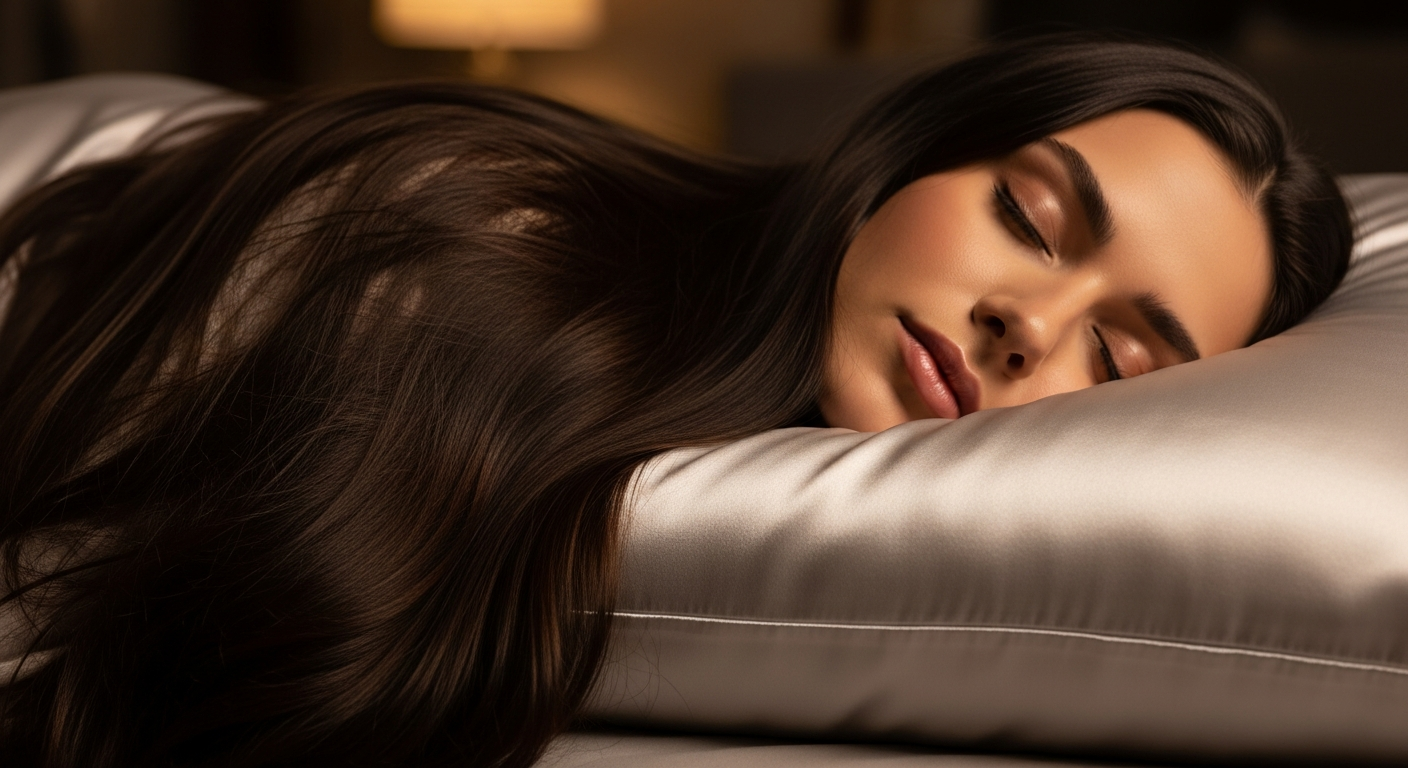
Every night, millions of people unknowingly set their hair up for damage before they even drift off to sleep. We go to bed with clean, styled locks and wake up to a tangled mess — frizzy, broken strands matted against our pillow. For years, people have blamed everything from shampoo to stress, but what if the answer lies not in products or genetics, but in the fabric your head rests on?
That’s exactly what happened to 34-year-old Jariya, a Bangkok-based nurse who had spent years battling unruly bedhead and fragile split ends. Exasperated after trying every serum and silk wrap imaginable, she had nearly given up on ever achieving smooth, healthy hair. One day, after a conversation with a salon owner, she decided to swap her cotton pillowcase for a silk one. The result? In just two weeks, she noticed significantly less breakage, smoother strands in the morning, and a drastic reduction in that stubborn “bed head” frizz. Could one small bedtime change really make such a big difference?
It’s a question beauty experts are now answering with an enthusiastic “yes.” The secret might be in the literal fabric of your rest — and science is catching up to confirm what anecdotal stories like Jariya’s have long suggested. Here’s what you need to know about the simple sleep upgrade that’s redefining morning hair care routines across the globe.
Why silk pillowcases are taking over the beauty conversation
| Topic | Details |
|---|---|
| Product Highlight | Silk Pillowcases for hair and skin health |
| Main Benefits | Reduces hair breakage, prevents frizz, minimizes split ends |
| Best For | All hair types, especially curly or damaged hair |
| Scientific Basis | Less friction, moisture retention, lower absorption |
| Time to See Results | 7–14 nights |
| Additional Perks | Better skin hydration, less facial wrinkles |
What causes overnight hair damage in the first place
The average person spends seven to nine hours asleep every night. That’s a lot of time for your hair to endure constant contact, movement, and friction with your pillowcase. Traditional fabric materials like cotton may feel soft to the touch, but their high absorbency and rougher texture can be harsh on the delicate hair cuticle.
As you toss and turn, these fabrics tug at the hair shafts, strip away moisture, and create microscopic damage that leads to larger problems over time — like split ends, increased shedding, and general unruliness. Cotton pillowcases, in particular, are known for absorbing the natural oils your scalp produces, leaving your strands dry and fragile before you even wake up.
How silk changes the overnight experience for your hair
Silk pillowcases work like a gentle, friction-free surface that allows your hair to glide instead of tug. Unlike cotton, silk doesn’t absorb moisture from your scalp or hair, helping your natural oils stay where they belong — on your strands, providing hydration and strength.
The smoothness of silk also prevents knots, tangles, and static. This can be especially beneficial for individuals with curly, coily, or color-treated hair, all of which are more vulnerable to environmental stressors and breakage.
“Silk pillowcases create an environment in which the hair is not exposed to constant mechanical stress. Over time, this reduces breakage and promotes healthier regrowth.”
— Dr. Aranya S., Dermatologist
Benefits that go beyond your hair
While silk pillowcases are often advertised as a haircare essential, their impact on skin health is equally impressive. Since they’re hypoallergenic and non-irritating, they reduce inflammation and friction on the skin, which can lessen the appearance of wrinkles and prevent skin irritation.
For people suffering from acne, eczema, or other sensitive skin conditions, silk can offer a more sanitary, soothing alternative to fabrics that trap oils, bacteria, and allergens. And because silk doesn’t pull or twist your facial skin while you sleep, it can minimize the long-term formation of sleep lines across your cheeks and forehead.
Who benefits most from switching to silk
Almost everyone can benefit from making the switch, but some hair types in particular see more dramatic improvements. If your hair is long, curly, treated with bleach or permanent dye, or regularly exposed to heat styling, the odds are you’re experiencing cumulative damage. A silk pillowcase can serve as a preventative tool that slows down wear-and-tear while helping your current hair stay strong.
It’s also highly recommended for those with new hair growth or recovering from hair loss due to postpartum changes, illness, or stress. Nighttime protection is critical during regrowth phases, and silk offers exactly that — without demanding major lifestyle changes or routines.
“One of the easiest, budget-friendly changes you can make to boost hair resilience is using a silk pillowcase. It sounds simple, but the science supports it.”
— Mali W., Haircare Educator
Choosing the right silk pillowcase
Not all silk is created equal. Look for high-quality, 100% mulberry silk with a momme weight of at least 19. “Momme” refers to the density of the silk, and a higher number indicates better durability and softness. Envelope-style cases or those with hidden zippers are often preferable, as they stay secure while maintaining a polished look.
Be cautious of synthetic blends or “silk-like” products — these usually don’t provide the same benefits and may even irritate sensitive skin types. Also, consider selecting silk that’s OEKO-TEX certified, ensuring it’s free from harmful chemicals and dyes.
How to properly care for your silk pillowcase
Unlike traditional fabrics, silk requires more delicate care. Always check for manufacturer instructions, but most silk pillowcases thrive when hand washed or machine washed using a gentle cycle with cool water. Use a pH-neutral detergent and avoid high heat during drying. Air-drying is best to preserve the fabric’s integrity over the long run.
If you’re worried about maintenance, know that silk is naturally resistant to dust mites and mold, so it doesn’t require constant washing like cotton does. With proper care, a good silk pillowcase can last for years and continue delivering visible benefits well into the future.
Comparing winners and losers of this haircare shift
| Winners | Losers |
|---|---|
| People with curly, textured, or color-treated hair | Conventional pillowcase manufacturers |
| Skincare enthusiasts and sensitive-skin individuals | Heavy overnight hair product users |
| Those recovering from hair loss or thinning | Users of harsh nighttime hair wraps or bonnets |
Final thoughts on switching to a silk pillowcase
While it might seem like a small shift, investing in a silk pillowcase is one of those rare beauty steps that provides true overnight results. From frizz-free mornings to stronger strands and even a skincare boost, the benefits speak for themselves.
Whether you’re managing breakage, trying to improve the appearance of your curls, or looking for a non-invasive way to care for your skin while you sleep, silk pillowcases offer a versatile, luxurious solution grounded in science and loved by experts.
After all, the best transformations don’t always require a complete routine overhaul — sometimes, it’s as simple as changing the surface you lay your head on.
Short FAQs about silk pillowcases
Do silk pillowcases really prevent hair breakage?
Yes, the smooth texture minimizes friction, reducing your hair’s exposure to stress that leads to breakage and split ends.
Can silk pillowcases help with frizzy hair?
Absolutely. Silk helps hair retain natural moisture and prevents friction-based tangling and static, leading to smoother hair in the morning.
Are silk pillowcases good for all hair types?
Yes, though they’re especially helpful for curly, chemically treated, or fragile hair due to their friction-reducing properties.
How often should I wash my silk pillowcase?
Silk should be washed every 7–10 days with a gentle detergent, unless soiled. Always opt for air-drying to maintain its softness.
Can silk pillowcases help with acne?
Silk is hypoallergenic and less absorbent, which reduces exposure to oils and bacteria that can contribute to acne.
Is there a difference between silk and satin pillowcases?
Yes. While satin mimics silk’s feel, it’s usually made from synthetic fibers and doesn’t offer the same moisture-retaining or hypoallergenic benefits as real silk.
Are silk pillowcases worth the investment?
For many, yes. The long-term hair and skin benefits, combined with durability, often justify the higher cost.
What should I look for when buying a silk pillowcase?
Look for 100% mulberry silk with a momme weight of at least 19. Ensure it’s OEKO-TEX certified for purity and safety.