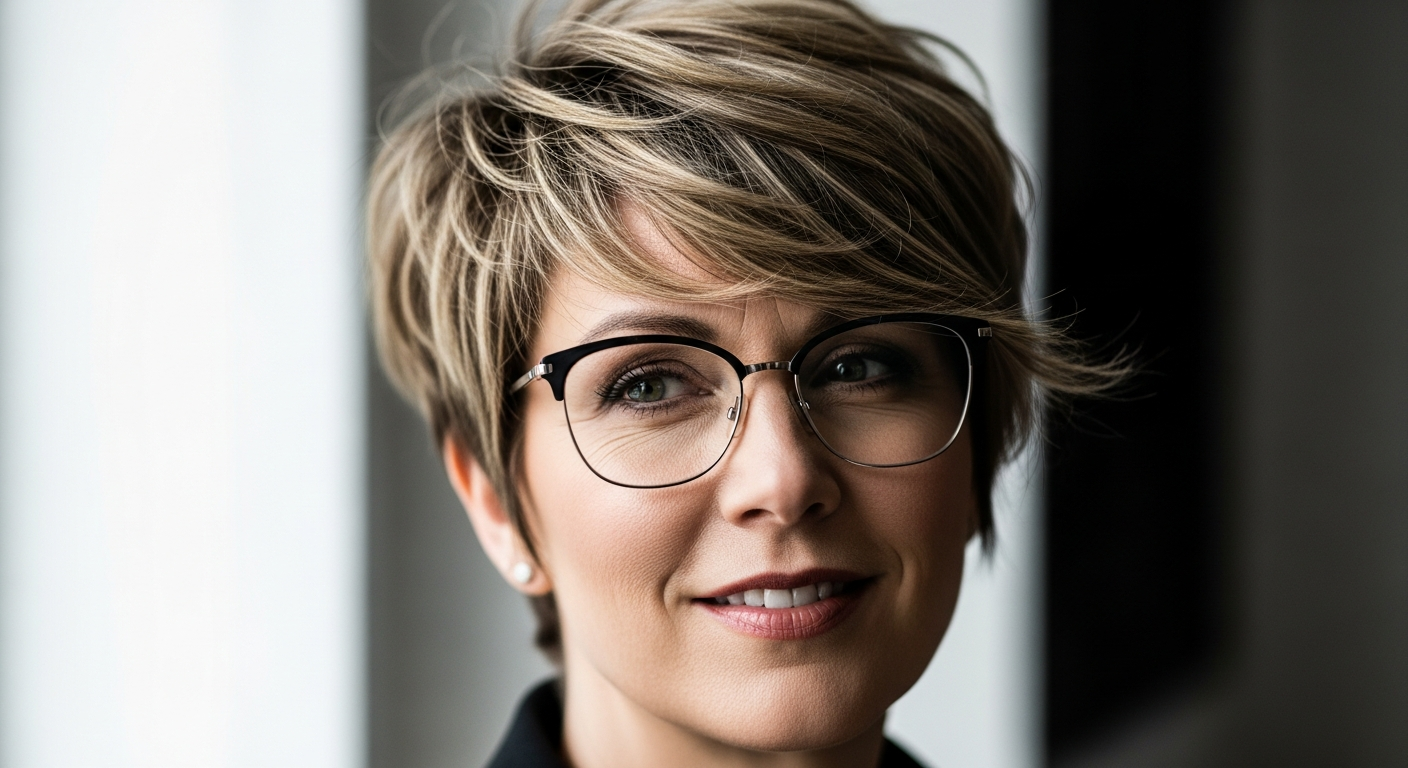
As style continues to evolve and embrace both individuality and practicality, hairstyle trends have never been more inclusive or personalized. Among these transformations, a subtle revolution is taking place in the realm of short haircuts—specifically tailored to accommodate and enhance eyewear fashion. With the increasing number of women opting for bold frames and distinctive glasses, hairstyles that balance both aesthetics and function have come into the spotlight.
One haircut in particular is gaining fast traction: a **specific type of textured pixie cut** that does more than just flatter. Designed with the modern woman in mind—one who wears glasses and values a dynamic, easy-to-maintain style—this haircut is a game changer. It’s not just about chopping off locks; it’s about reshaping how women present themselves while working with, not against, the practical accessories they wear daily.
Let’s delve into why this textured pixie stands out from the crowd, how it complements facial features and eyewear, and what women need to know before taking the plunge. This guide explores everything from face shapes to maintenance tips, with insights that’ll turn consideration into confidence.
Why this hairstyle is ideal for women with glasses
| Feature | Details |
|---|---|
| Haircut Type | Specific textured pixie cut |
| Best For | Women with glasses |
| Face Shapes | Oval, heart, square |
| Styling Requirements | Minimal to moderate upkeep |
| Length | Short, with layered texture |
| Main Benefits | Reduces visual competition with frames, enhances facial features |
| Styling Products | Light pomade, texture spray |
How this pixie cut works in harmony with eyewear
The main appeal of this **textured pixie cut** lies in its versatility and precision. Unlike some short styles that can appear harsh or overwhelming when paired with statement eyewear, this cut is carefully designed with soft, sculpted layers. These layers subtly frame the face without detracting from—or being overpowered by—glasses.
For women with strong prescription lenses or bold-colored frames, the cut reduces the visual “busy-ness” around the eyes. By keeping the hair above the ears and creating airy volume at the crown or toward the front fringe, the hairstyle allows the frames to sit comfortably while still letting facial features shine.
“The key to wearing glasses with confidence is balance. A well-shaped pixie cut de-emphasizes the heaviness of frames and draws attention upwards, lifting the entire look.”
— Jenna Torres, Professional Hairstylist
The best face shapes for this cut and why it matters
This pixie variation isn’t one-size-fits-all—but it’s impressively close. Most flattering for **oval, heart-shaped, and square faces**, the adaptable texture gives stylists room to build volume and contour where needed. For a heart-shaped face, the cut softens the forehead while balancing a narrower chin. For square jaws, texturing around the top keeps the lines fluid and feminine, framing the glasses rather than competing with them.
Women with round faces can still benefit from this style too, particularly when it’s layered with asymmetry or slightly longer strands at the front to elongate the face. The trick is customization. Stylists fine-tune sideburn lengths or fringe direction to accommodate each individual’s facial geometry and style preferences.
Styling this look at home: tips and tools to simplify your routine
Maintaining this pixie doesn’t require salon-level skill, but a few golden rules help it stay polished:
- Use a **lightweight styling pomade** to mold and shape individual sections, especially around the fringe and crown.
- Blow dry with a **round brush at the roots** to add subtle lift if desired.
- A few spritzes of **texturizing spray** revive the look between washes and add dimension.
- Don’t over-style—let the layers do the work.
Protect your look with regular trims every 4–6 weeks to maintain shape, especially if your goal is to accentuate eyewear without overwhelming your features.
“Keeping the cut crisp ensures it complements your glasses and doesn’t blur your features. A solid shape is everything with short hair.”
— Marcus L., Senior Stylist
Customization options for personality and flair
What makes this pixie especially modern is its adaptability. Want more edge? Ask your stylist for an undercut or razored side. Prefer a softer aesthetic? Incorporate choppy baby bangs or a side-swept fringe. Each variation highlights a different angle of the face, with enough nuance to work with different textures—whether your hair is pin-straight or full of curls.
Color also plays a key role. Subtle highlights or even bold colors strategically placed near the crown or fringe can add visual interest, especially if your eyewear is neutral in tone.
Common challenges and how to overcome them
Any major hairstyle change comes with a learning curve. Here’s how to address the three most common concerns when transitioning to this pixie style:
- “What if I have fine or thinning hair?” Good news—this cut works well with finer textures because the layers build volume without bulk. A root-lifting spray can amplify fullness.
- “Will my glasses slide more with short hair?” Not if your stylist shapes the cut around your ear line properly. Ask them to tailor the hair so it complements your frame’s arms.
- “What if I get bored?” Use accessories like headbands or even temporary hair dye to play up the cut’s versatility without needing to wait for it to grow out.
Influence from celebrities and public figures bringing this look mainstream
From red carpet stars to social media influencers, many personalities are championing this haircut. With names like Zoë Kravitz, Ginnifer Goodwin, and Charlize Theron embracing short pixie variations while sporting chic reading or fashion glasses, the line between practical and trendy has been firmly blurred. Their stylists often treat eyeglasses as part of the whole ensemble, making the pixie not just a haircut, but a holistic style statement.
“Eyeglasses are personal style pieces now, not just prescriptions. Haircuts like this are a way of framing that fashion choice, not hiding it.”
— Dylan Kai, Fashion Consultant
Who this haircut is not ideal for
| Group | Why It May Not Work |
|---|---|
| Those with very tight coils or kinky hair | May require extensive texturizing or heat styling to shape |
| Women looking for low-maintenance between trims | Requires shape upkeep more frequently than longer styles |
| Wearers of oversized, wrap-around glasses | Could overwhelm the minimalist look of the cut |
The long-term perks beyond the aesthetic
This hairstyle isn’t just fad-driven. It encourages women to reconsider how much time, product, and effort they put into maintenance daily. It also allows more room for accessories—be it statement earrings, scarves, or changing frames with different outfits. It’s a liberating change both visually and emotionally, giving wearers a crisp, expressive style that supports, rather than clashes with, their eyewear needs.
“Women are realizing they don’t have to compromise between function and fashion. This pixie style is proof.”
— Lucia Grant, Image Consultant
Frequently asked questions about this pixie hairstyle
Is this haircut suitable for all ages?
Yes, the textured pixie is age-inclusive. It adds sophistication for older women while emphasizing youth and vibrancy for younger wearers.
Can I wear bangs with this pixie?
Absolutely. Side-swept or wispy bangs often enhance the look, especially if your glasses have a thick top frame like wayfarers or bookish shapes.
What hair texture works best with this cut?
Fine to medium textures work best, though coarse hair can be adapted with the right layering or thinning techniques.
How often do I need to trim this haircut?
Every 4–6 weeks is recommended to maintain the shape and balance with your eyewear shape.
Can I wear hats or headbands with this pixie style?
Yes! Minimalist accessories like berets or cloth headbands pair exceptionally well with this clean-cut look.
Will this cut help if my glasses constantly slide down?
Yes, your stylist can cut around the ear and frame area in ways that reduce slippage and add comfort.
Do I need to change my hair part when I get this cut?
Not necessarily. But stylists often explore new parting angles to best complement facial symmetry and glasses shape.
Can this cut be worn to formal occasions?
Absolutely. Just add a slight wave or texture, dress up with bold makeup or accessories, and the look is elevated and ready for events.