Have you ever wondered why some rooms seem to trap sound, creating an echo that’s hard to ignore, while others remain remarkably quiet? That bouncing sound you hear in empty hallways or sparsely furnished apartments isn’t random—there’s a science behind it. The phenomenon of echo in rooms is more than just acoustics; it’s deeply tied to a room’s shape, materials, design, and its furnishings—or lack thereof. It’s an invisible characteristic that influences how we feel, communicate, and even concentrate within spaces.
Sound behaves like a fluid, bouncing off hard surfaces and being absorbed by soft ones. This intricate dance determines whether a room feels echoey, cozy, or acoustically balanced. But here’s the hidden catch: not all echoes stem simply from what’s visible. There’s a surprising architectural and material science reason why some seemingly similar rooms echo more than others. This overlooked detail can mean the difference between a noisy, reverberating space and a serene, hushed environment.
Room Echo Characteristics: Key Facts Breakdown
| Feature | Impact on Echo |
|---|---|
| Ceiling Height | Taller ceilings increase sound reflection and echo probability |
| Wall Materials | Concrete and glass reflect sound; insulation and drywall absorb it |
| Flooring Type | Hardwood, tile reflect sound; carpet absorbs it |
| Furniture Density | Empty rooms echo more; soft furniture reduces reflections |
| Geometry of Room | Squared or cylindrical shapes cause lingering sound waves |
| Hidden Cavities | Recessed spaces rebound sound and act as echo chambers |
The physics of sound that shapes a room’s acoustics
Sound travels in waves and interacts with its environment through reflection, absorption, diffraction, and diffusion. In an enclosed space like a room, the primary concern is reflection—the bouncing of sound waves off surfaces. When sound strikes a smooth, flat, and hard surface, it reflects clearly, leading to **echo** or **reverberation** depending on the speed and density of reflections. Walls, ceilings, and floors are usually the main culprits.
Reverberation happens when sound persists even after its source has stopped, caused by the multiple reflections in enclosed spaces. If these reflections take longer than 0.1 seconds to return to the listener, they’re perceived as distinct echoes. This distinguishes an echo from reverberation: the time delay. In symmetrical rooms, where parallel walls reflect sound back and forth, the echo effect worsens, especially if there are minimal objects to disrupt the wave paths.
Why modern architecture amplifies echo
Modern design trends favor open spaces, tall ceilings, and minimalist furniture—unintentionally creating echo-prone environments. These large, clean areas allow sound waves to travel longer distances without obstruction or absorption. Glass walls, concrete tiles, and polished wooden floors reflect shockwaves back into the space, making conversations seem louder and more distorted. In such rooms, the lack of diffusing objects allows sound to travel wildly and inconsistently.
“Minimalist aesthetics with hard surfaces have aesthetic appeal but detrimental acoustic consequences.”
— Dr. Karen Linder, Acoustical Architect
Furthermore, these rooms often omit traditional sound-absorbing materials like heavy curtains, wall tapestries, and upholstered furniture. While sleek interiors might be visually calming, they’re sometimes acoustical nightmares.
Hidden cavities and architectural traps
One of the **hidden reasons** for echo in certain rooms lies in unseen architectural features: hidden cavities, recessed walls, or irregular spatial geometry that acts like **natural echo chambers**. These features can trap sound, bouncing it internally before releasing it back into the main space with delay, mimicking an echo.
Structural recesses such as book nooks, alcoves, or air vents can unknowingly reflect sound in unpredictable patterns. This complexity often goes unnoticed unless an acoustic engineer inspects the site. In many cases, even if a room is adequately furnished and appears acoustically neutral, these hidden voids alter the reflection pathways drastically.
Materials that influence sound behavior
Every material interacts with sound differently. Dense, hard materials like concrete and stone reflect most sound, whereas porous and soft materials like foam or textile absorb it. In homes and offices, the combined materials used in construction decide whether the space will sound rich, flat, or echoey. Here’s how some materials rank in terms of absorption:
| Material | Sound Absorption |
|---|---|
| Concrete | Low |
| Glass | Low |
| Drywall | Moderate |
| Carpet | High |
| Fabric Upholstery | High |
| Foam Panels | Excellent |
“Every room must strike a balance between reflection and absorption to optimize acoustics.”
— Jorge Mateo, Sound Engineer & Consultant
Simple fixes that reduce room echo
Reducing echo doesn’t always require an expensive renovation. Simple changes can drastically alter a room’s acoustic profile. Strategically placing soft, absorptive items like thick rugs, heavy curtains, and plush furniture will dissipate excess sound energy. Even hanging canvas art pieces or bookshelf installations can interrupt soundwave paths, reducing resonance throughout the room.
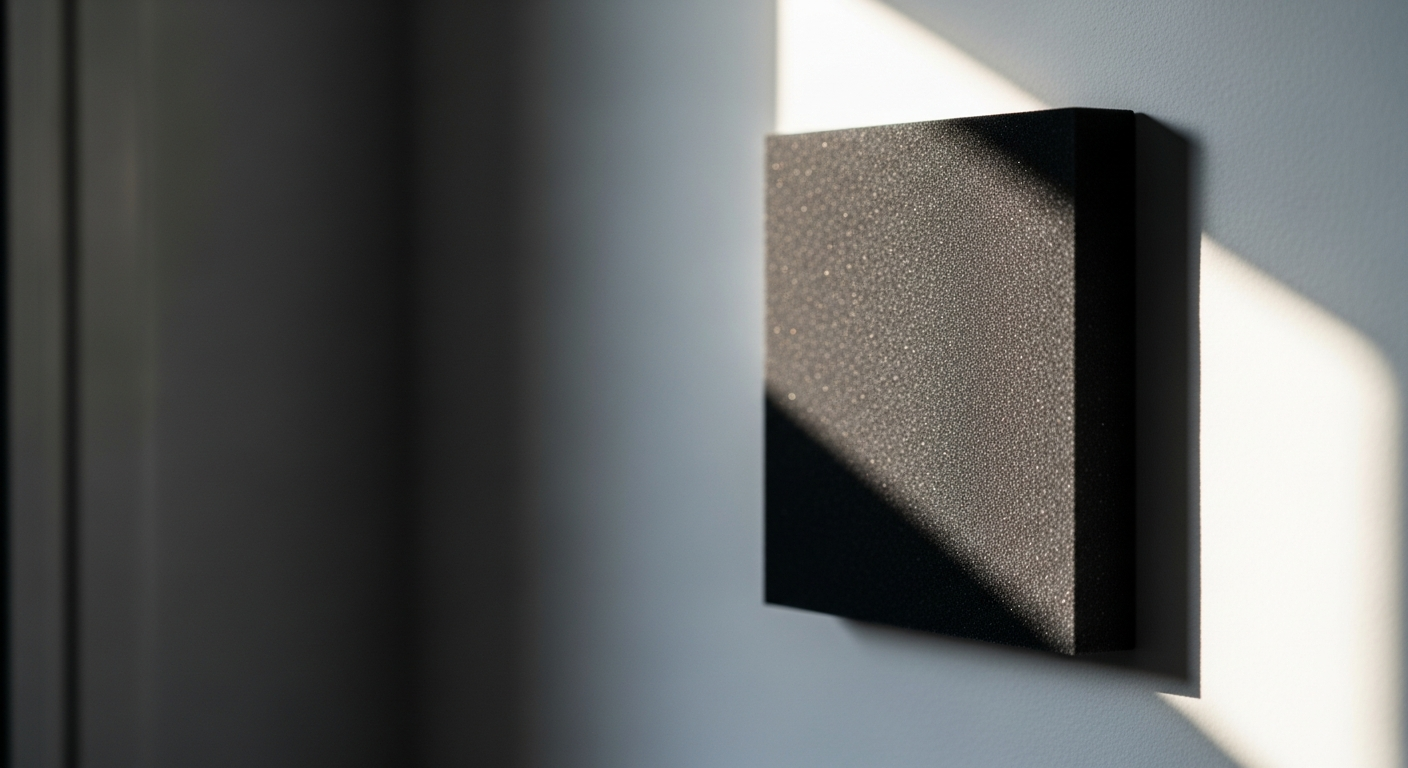
For more persistent echo issues, acoustic panels made from foam or fabric can be mounted on walls and ceilings. These panels can be both functional and stylish, designed to blend with modern aesthetics while managing sound energy efficiently.
Special cases: Echo in cylindrical or dome-shaped rooms
Certain room shapes are more susceptible to highly pronounced echoes. Dome-shaped or cylindrical spaces produce what physicists call a “focusing effect.” Sound is concentrated at certain focal points, leading to unexpectedly loud echoes and feedback loops. Concert halls and churches designed without acoustic analysis often suffer from this, making public speaking or music muddled in quality.
The phenomenon can even lead to whispered conversations being audible across the room while the speaker’s voice seems projected unnaturally. These acoustic phenomena highlight how deeply geometry affects sound, often far more dramatically than materials or furniture placement can correct.
Winners and losers in room design acoustics
| Winners | Losers |
|---|---|
| Rooms with thick curtains and soft wall furnishings | Minimalist spaces with polished surfaces |
| Spaces with irregular layouts that scatter sound | Box-shaped or dome rooms with parallel surfaces |
| Floors covered with rugs or carpets | Tile or hardwood floors without underlays |
Short FAQs about echo in rooms
What causes an echo in an empty room?
Hard, reflective surfaces and lack of soft furnishings cause sound waves to bounce around without absorption, resulting in an echo.
Can furniture reduce an echo?
Yes, soft furniture absorbs sound waves, reducing their ability to bounce back and create echoes.
Why do bathrooms have so much echo?
They tend to have hard surfaces like tile and mirrors that fully reflect sound, resulting in sharp echoes.
Are high ceilings responsible for room echo?
Yes, high ceilings increase the distance sound travels, allowing prolonged reflections that cause reverberation.
Do carpets help with acoustics?
Absolutely. Carpets and rugs absorb sound, significantly improving room acoustics.
What is the difference between echo and reverberation?
An echo is a distinct repetition of sound, while reverberation is a continuous decay of sound from multiple reflections.
Can I eliminate echo without remodeling?
Yes, using rugs, curtains, wall hangings, and acoustic panels can greatly reduce echo in a room without reconstruction.
Are there apps for testing room acoustics?
Yes, several smartphone apps can measure reverberation time and sound reflection for home acoustics analysis.