For many of us, cleaning the house is a necessary chore. We devote hours to scrubbing floors, wiping down surfaces, and trying to eliminate stubborn odors that cling to the air. Despite our best efforts with chemical-based cleaners and trendy natural substitutes like lemon or vinegar, sometimes our homes just don’t smell fresh for more than a few hours. And when guests are expected, or we simply want our living space to feel like a peaceful and fragrant retreat, the challenge becomes all the more frustrating.
That was exactly the case for one homeowner who, tired of short-lived solutions and overpowering artificial scents, began looking for an alternative. What they found wasn’t something new or expensive—it was a simple, two-ingredient formula that made the whole house smell amazing for days. Even better: it didn’t involve vinegar or lemon, two staples often cited in DIY cleaning recipes. Instead, their mop bucket became the vehicle for a surprising but powerful formula for long-lasting freshness.
In this guide, we’ll explore the easy trick that’s transforming homes, how you can replicate it, and why it works better than traditional methods. Whether you’re getting your house ready for guests or simply crave a fresh and inviting space every day, this household hack might become your new favorite.
Why this two-drop cleaning method is going viral
| Feature | Details |
|---|---|
| Ingredients Used | Liquid fabric softener and dishwashing liquid |
| Primary Benefit | Leaves home smelling fresh for days |
| Preparation Time | Less than 2 minutes |
| Cost | Low (common household items) |
| Used On | Floors (via mop water), tiles, and washable surfaces |
| Avoids | Vinegar, lemon, and overpowering commercial air fresheners |
What makes this combination so effective
The secret to this method lies in combining just two simple household items: liquid fabric softener and dishwashing liquid. While these products are commonly used for laundry and kitchen cleaning, their blend creates a gentle yet effective deodorizing solution when diluted in water.
Liquid fabric softener contains mild fragrance molecules designed to cling to fibers. When you mop your floors with just a couple of drops mixed into a bucket of warm water, that same technology lightly adheres to floor surfaces, leaving behind a pleasant scent. Dishwashing liquid adds a touch of degreasing power and helps cut through floor grime, allowing for a deeper and more hygienic clean.
Step-by-step: How to use it in your mop bucket
- Fill a standard mop bucket with around 1–2 gallons of warm water.
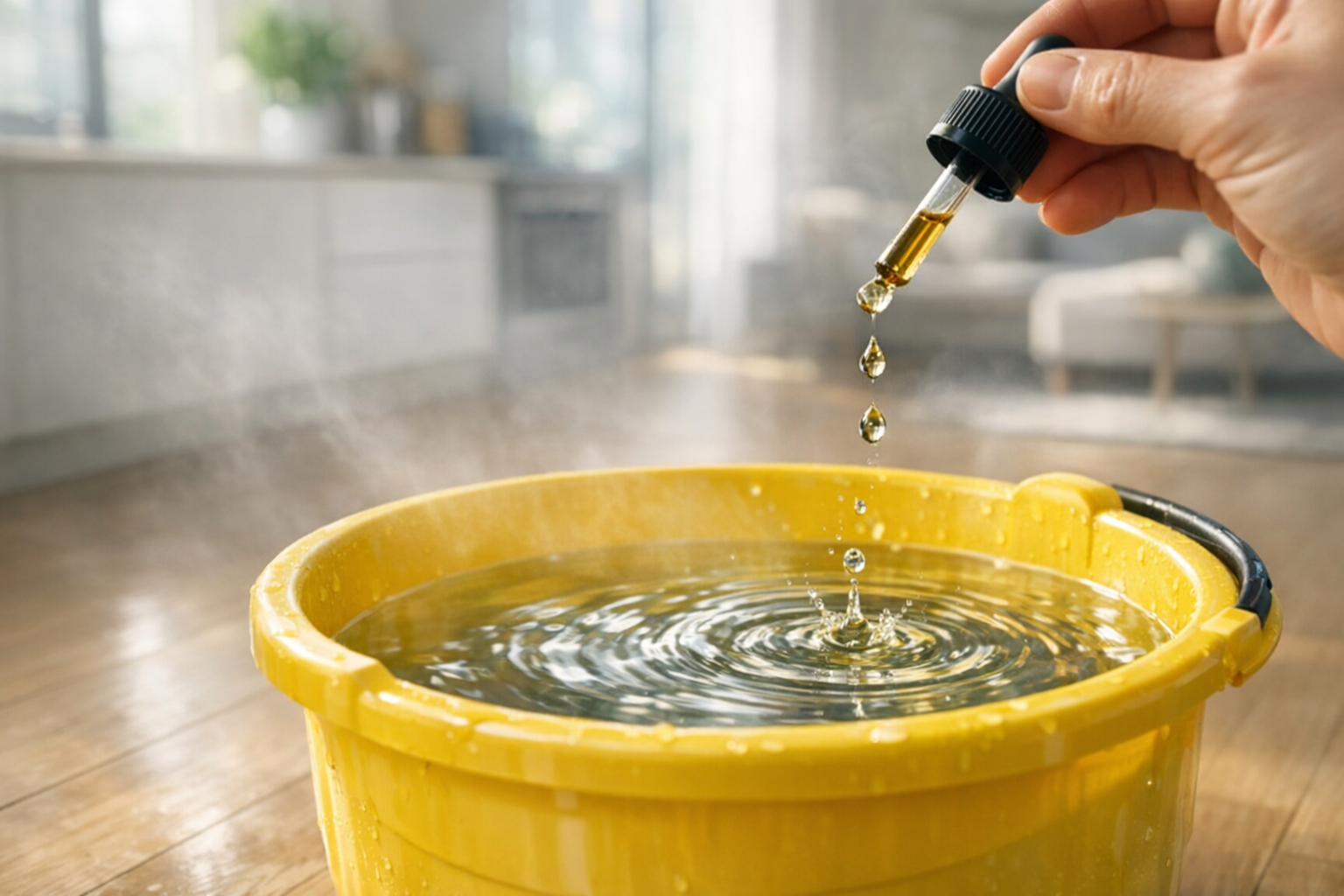
- Add 2 drops of liquid fabric softener.
- Add 1 teaspoon of dishwashing liquid.
- Stir gently to mix. Be careful not to create too many suds.
- Dip your mop into the bucket, wring out excess water, and begin your usual mopping routine.
- Let the floor air dry. Avoid rinsing—this allows the fragrance to stay longer.
Where it works best—and where to avoid it
This mixture works exceptionally well on ceramic tiles, vinyl flooring, and laminate. These surfaces tend to hold the scent for longer, providing days of continuous freshness. It’s also ideal for use on bathroom tiles, leaving them not only clean but with a lingering pleasant aroma.
However, avoid using this solution on natural hardwood floors—especially untreated types—as repeated exposure to even diluted soap-based solutions can strip the wood of its finish or leave residue. If in doubt, do a small patch test in a corner.
Why it beats vinegar and lemon alternatives
Natural cleaning agents like vinegar and lemon are popular choices, but they have their downsides. Vinegar, despite its cleaning power, carries a tangy smell that many find unpleasant. Lemon can be overly acidic or even cause discoloration on certain surfaces when misused.
In contrast, this liquid fabric softener and dish soap combo offers a pleasant scent, improved cleaning power, and surface safety—all without the pungency or potential corrosion of vinegar-based cleaners. Plus, it adds a layer of softness underfoot that dry-cleaning methods don’t offer.
User testimonials and expert insights
I’ve been using this in my weekend cleaning routine for three months now. Not only does the house stay fresh all week, but guests always comment on the subtle scent. I’ve ditched the plug-in air fresheners entirely.
— Natalie B., Homeowner
Using fabric softeners in low doses for floor cleaning is safe for most synthetic and tile floors. The fragrance adhesion is particularly good, though I always advise people to avoid using on raw wood.
— Dr. Colin Reyes, Environmental Chemist
Tips for long-lasting results
- Use a high-quality mop that provides good friction—this helps distribute the liquid evenly.
- Choose fabric softeners with subtle fragrances for a more natural scent profile.
- Repeat the process once a week for consistent results.
- Avoid rinsing floors after application to preserve the scent.
- Open windows during and after mopping to let the scent circulate effectively.
Additional ways to freshen your living space
If you love the idea of naturally fragrant spaces, extend this technique to other parts of the house. Add a couple drops of fabric softener mixed with water into a spray bottle and use it to lightly spritz washable bathroom curtains, rugs, or even cushion covers (do a spot test first). You can also soak a cotton ball in the mixture and place it discreetly in closets, under the sink, or behind radiators for a gentle whiff of freshness throughout the day.
Summary of benefits and things to watch out for
| Winners | Losers |
|---|---|
| Homeowners looking for longer-lasting freshness | Those with untreated hardwood floors |
| Busy families who want fast, effective cleaning | Fans of natural-only cleaning agents |
| People who dislike vinegar or lemon scents | Anyone sensitive to artificial fragrances |
Frequently asked questions
Can I use this solution every day?
Yes, but once a week is usually enough to maintain a consistently pleasant scent around the house.
Will the fabric softener make my floors slippery?
When used in small amounts as directed, it shouldn’t cause any slipperiness. Avoid overpouring the softener.
Is this safe for homes with pets?
Yes, but ensure that pets don’t lick freshly cleaned floors until they’re fully dried, as fabric softeners can sometimes cause stomach upsets if ingested.
Can I use this method with a steam mop?
No. Fabric softener and dish soap are not recommended for use inside steam mops, as they can damage the internal system.
Does the scent last even if I have a high-traffic household?
It depends on the type of flooring and ventilation, but users report scent retention for up to 3–4 days in busy households.
Can I add essential oils to the mix for extra fragrance?
While possible, be cautious. Essential oils can create slippery residues or damage some floor types. Stick to the two-drop method for safest results.
Can this replace air fresheners entirely?
For many users, yes. While it won’t deliver a surge of fragrance like a spray, it provides a *gentle, ambient freshness* that lasts.
What kind of fabric softener works best?
Choose one with a mild, clean scent. Overpowering or heavily perfumed softeners may be too intense indoors.