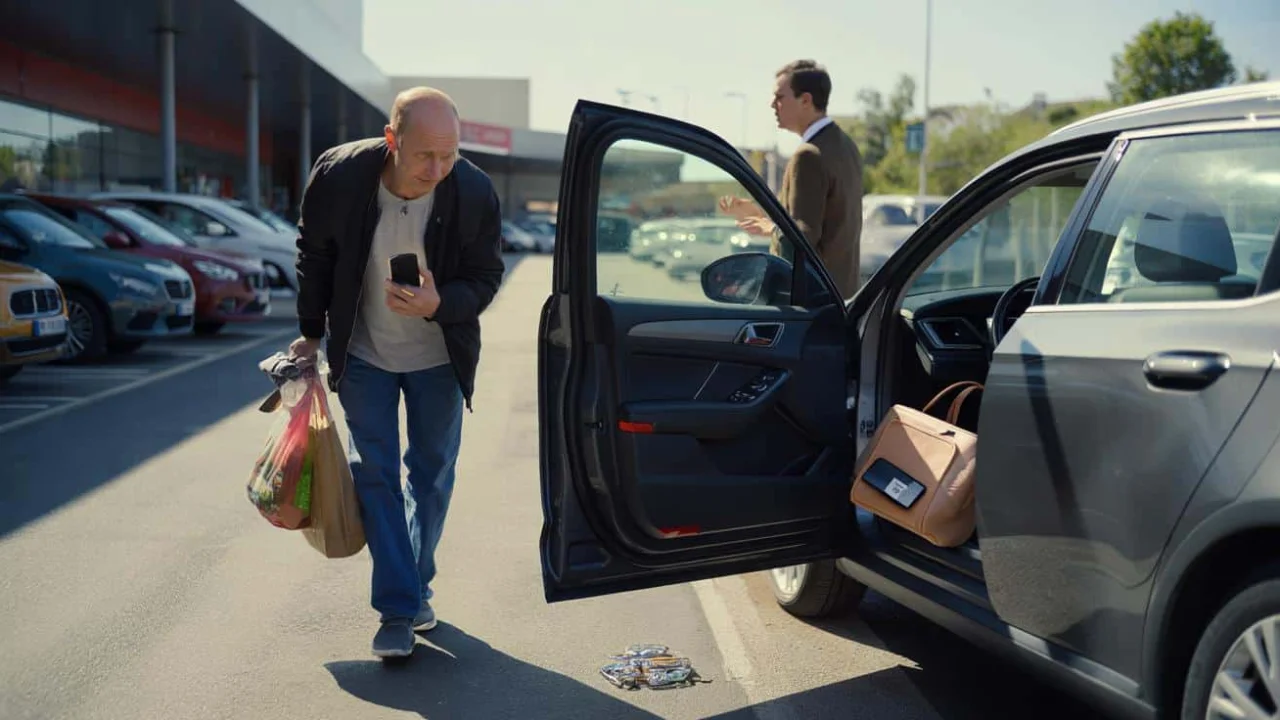
The Gendarmerie’s Urgent Warning: A New Car Theft Scam Targeting Unsuspecting Drivers
In the seemingly safe environment of a supermarket car park, danger lurks in the most unexpected places. French gendarmerie units have issued an urgent warning about a sophisticated car theft scam that exploits a simple human instinct to help others. This deceptively simple trick has left countless drivers shocked, violated, and financially devastated in just seconds.
The emotional impact of falling victim to this scam extends far beyond the immediate financial loss. Victims often describe feeling vulnerable, angry, and violated – emotions that can last long after the incident. What makes this crime particularly insidious is how it preys on basic human decency and courtesy, turning our natural inclination to help into a weapon against us.
The psychological aftermath can be profound. Many victims report feeling paranoid about returning to car parks, constantly looking over their shoulders, and losing trust in their ability to protect their belongings. Some describe the violation as worse than a traditional break-in because the criminals manipulated their kindness and exploited their guard being down in what should have been a safe moment.
This isn’t just another petty crime – it’s a calculated assault on our sense of security and community trust. The criminals behind this car theft scam have weaponized basic human courtesy, creating a ripple effect of fear and suspicion that extends far beyond their immediate victims.
How the “Dropped Object” Scam Operates
The mechanics of this car theft scam are both brilliant and disturbing in their simplicity. The operation typically involves two or more criminals working in perfect coordination, targeting drivers at their most vulnerable moment.
- The Setup: Thieves position themselves strategically in busy car parks, observing potential victims who appear distracted or laden with shopping bags
- The Plant: A small, seemingly valuable object is discretely placed near the target’s vehicle door – coins, keys, credit cards, or folded banknotes
- The Approach: As the driver reaches their car, one thief “helpfully” points out the dropped item
- The Distraction: The victim naturally bends down or turns away to retrieve the object
- The Strike: A second thief uses this 2-3 second window to grab valuables from the open car
- The Escape: Both criminals disappear quickly, often using waiting scooters or blending into crowds
Target Locations and Timing Analysis
| Location Type | Risk Level | Peak Times | Common Targets |
|---|---|---|---|
| Supermarket Car Parks | Very High | Weekends, Evening rush | Shoppers with bags, families |
| Shopping Centers | High | Lunch hours, Holidays | Tourists, elderly shoppers |
| Residential Streets | Medium-High | Morning commute | Professionals, parents |
| Office Building Parking | Medium | Lunch breaks, End of workday | Business people with laptops |
| Train Station Parking | High | Rush hours | Commuters, travelers |
Expert Analysis and Professional Insights
“This particular scam is so effective because it exploits fundamental human psychology. We’re hardwired to be helpful and to pick up items that appear to be dropped accidentally. The criminals have identified this universal human trait and turned it into their primary weapon,” explains Dr. Marie Laurent, a criminal psychologist specializing in theft prevention strategies.
Security experts emphasize that this car theft scam represents a new evolution in opportunistic crime. Unlike traditional car break-ins that require tools and leave obvious signs of forced entry, this method relies purely on timing and psychological manipulation.
“What makes this crime particularly insidious is that victims often don’t realize they’ve been robbed until several minutes after the fact. The thieves have perfected the art of appearing helpful while committing their crime, which means witnesses often don’t recognize what they’ve seen as criminal activity,” notes Inspector Claude Moreau from the French National Gendarmerie’s Crime Prevention Unit.
Prevention Strategies and Safety Protocols
Law enforcement agencies have developed comprehensive guidelines to help drivers protect themselves from falling victim to this sophisticated theft method:
- Environmental Awareness: Always scan the ground around your vehicle before approaching, looking for suspiciously placed objects
- Secure Entry Protocol: Get into your vehicle quickly and lock doors immediately, even if you need to retrieve something afterward
- Valuables Management: Never leave bags, electronics, or wallets visible on seats, even for seconds
- Distraction Recognition: Be suspicious of strangers who approach offering help or pointing out “dropped” items
- Communication Timing: Avoid phone conversations while walking to your car, as this increases vulnerability
- Trust Your Instincts: If something feels off about a situation, prioritize your safety over politeness
Statistical Impact and Reporting Trends
Recent crime statistics reveal alarming trends in the frequency and success rate of this car theft scam. Police departments across France report a 340% increase in similar incidents over the past 18 months, with the average victim losing items worth €450-€1,200 per incident.
The emotional and financial toll extends beyond immediate losses. Victims often need to replace identification documents, cancel credit cards, and deal with potential identity theft issues. Many report feeling unsafe in car parks for months afterward, fundamentally changing their daily routines and shopping habits.
“The ripple effects of these crimes are far more damaging than the immediate theft. We see victims who develop anxiety about simple activities like grocery shopping, and some who completely alter their behavior patterns. The criminals aren’t just stealing objects – they’re stealing people’s sense of security and trust,” observes victim advocate specialist Dr. Sophie Blanchard.
Technology and Modern Prevention Methods
Modern technology offers several solutions for protecting against this type of opportunistic theft. Car manufacturers are increasingly incorporating proximity sensors and automatic locking systems that can help prevent these quick-strike thefts.
Personal safety apps can also provide additional protection by allowing users to quickly alert authorities or trusted contacts if they feel threatened. Some advanced systems can automatically detect unusual movement patterns or extended stops in high-risk areas.
Legal Consequences and Law Enforcement Response
French law enforcement treats these organized theft operations seriously, with penalties that can include significant prison time and substantial fines. The coordinated nature of many of these crimes often elevates them from simple theft to organized criminal activity, carrying much harsher sentences.
Police are increasingly using surveillance technology and undercover operations in high-risk areas to identify and arrest criminal teams before they can victimize innocent drivers. However, the mobile and adaptable nature of these crimes makes prevention challenging.
Frequently Asked Questions
What should I do if someone points out a “dropped” item near my car?
Thank them but don’t immediately bend down. Get in your car first, lock doors, then assess if retrieval is safe.
How can I tell if an object was deliberately placed versus accidentally dropped?
Items positioned directly by driver’s door, especially valuable-looking objects, should raise immediate suspicion.
Are certain types of vehicles more targeted than others?
Higher-end vehicles and those with visible valuables inside attract more attention from organized theft teams.
Should I confront someone I suspect of attempting this scam?
Never confront suspected criminals directly. Prioritize your safety and report suspicious activity to local authorities.
What’s the best way to carry valuables when going to my car?
Keep items in closed bags, minimize what’s visible, and maintain awareness of your surroundings always.
How effective are car alarms against this type of theft?
Traditional alarms are ineffective since criminals target unlocked vehicles and complete thefts within seconds.
The rise of this sophisticated car theft scam represents a new challenge for both law enforcement and ordinary citizens. By understanding the mechanics of these operations and implementing simple but effective prevention strategies, drivers can significantly reduce their risk of becoming victims. The key lies in maintaining situational awareness, trusting instincts, and prioritizing personal safety over social politeness in potentially dangerous situations.