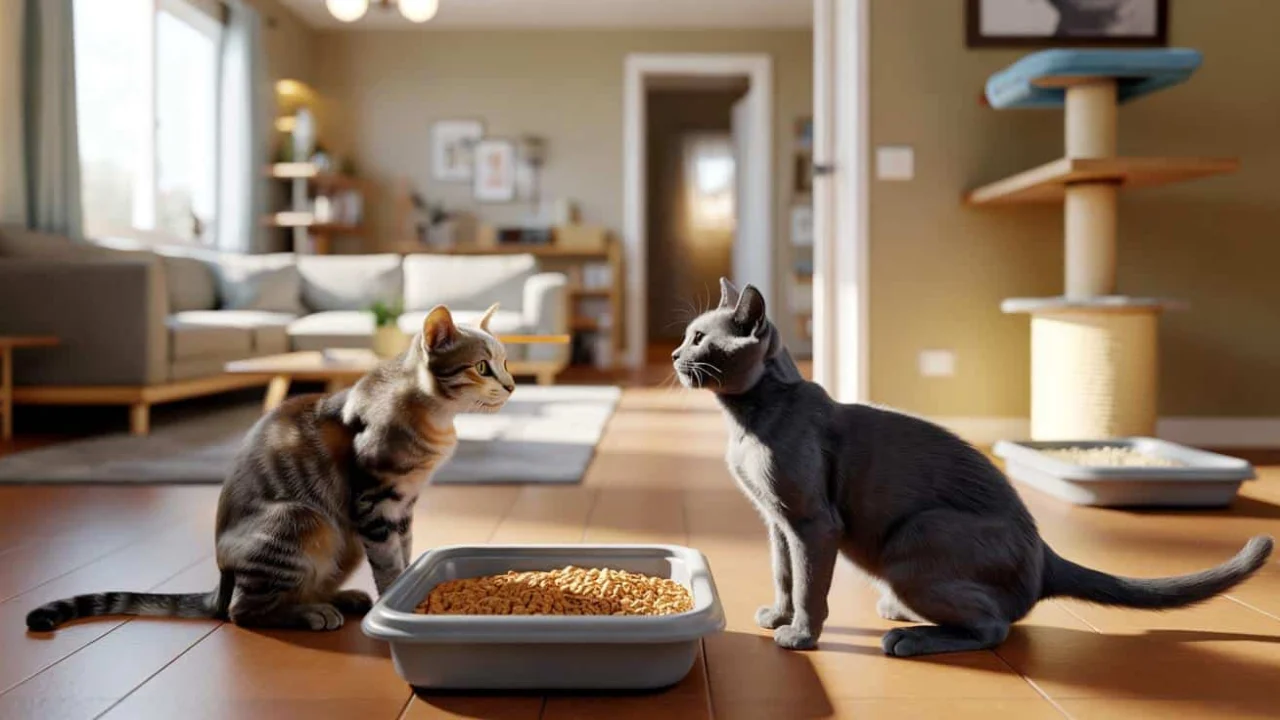
Veterinarians across the country are sounding an urgent alarm about a seemingly innocent household practice that could be causing serious stress and health issues for millions of cats. The culprit? Litter box sharing between multiple cats in the same household.
Recent veterinary reports reveal that many behavioral problems and mysterious urinary issues in cats stem from inadequate litter box arrangements. What owners perceive as simple convenience or space-saving may actually be triggering silent territorial wars that manifest as “accidents” around the home.
| Issue Type | Frequency in Multi-Cat Homes | Primary Cause |
|---|---|---|
| Inappropriate urination | 65% of cases | Territory competition |
| Behavioral aggression | 45% of cases | Resource guarding |
| Stress-related illness | 38% of cases | Chronic anxiety |
| Complete litter avoidance | 22% of cases | Box aversion |
The Hidden Mathematics of Cat Bathroom Politics
Veterinary behaviorists have established clear guidelines that most cat owners unknowingly violate. The data reveals a stark disconnect between recommended practices and typical household setups.
| Number of Cats | Recommended Boxes | Average Household Reality | Stress Risk Level |
|---|---|---|---|
| 1 | 2 | 1 | Low |
| 2 | 3 | 1-2 | High |
| 3 | 4 | 2 | Very High |
| 4+ | 5+ | 2-3 | Critical |
Why Traditional Litter Box Sharing Creates Behavioral Disasters
The root problem lies in cats’ evolutionary programming. As solitary hunters, cats view bathroom facilities as vulnerable territory requiring security and privacy. When forced to negotiate access with other cats, stress hormones spike and defensive behaviors emerge.
Resource guarding around litter boxes manifests in subtle ways. One cat may position itself near the box, effectively blocking access. Others engage in “ambush behaviors,” waiting until a rival exits before rushing in to cover scents. These territorial skirmishes occur primarily when humans aren’t watching.
The hygiene factor compounds the problem exponentially. Litter box sharing means faster accumulation of waste, stronger odors, and increased moisture levels that cats instinctively avoid. Their superior sense of smell—14 times stronger than humans—makes dirty shared boxes particularly repulsive.
Clinical Warning Signs Every Multi-Cat Owner Must Recognize
Veterinary emergency rooms report specific patterns in cats suffering from litter box stress. Early intervention can prevent serious medical complications and expensive treatments.
Behavioral Red Flags
- Urinating on soft surfaces like beds, couches, or laundry
- Defecating in hidden corners or behind furniture
- Extremely brief visits to the litter box followed by rapid escape
- Aggressive guarding behaviors near bathroom areas
- Over-grooming, particularly on belly and inner legs
- Reluctance to walk past other cats to reach facilities
Medical Complications
- Feline Lower Urinary Tract Disease (FLUTD)
- Stress-induced cystitis
- Urinary blockages (life-threatening in males)
- Kidney dysfunction from holding urine
- Secondary skin infections from over-grooming
“We see cats in our clinic weekly who are suffering from preventable urinary issues directly linked to inadequate litter box arrangements,” says Dr. Sarah Mitchell, a veterinary behaviorist. “Owners often blame the cat’s personality, but it’s usually a fixable environmental problem.”
The Economic Reality of Litter Box Conflicts
Beyond animal welfare concerns, litter box sharing creates significant financial burdens for pet owners. Emergency veterinary visits, behavioral consultations, and property damage add up quickly.
| Issue | Average Cost | Frequency | Annual Impact |
|---|---|---|---|
| Emergency urinary blockage | $1,500-3,000 | 15% of stressed cats | High |
| Behavioral consultation | $200-500 | 40% of multi-cat homes | Medium |
| Carpet/furniture replacement | $300-1,200 | 60% of affected households | High |
| Ongoing medications | $50-150/month | 25% of chronic cases | Very High |
Evidence-Based Solutions That Actually Work
Veterinary research has identified specific interventions that dramatically reduce litter box conflicts. Implementation requires strategic planning but yields immediate results in most households.
The “Plus One” Rule Implementation
The golden formula remains consistent across all professional guidelines: number of cats plus one additional box. This approach eliminates competition, provides backup options, and maintains cleaner facilities overall.
Strategic placement prevents territorial bottlenecks. Boxes should be distributed across different rooms, never clustered together. Each location requires easy access without forcing cats to pass through another cat’s preferred territory.
Optimal Cleaning Protocols
- Scoop waste twice daily minimum in multi-cat households
- Complete litter changes weekly with thorough box washing
- Maintain 2-3 inches of litter depth consistently
- Use unscented, clumping litter preferred by most cats
- Replace boxes annually to prevent odor absorption
“The difference in cat behavior after implementing proper litter box protocols is remarkable,” reports Dr. James Peterson, a feline specialist. “Families often see complete resolution of inappropriate elimination within two weeks of making these environmental changes.”
Advanced Territory Management Strategies
Beyond basic box numbers, successful multi-cat households address broader territorial needs. Cats require three-dimensional territory that includes vertical space and secure retreat areas.
Resource distribution prevents competition flashpoints. Food stations, water sources, and resting areas should be scattered throughout the living space rather than centralized. This approach reduces the likelihood that one cat can control access to multiple essential resources.
Environmental enrichment through climbing structures, hiding spots, and interactive toys helps cats establish individual territories within shared spaces. Each cat should have access to at least one elevated perch and one ground-level hiding area that other cats typically avoid.
When Professional Intervention Becomes Necessary
Some situations require veterinary behavioral consultation beyond basic environmental modifications. Chronic stress in cats can develop into complex behavioral patterns requiring systematic desensitization protocols.
Signs that indicate professional help is needed include persistent inappropriate elimination despite proper litter box setup, escalating aggression between cats, or medical complications related to urinary retention or stress-induced illness.
Veterinary behaviorists use specialized techniques including pheromone therapy, environmental modification protocols, and sometimes anti-anxiety medications to restore harmony in severely affected households.
Frequently Asked Questions
How quickly will cats adjust to additional litter boxes?
Most cats begin using new boxes within 24-48 hours, with full behavioral improvement typically seen within 2-3 weeks.
Can covered litter boxes reduce territorial conflicts?
Covered boxes often increase anxiety by limiting escape routes and trapping odors that signal territory occupation to other cats.
What if my cats have shared one box successfully for years?
Chronic low-level stress may not show obvious symptoms initially but can contribute to health problems and shortened lifespans over time.
Should different cats use different types of litter?
Consistency across all boxes reduces confusion and helps cats develop predictable bathroom routines regardless of which box they choose.
How do I introduce additional litter boxes to established cats?
Place new boxes in quiet, easily accessible locations and allow cats to discover them naturally without forced introductions.
When should I contact my veterinarian about litter box issues?
Any sudden change in elimination habits, straining, or signs of pain require immediate veterinary evaluation to rule out medical causes.
Taking Action Before Problems Escalate
The evidence overwhelmingly supports proactive litter box sharing prevention rather than reactive problem-solving. Multi-cat households that implement proper protocols from the beginning avoid the majority of behavioral and medical complications associated with bathroom stress.
Success requires consistent commitment to environmental management, regular cleaning protocols, and attention to individual cat preferences. The investment in additional boxes and strategic placement pays dividends in reduced veterinary costs, improved cat welfare, and household harmony.
| Action Item | Timeline | Priority Level | Expected Outcome |
|---|---|---|---|
| Add one litter box per current cat | This week | Critical | Reduced competition |
| Distribute boxes across different rooms | Within 3 days | High | Eliminated territorial bottlenecks |
| Increase scooping to twice daily | Immediately | High | Improved hygiene acceptance |
| Schedule veterinary checkup if issues persist | Within 2 weeks | Medium | Rule out medical causes |
| Monitor and document behavioral changes | Ongoing | Medium | Track improvement progress |