The Revolutionary Heating Solution Taking Europe by Storm
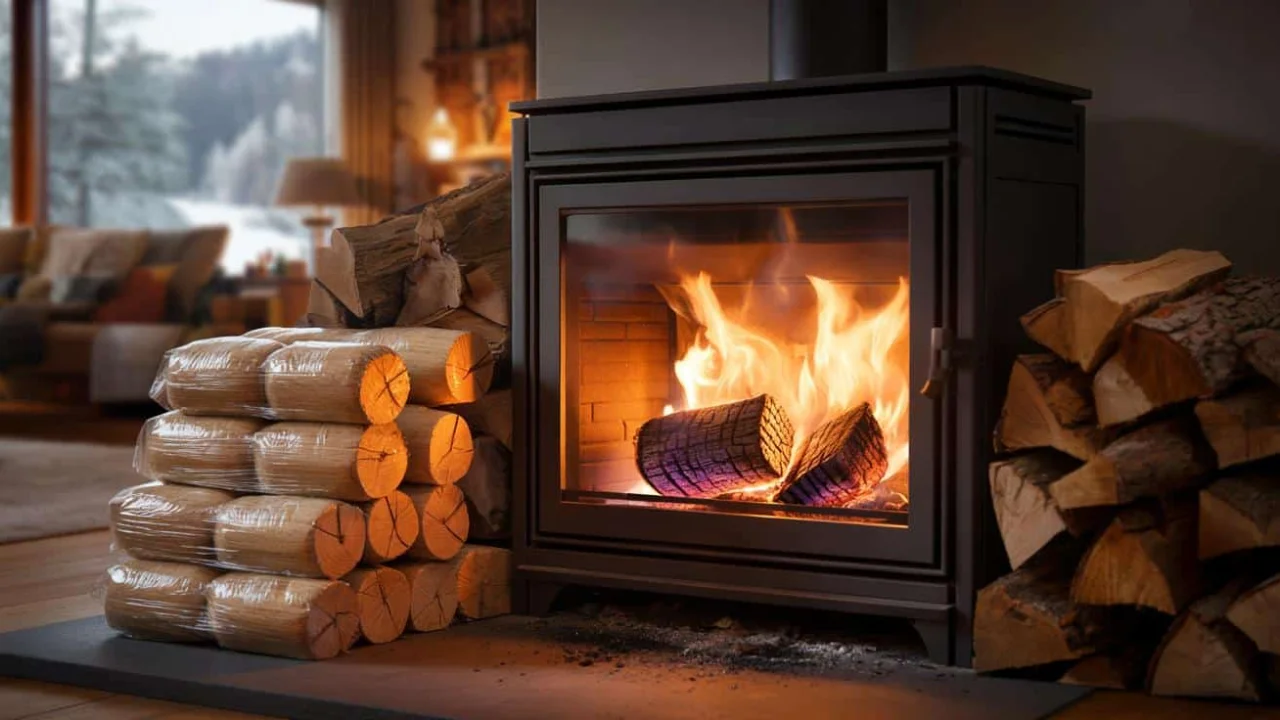
In living rooms across France and throughout Europe, a quiet revolution is transforming how families heat their homes. The familiar ritual of splitting and stacking traditional firewood is giving way to something far more sophisticated: engineered fuel that burns with remarkable efficiency. These aren’t just ordinary logs – they’re compressed logs made from sawdust that can deliver up to three times more heat than conventional firewood.
The shift represents more than just a fuel upgrade; it’s a fundamental rethinking of home heating. While homeowners in the UK and US are just beginning to discover these high-performance alternatives, European families have already experienced the dramatic difference these dense cylinders can make to both their heating bills and daily routines.
What makes this transformation so compelling isn’t just the promise of greater efficiency – it’s the real-world results homeowners are experiencing. Less storage space needed, cleaner burning, and significantly reduced maintenance requirements are converting even the most traditional wood-burning enthusiasts to these engineered alternatives.
The science behind compressed logs reveals why they outperform traditional firewood so dramatically, and understanding this technology could reshape how millions of homes stay warm through winter months ahead.
Understanding the Engineering Behind Compressed Logs
These revolutionary heating products go by several names across different markets: compressed logs, densified logs, eco logs, or briquettes. Regardless of the terminology, the fundamental principle remains consistent and ingenious. Instead of harvesting trees specifically for firewood, manufacturers recover sawdust and wood shavings that would otherwise become waste from sawmills and carpentry workshops.
The transformation process involves compacting these wood residues under extreme pressure. Under this compression, wood fibers bind naturally without requiring any glue or chemical additives. The result appears deceptively simple: a solid cylinder or rectangular brick of wood. However, from an energy efficiency perspective, these engineered logs behave dramatically differently from conventional logs cut directly from tree trunks.
| Specification | Compressed Logs | Traditional Firewood |
|---|---|---|
| Moisture Content | Below 10% | 20-30% |
| Heat Output | 4.8-5.2 kWh/kg | 2-3 kWh/kg |
| Storage Volume | 25% of traditional | 100% baseline |
| Burn Consistency | Highly uniform | Variable |
| Ash Production | Minimal | Moderate to high |
“The physics of combustion favor compressed logs in every measurable way,” explains Dr. Sarah Mitchell, a combustion engineer at the European Biomass Research Institute. “When you eliminate moisture and create uniform density, you’re essentially removing the inefficiencies that have plagued wood burning for centuries.”
The Science of Superior Efficiency
The dramatic efficiency gains of compressed logs stem from two critical factors: moisture content and density uniformity. Traditional firewood, even when properly seasoned, typically contains 20-30% moisture content. In contrast, compressed logs maintain moisture levels below 10%. This difference proves crucial because a significant portion of any log’s energy gets wasted evaporating water before the wood actually begins burning effectively.
This moisture advantage translates into substantial heat output differences. Compressed logs typically deliver 4.8-5.2 kWh of heat per kilogram, compared with roughly 2-3 kWh per kilogram for standard firewood. For homeowners, this means achieving the same warmth in their living spaces while burning significantly less fuel. Depending on the quality of conventional wood supply, the gain in usable heat can reach the promised factor of three.
Key Benefits Driving Adoption
- Exceptional Energy Density: Up to 300% more heat output per unit compared to traditional logs
- Consistent Performance: Uniform shape and moisture ensure predictable burning characteristics
- Reduced Storage Requirements: Takes up to 75% less space than equivalent heating capacity in traditional wood
- Cleaner Combustion: Produces less smoke, soot, and ash during burning
- Lower Maintenance: Reduces chimney cleaning frequency and stove maintenance needs
- Environmental Benefits: Utilizes waste materials that would otherwise require disposal
- Convenience Factor: Easy to handle, transport, and store in residential settings
Combustion Performance and Practical Benefits
The uniform composition of compressed logs creates remarkably stable and predictable combustion characteristics. Each log maintains similar density, shape, and moisture content, allowing stoves and fireplaces to burn them with consistent temperature control and flame patterns. This consistency delivers several practical advantages that users notice immediately.
The improved combustion manifests in multiple ways: significantly reduced smoke production during ignition, fewer soot deposits accumulating in flues and chimneys, minimal blackening of stove windows, and substantially reduced ash volume in collection pans. These improvements not only enhance the user experience but also protect heating appliances and chimney systems over time, typically reducing the frequency of professional cleaning and maintenance services.
“Our customers report 60-70% reduction in chimney maintenance costs after switching to compressed logs,” notes James Harrison, a certified chimney sweep with over 20 years of experience. “The cleaner burn creates less creosote buildup, which means safer operation and lower maintenance expenses for homeowners.”
Storage and Logistical Advantages
For homeowners accustomed to managing large quantities of traditional firewood, the storage benefits of compressed logs represent a game-changing improvement. The uniform shape and exceptional density allow these engineered logs to occupy up to four times less space while delivering equivalent heat output compared to loose split wood. A winter’s heating supply that previously required an entire shed or garage can shrink to neat, manageable stacks against a wall.
The logs typically arrive in plastic-wrapped bundles or packs designed for easy handling and transport. This packaging approach particularly benefits urban dwellers, apartment residents, or homeowners with limited outdoor storage space. The standardized sizing also enables more precise fuel planning and inventory management throughout the heating season.
Environmental Impact and Sustainability
The environmental profile of compressed logs extends beyond their efficient burning characteristics. These products represent a circular economy success story, transforming sawmill waste and carpentry residues into high-value heating fuel. Rather than allowing sawdust and wood shavings to decompose in landfills or require energy-intensive disposal methods, manufacturers convert these materials into premium heating products.
This waste-to-fuel transformation reduces pressure on forest resources while creating economic value from materials previously considered disposal challenges. The manufacturing process typically requires less transportation than traditional firewood supply chains, as sawmill residues can be processed locally rather than harvesting and transporting whole logs across long distances.
Market Adoption and Regional Variations
European markets have embraced compressed logs with particular enthusiasm, driven by environmental regulations, energy efficiency incentives, and rising conventional fuel costs. Countries like Germany, Austria, and France have seen rapid adoption rates, with many retailers dedicating significant shelf space to various compressed log brands and formulations.
The UK market shows growing interest, particularly in urban areas where storage space constraints make traditional firewood challenging. Early adopters report satisfaction with the convenience and performance benefits, though wider market penetration remains limited by availability and consumer awareness. US markets represent the greatest growth opportunity, with pilot programs in several states demonstrating strong consumer interest once homeowners experience the performance advantages firsthand.
- France: Leading adoption with over 40% of wood-burning households using compressed logs regularly
- Germany: Strong growth driven by environmental policies and energy efficiency programs
- United Kingdom: Emerging market with growing retailer support and consumer interest
- United States: Early stage adoption with significant growth potential in northeastern states
“The European experience demonstrates that compressed logs aren’t just a niche product – they’re becoming the preferred choice for informed consumers,” explains Maria Rodriguez, European sales director for Nordic Fire Products. “We’re seeing the same adoption pattern beginning in North America as awareness grows.”
Cost Analysis and Economic Benefits
While compressed logs typically command higher per-unit prices than traditional firewood, the total cost analysis often favors the engineered alternative. The superior heat output means homeowners require fewer logs to achieve the same warmth, effectively reducing the cost per unit of heat delivered. Additionally, reduced maintenance expenses, less frequent chimney cleaning, and extended appliance life contribute to overall cost savings.
Storage and handling efficiencies provide additional economic benefits. Reduced storage space requirements can free up valuable real estate for other uses, while easier handling reduces labor time and physical strain associated with wood management. For urban homeowners or those with mobility limitations, these practical advantages often justify premium pricing.
Installation and Usage Considerations
Transitioning to compressed logs requires minimal adjustments to existing wood-burning systems. Most modern stoves, fireplaces, and heating appliances accommodate compressed logs without modification. However, users may need to adjust burning techniques slightly, as the consistent burn characteristics differ from traditional wood’s variable performance.
Proper storage remains important despite the improved moisture resistance of compressed logs. While they withstand humidity better than traditional firewood, extended exposure to moisture can reduce performance. Most manufacturers recommend storing logs in dry locations and keeping original packaging intact until use.
Frequently Asked Questions
Are compressed logs safe for all wood-burning appliances?
Yes, compressed logs work safely in all standard wood-burning stoves, fireplaces, and heating systems designed for solid fuel.
How much storage space do compressed logs require?
Compressed logs need approximately 75% less storage space than traditional firewood for equivalent heat output.
Do compressed logs produce less ash than regular wood?
Yes, compressed logs typically generate 60-80% less ash due to their uniform composition and efficient combustion.
Can compressed logs be mixed with traditional firewood?
Absolutely, compressed logs can be used alongside traditional wood, though optimal efficiency requires using them separately.
What’s the typical cost difference compared to regular firewood?
While unit prices are higher, total heating costs often decrease due to superior efficiency and performance.
How long do compressed logs burn compared to traditional wood?
Compressed logs typically burn longer and more consistently, providing sustained heat output over extended periods.
The transition to compressed logs represents more than just a fuel upgrade – it’s a step toward more efficient, convenient, and environmentally conscious home heating. As availability expands and consumer awareness grows, these engineered alternatives are positioned to transform residential heating across Europe and North America, offering a compelling combination of performance, convenience, and sustainability that traditional firewood simply cannot match.