Many gardeners struggle with rosemary, a hardy yet stubborn herb that often refuses to flourish beyond a woody, unproductive shrub. While it may survive years of neglect and rough treatment, its growth plateaus, leaving behind tired branches and bare bases instead of the lush, aromatic abundance admired on social media. The secret to transforming these scrappy bushes into thriving, expansive plants lies not in seeds or traditional cuttings but in a simple, natural gardening method that many overlook.
This underrated technique, layering, allows rosemary to multiply effortlessly and reliably by encouraging rooting from branches while they remain attached to the parent plant. Far from fiddly propagation rituals with powders and jars, layering embraces the plant’s natural growth habit. Rosemary branches often bend down and touch soil, quietly developing roots underground without any gardener’s intervention. By mimicking and guiding this process, you unlock a low-effort, high-success strategy that turns one struggling bush into a flourishing family of plants.
Unlike cuttings, which require detaching a stem and hoping it survives independently, layering keeps the branch connected to the mother plant. This gives the new growth a lifeline—steady nourishment and hydration—until it forms its own roots. With patience, you’ll find the buried branch resisting gentle tugging, proof that a new plant can soon be severed and potted or transplanted. This method sidesteps many common frustrations such as drying out, transplant shock, or fragile seedlings that fail to thrive.
Once familiar with layering, gardeners quickly abandon treating rosemary as a finicky, high-maintenance herb. Instead, they harness its natural ability to clone and spread, creating abundant, fragrant shrubs from a single original plant. Here’s everything you need to know to get started with this simple yet powerful propagation trick that guarantees success every time.
What you need to multiply rosemary through layering| Material | Purpose |
| Rosemary bush with semi-flexible low branches | Source plant and stem for rooting |
| Loose, well-draining soil mix (with sand optional) | Rooting medium that avoids rotting |
| Bent hairpin, paperclip, or U-shaped wire | Pin branches down securely into soil |
| Knife tip or fingernail | To lightly scrape the stem’s rooting zone |
| Water source | To keep soil moist but not soggy |
| Optional: compost or mild organic fertilizer | Boost root development if desired |
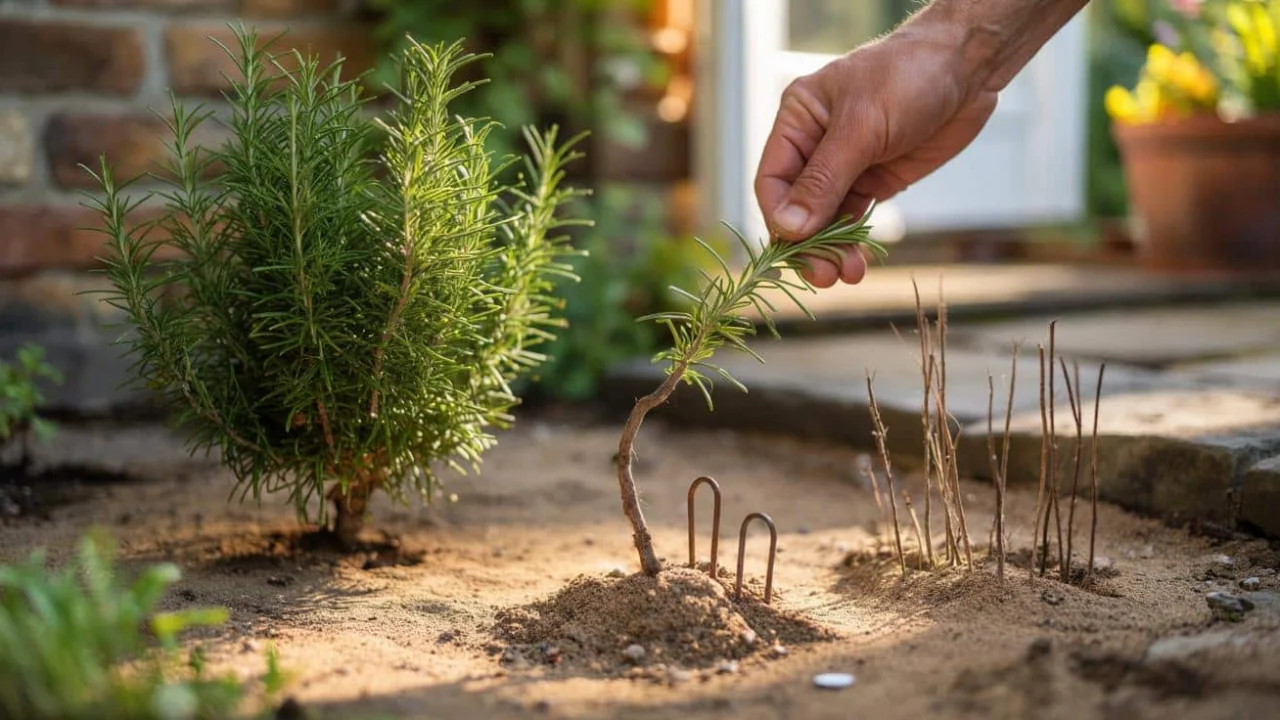
Layering leverages rosemary’s natural habit of low branches bending toward and touching the soil, where they can sprout roots. By intentionally bending a suitable branch down, scraping a small section to encourage rooting, and pinning it beneath a thin layer of loose soil, you create the perfect environment for roots to develop undisturbed. Because the stem remains attached to the mother plant during this process, it continues to receive water and nutrients, significantly improving survival rates.
The buried portion remains hidden, safe from drying winds or sudden environmental changes, while it quietly establishes a new root system. After 4 to 8 weeks—depending on temperature and soil warmth—you can gently test the branch for root growth by lifting it slightly. If it resists, roots have likely formed, and you can safely sever the new plant from its parent.
Choosing the right branches and soil for successNot all stems are suitable. Thick, woody branches tend to snap when bent, making them poor candidates. Instead, choose semi-flexible, greenish stems with enough bend to pin into the soil comfortably without breaking. These younger branches are more likely to root successfully and establish robust new plants.
Soil choice is just as crucial. Rosemary dislikes cold, soggy soil that promotes rot. Use a well-draining earth mix, ideally combined with a bit of sand for extra drainage. Light, loose soil encourages root growth and keeps moisture balanced. Avoid compacted or waterlogged soils to protect the developing roots.
Step-by-step guide to propagating rosemary by layering- Identify a low, flexible branch that leans naturally outward from the bush.
- Using your fingers, carefully strip off leaves from a 3–4 cm section in the middle of the branch to create a bare rooting zone.
- Lightly scrape this leafless section with your fingernail or a small knife to gently roughen the surface—this encourages root formation.
- Bend the branch down and bury the scraped area under 3–5 cm of loose, well-draining soil.
- Secure the stem underground with a bent hairpin, paperclip, or wire staple.
- Leave the tip of the branch free above soil, as if nothing has changed.
- Water the soil around the burial spot to keep it moist but not soggy.
- Resist the urge to dig or check frequently; roots develop best undisturbed.
- After 4 to 8 weeks, gently lift the branch tip. If it resists, roots have formed.
- Use pruners to cut just behind the rooted section and remove your new rosemary plant.
Many gardeners fail by rushing the process, digging up the branch too soon to “inspect” roots or overwatering the site. Checking too often disturbs the delicate root formation and leads to failure more often than drought. Patience is essential.
Also, avoid pinning thick, woody branches that don’t bend easily; they often snap or fail to root. Finally, watering should be balanced to keep soil moist—not oversized to create swampy conditions. Maintain good drainage and light soils to help your new roots thrive.
Why layering is the easiest rosemary propagation methodLayering reduces failure rates drastically by nurturing new plants within the protective embrace of the mother shrub’s lifeline. Unlike cuttings, you’re not forcing a baby plant to survive in isolation from day one. Instead, you let it “crawl” first, gradually gaining independence with support.
This approach saves time, money, and frustration. It’s perfect for home gardeners who want to multiply rosemary without fancy equipment, rooting hormones, or lab-like care. You can pin a few stems, then forget them, returning weeks later to find new plants ready to pot or gift.
| Method | Success Rate | Effort Required | Typical Challenges |
|---|---|---|---|
| Seed Sowing | Low | High (time + care) | Slow germination, variable growth |
| Cuttings | Moderate | Moderate to high | Rooting failures, needs rooting hormone |
| Layering | High | Low | Requires patience, careful branch selection |
“Layering takes the mystery and worry out of propagating rosemary. It’s the most natural way to multiply your plants without special skills or tools.”
— Clara, Balcony Gardener, Lisbon
Gardeners who embrace layering quickly move from consumers to cultivators. From a single bush, they build a resilient thyme-scented landscape: low sprawling shrubs bursting with fragrant leaves. The method is delightfully simple, almost too easy once you’ve seen it work. It’s a pointer to observe and respect your plant’s natural behaviors rather than forcing it into unnatural propagation categories.
Short FAQs about layering rosemary at homeHow long does it take for roots to form when layering rosemary?
Typically, roots start forming between 4 to 8 weeks depending on soil temperature, moisture levels, and the season.
Can I use layering to propagate other herbs besides rosemary?
Yes, many shrubs like lavender, blackberry, and some currants respond well to layering. Rosemary’s woody, flexible stems make it particularly suited to this technique.
What kind of soil is best for layering rosemary?
Use light, well-draining soil, often mixed with sand for extra drainage. Avoid heavy clay or soggy soils to prevent root rot.
Should I keep the layered branch covered with mulch or compost?
Adding a light layer of compost under the buried part can boost root growth but is optional. Mulch can help retain moisture but avoid excessive wetness.
Can I layer woody, old rosemary branches?
Old, thick woody branches tend to snap when bent. It’s best to use younger, semi-flexible branches that bend easily without breaking.
How do I know when to cut the new plant free?
Gently lift the branch; if it resists being pulled up, roots have likely formed. This means you can cut below the rooted section and pot up your new rosemary plant.
Does layering rosemary require any rooting hormone or special treatments?
No, layering works naturally without rooting hormones or powders since the stem remains attached and fed by the parent plant.
What common mistakes should I avoid when layering rosemary?
Don’t rush to check roots too frequently, avoid overwatering, don’t use woody stems that snap, and ensure the soil drains well to prevent rot.
What is the main technique recommended for multiplying rosemary in the article?
The article recommends using the layering technique to multiply rosemary by encouraging rooting from branches while they remain attached to the parent plant.
How does layering differ from traditional rosemary propagation methods like cuttings or seeds?
Layering keeps the branch connected to the mother plant, providing steady nourishment and hydration until roots form, unlike cuttings which require detaching a stem that must survive independently.
Why do many gardeners find rosemary difficult to grow successfully?
Rosemary is hardy but often stops flourishing beyond a woody, unproductive shrub with tired branches and bare bases, leading to growth plateaus and difficulty achieving lush, aromatic abundance.
What are the benefits of using layering for propagating rosemary?
Layering is a low-effort, high-success strategy that mimics the plantu2019s natural growth habit, avoiding issues such as drying out, transplant shock, or fragile seedlings failing to thrive.
How can you tell when a layered rosemary branch is ready to be separated from the mother plant?
You can gently tug the buried branch, and if it resists, it indicates that a new plant has developed roots and can soon be severed and transplanted.
What mindset shift do gardeners experience after mastering the layering technique for rosemary?
Gardeners abandon the idea of rosemary as a finicky, high-maintenance herb and instead harness its natural ability to clone and spread, creating abundant, fragrant shrubs from a single plant.