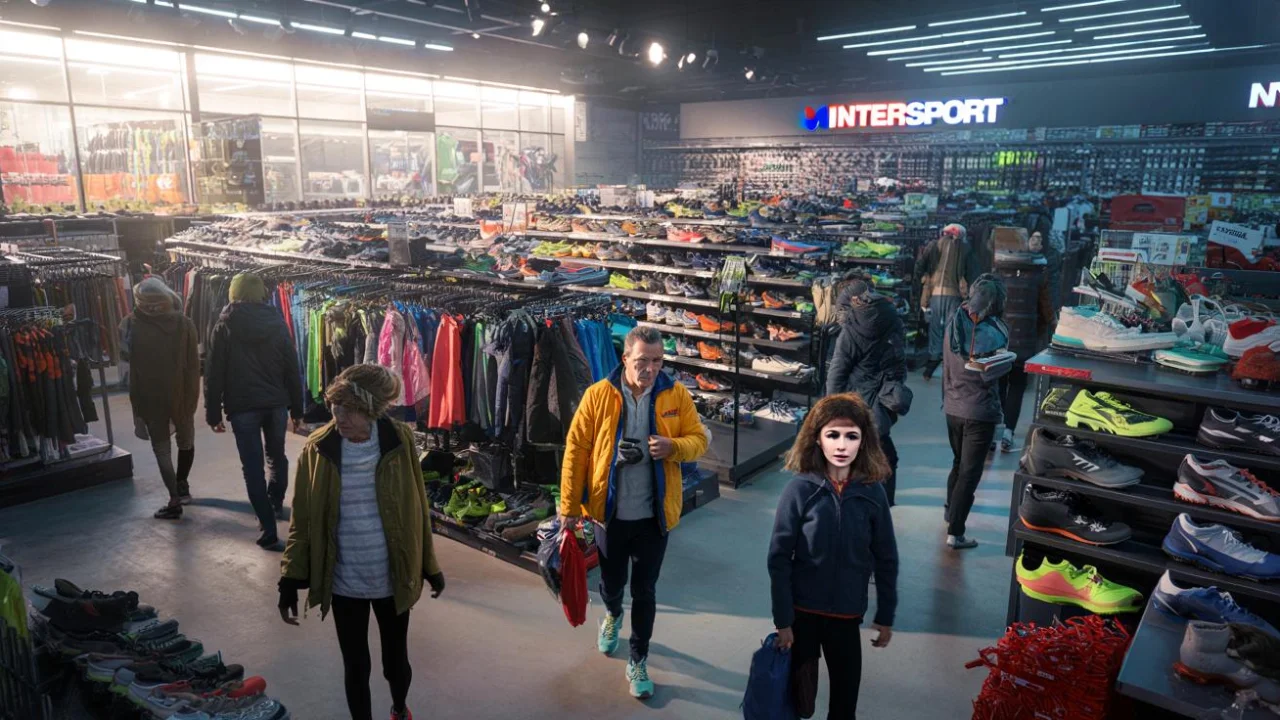
Marie Dubois rushed into the Intersport store in Sedan last Wednesday morning, clutching a hastily scribbled shopping list. Her teenage son needed new football boots, and those bright yellow “LIQUIDATION TOTALE” banners promised savings of up to 60%. But as she navigated the half-empty shelves and crowds of bargain hunters, a nagging question crept into her mind: would this familiar sports store still be here next year?
Her concerns reflect a broader anxiety sweeping across France’s retail landscape. When a major french sports retailer announces “total liquidation,” shoppers and communities naturally fear the worst. Yet the reality behind Intersport’s dramatic clearance sale in Sedan reveals a more complex story of transformation rather than collapse.
“The French retail sector is experiencing unprecedented pressure, but smart brands are using strategic renovations to emerge stronger rather than simply cutting losses,” says a retail analyst specializing in European sports markets.
France’s Retail Earthquake Reshapes Shopping Landscape
The past twelve months have delivered brutal blows to France’s retail sector. Iconic brands once considered unshakeable have crumbled under mounting pressures. Tupperware flirted openly with bankruptcy proceedings. The beloved glassmaker Duralex survived only through worker mobilization and emergency state intervention.
Beauty chain The Body Shop saw its French operations enter liquidation, shocking consumers who viewed the brand as financially solid. Meanwhile, grocery giant Casino was forced to sell its entire network of hypermarkets and supermarkets to competitor Intermarché between October 2023 and January 2024.
This retail carnage has created a climate where any mention of “liquidation” triggers immediate fears of permanent closures. But not every clearance sale signals impending doom.
| Retail Challenge | Impact on French Stores | Consumer Response |
|---|---|---|
| Rising operational costs | Store closures and consolidations | Increased price sensitivity |
| Cautious spending patterns | Reduced profit margins | Bargain hunting behavior |
| Energy efficiency regulations | Mandatory renovations | Temporary disruption acceptance |
| Digital competition | Omnichannel investments | Hybrid shopping expectations |
Decoding Who Benefits From Strategic Store Transformations
Several groups find themselves directly affected by Intersport’s renovation strategy:
- If you’re a local bargain hunter in Sedan, then you can access genuine discounts of 10-60% on sports equipment through February
- If you’re a parent needing children’s sports gear, then timing your purchase during liquidation sales maximizes your budget
- If you’re an Intersport employee, then you face temporary uncertainty but ultimately benefit from working in a modernized facility
- If you’re a competitor like Decathlon, then you watch a key rival invest in store improvements while potentially losing short-term revenue
- If you’re a local shopper after February, then you’ll encounter a completely renovated store with LED lighting and updated displays
Understanding The Renovation Strategy Behind Liquidation Marketing
Intersport’s approach in Sedan demonstrates sophisticated retail strategy disguised as emergency clearance. The french sports retailer is leveraging legal definitions of “liquidation totale” to achieve multiple objectives simultaneously.
French retail law permits total liquidation for two distinct purposes: genuine bankruptcy proceedings or commercial operations preceding major renovations. Intersport clearly operates under the second category, using dramatic marketing language to accelerate inventory clearance.
- If your store needs complete refurbishment, then clearing existing inventory prevents costly storage during construction
- If energy regulations require LED lighting upgrades, then renovation becomes mandatory rather than optional
- If your brand image requires modernization, then temporary disruption enables comprehensive visual updates
- If competitors dominate market share, then investing in store improvements becomes essential for survival
- If operating costs continue rising, then energy-efficient renovations reduce long-term expenses
“Successful retailers are discovering that strategic renovations, marketed as liquidation events, can generate immediate cash flow while preparing stores for future competition,” explains a retail transformation consultant.
Financial Performance Contradicts Closure Speculation
Hard numbers reveal Intersport’s actual financial position, contradicting any narrative of impending collapse. The chain’s robust performance suggests strategic expansion rather than defensive retreat.
| Financial Metric | Intersport Performance | Market Context |
|---|---|---|
| Annual Revenue | €4.752 billion | Major retail heavyweight status |
| Market Share Growth | 4x increase over decade | Primary challenger to Decathlon |
| Sector Size | €14 billion annually | French sports equipment market |
| Store Network | Expanding in mid-sized cities | Strategic geographic positioning |
Strategic Positioning Against Market Leader Decathlon
Intersport’s aggressive expansion strategy over the past decade has transformed it from a secondary player into Decathlon’s primary competitor. This transformation required significant investment in store networks, digital capabilities, and brand positioning.
The company has focused on medium-sized cities and retail parks, areas where Decathlon’s hypermarket format may be less suitable. By emphasizing multi-brand offerings alongside private labels, Intersport appeals to customers seeking variety beyond Decathlon’s predominantly own-brand approach.
Digital integration has become crucial, with click-and-collect services and omnichannel experiences now standard expectations. The french sports retailer has invested heavily in technology infrastructure to compete with online-first competitors.
Sustainability messaging has gained importance as environmentally conscious consumers increasingly influence purchasing decisions. Store renovations incorporating LED lighting and energy-efficient systems align with broader corporate responsibility initiatives.
“The sports retail market rewards companies that can balance physical presence with digital convenience while maintaining competitive pricing,” notes a sports industry analyst.
Practical Shopping Strategies During Liquidation Sales
Experienced bargain hunters approach liquidation sales with specific strategies to maximize value while avoiding common pitfalls. Understanding retailer motivations helps shoppers make informed decisions.
Question: How can shoppers verify genuine discounts during liquidation sales?
Compare final prices with online retailers and check previous pricing before assuming percentage discounts represent true bargains.
Question: What products typically offer the best value during store clearances?
Seasonal items, discontinued models, and overstocked sizes usually provide the most significant genuine savings opportunities.
Question: How long do liquidation sales typically last before stock depletion?
Popular sizes and premium brands disappear within days, while niche items may remain available throughout the entire sale period.
Question: Should consumers stock up on sports equipment during these events?
Buy only items you need soon, as sports equipment styles and technology evolve rapidly, potentially obsoleting unused purchases.
Question: Do liquidation sales indicate permanent store closures?
Not necessarily; many represent strategic inventory clearance before renovations or relocations rather than business failure.
Question: How can communities distinguish between renovation and genuine closure announcements?
Check parent company financial reports and official statements rather than relying solely on sale advertising language.
Retail Evolution Demands Constant Adaptation
The broader context surrounding Intersport’s Sedan renovation reflects industry-wide transformation pressures. Energy efficiency regulations, changing consumer expectations, and competitive dynamics force retailers to continuously evolve their physical presence.
Modern shoppers expect seamless integration between online browsing, mobile apps, and in-store experiences. Stores must accommodate click-and-collect services, easy returns, and product demonstrations while maintaining attractive displays and efficient checkout processes.
Rising energy costs make LED lighting upgrades and improved insulation financially beneficial beyond regulatory compliance. These improvements reduce operating expenses while demonstrating environmental responsibility to increasingly conscious consumers.
The french sports retailer landscape will likely see continued consolidation as smaller players struggle with mounting pressures. However, well-positioned chains like Intersport can use strategic investments to strengthen their market position while competitors falter.
Success increasingly depends on balancing immediate cost pressures with long-term strategic investments. Companies that defer necessary improvements risk falling behind competitors who embrace change proactively.
“The retail winners emerging from this challenging period will be those who viewed disruption as opportunity rather than threat,” concludes a retail strategy expert.
Looking ahead, French consumers can expect more strategic renovations disguised as dramatic sales events. Smart shoppers will learn to distinguish between genuine closures and calculated transformations, while retailers continue adapting to evolving market demands through innovative approaches to traditional challenges.
Key takeaways for understanding retail liquidation announcements:
- Financial performance data provides more reliable closure indicators than marketing language
- Strategic renovations often generate short-term bargains while strengthening long-term competitiveness
- Successful retailers use dramatic sales events to fund necessary improvements rather than signal defeat