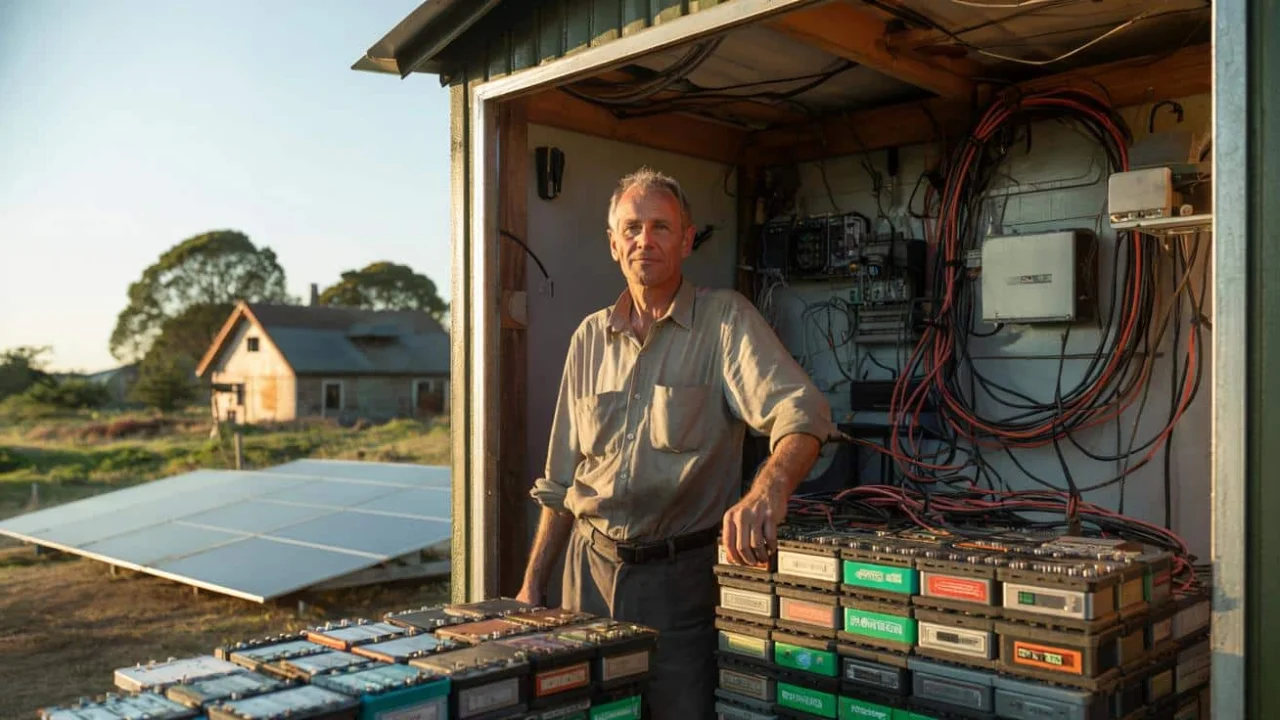
“The fascinating thing about this project is how it demonstrates the untapped potential in our electronic waste streams. Every year, millions of lithium-ion cells are discarded while still retaining 70-80% of their original capacity,” says a renewable energy consultant specializing in battery recycling systems.
Deep in a rural shed, an extraordinary experiment has been quietly humming for nearly a decade. What started as curiosity about discarded electronics has evolved into a sophisticated laptop battery power system that supplies most of a household’s electricity needs. This DIY enthusiast has transformed over 650 used laptop batteries into a working off-grid power station, proving that yesterday’s e-waste can become tomorrow’s energy solution.
The project challenges everything we think we know about battery life cycles and home energy storage. While commercial battery systems cost thousands of dollars, this innovative approach harvests power from devices most people consider worthless.
Technical Specifications of the Recycled Battery Network
| System Component | Details | Performance Impact |
|---|---|---|
| Total Battery Count | 650+ laptop batteries (expanding to 1,000) | Multi-kilowatt hour storage capacity |
| Module Configuration | 100 ampere-hour storage modules | Hours of appliance operation without sunlight |
| Safety Distance | 50 meters from main house | Isolated risk management |
| Operational Period | Nearly 10 years continuous operation | Proven long-term reliability |
Who Benefits Most From Battery Recycling Power Systems
- Off-grid homeowners: Rural residents seeking energy independence without massive commercial battery investments
- Environmental advocates: Individuals committed to extending electronic device lifecycles and reducing e-waste
- Technical hobbyists: DIY enthusiasts with electrical knowledge and patience for complex assembly projects
- Cost-conscious households: Families looking to dramatically reduce electricity bills through salvaged materials
- Emergency preparedness planners: Those building backup power systems from readily available discarded components
Critical System Changes From Traditional Battery Storage
- Safety protocols: Requires dedicated ventilated storage buildings and comprehensive fire suppression equipment
- Testing demands: Each individual cell needs voltage, capacity, and internal resistance evaluation before integration
- Maintenance complexity: Ongoing monitoring of temperature, cell balance, and performance degradation across hundreds of units
- Capacity limitations: Cannot reliably power high-demand appliances like electric heating or large air conditioning systems
- Weather dependency: Performance varies significantly with seasonal sunlight availability and battery temperature fluctuations
“What impresses me most is the systematic approach to cell testing and safety management. This isn’t just throwing batteries together – it’s proper engineering applied to waste materials,” explains a battery systems analyst with 15 years in renewable energy installations.
Financial Analysis of DIY Versus Commercial Battery Solutions
| Cost Category | DIY Laptop Cell System | Commercial Home Battery |
|---|---|---|
| Battery Cells | $0-50 (salvaged from recycling) | $8,000-15,000 |
| Testing Equipment | $200-500 | Included in professional installation |
| Safety Infrastructure | $500-1,500 (shed, ventilation, fire suppression) | Minimal (certified indoor installation) |
| Labor Investment | 200+ hours over months | Professional installation (8-16 hours) |
| Warranty Coverage | None (DIY risk) | 10-15 year manufacturer warranty |
Real-World Performance Impact on Household Operations
The laptop battery power system successfully handles most daily electrical needs, though with important limitations. LED lighting throughout the home runs entirely on stored power, while computers, phones, and internet equipment operate normally during extended cloudy periods.
Kitchen appliances present mixed results. Low-power devices like coffee makers and small microwaves work well, but electric ovens and dishwashers require careful timing with peak solar generation hours. The system excels at powering workshop tools and circulation pumps for hours without grid connection.
Winter performance creates the biggest challenges. Short daylight hours and reduced solar panel efficiency mean strategic load management becomes essential. The homeowner reports timing laundry, cooking, and other high-energy tasks for sunny afternoon periods.
Advanced Cell Testing and Integration Methodology
Each salvaged laptop battery undergoes rigorous evaluation before joining the power network. The testing process separates functional cells from damaged units, preventing one failing component from compromising entire battery banks.
Voltage testing identifies cells holding proper charge levels. Capacity testing measures actual energy storage compared to original specifications. Internal resistance testing reveals cells developing dangerous heat buildup under load. Only batteries passing all three evaluations earn integration into the laptop battery power system.
Balancing cells with similar performance characteristics prevents faster degradation of weaker units. The copper cabling system minimizes power loss during high-current operations, while thick wire connections reduce dangerous heat accumulation across hundreds of connection points.
“The key insight here is that battery packs often fail due to just one or two bad cells, while the remaining cells retain 70-80% capacity. That’s tremendous value sitting in recycling bins,” notes a lithium-ion battery research specialist.
Safety Considerations and Risk Management Strategies
Operating hundreds of salvaged lithium-ion cells creates legitimate fire and explosion risks that demand comprehensive safety protocols. The 50-meter distance between battery shed and living spaces provides crucial separation if thermal runaway occurs.
Professional-grade ventilation systems prevent dangerous gas accumulation from failing cells. Multiple fire extinguishers rated for electrical fires remain strategically positioned throughout the storage facility. Battery management systems monitor cell temperatures and automatically disconnect problematic sections.
Local electrical codes may prohibit high-capacity DIY battery installations. Insurance policies often exclude coverage for homemade electrical systems. Anyone considering similar projects needs legal compliance research before beginning construction.
Frequently Asked Questions
How long do recycled laptop batteries last in home power systems?
Well-maintained salvaged cells typically provide 3-7 years of useful service in home applications.
What tools are needed to test laptop battery cells safely?
Digital multimeters, battery capacity testers, and internal resistance meters are essential for proper cell evaluation.
Can this type of system power an entire house?
Most DIY laptop cell systems handle lighting and electronics well but struggle with heating and large appliances.
Is it legal to build homemade battery systems for residential use?
Local electrical codes vary significantly; many jurisdictions require professional inspection of high-capacity battery installations.
How much money can be saved compared to commercial home batteries?
Material costs drop dramatically, but factor in hundreds of hours for testing, assembly, and safety infrastructure.
What happens when these recycled batteries eventually fail completely?
Failed cells require proper lithium-ion recycling; many can be replaced individually without rebuilding entire systems.
Future Implications for Residential Energy Storage
This rural experiment hints at broader changes coming to home energy markets. Professional companies are beginning to collect used laptop, power tool, and electric vehicle batteries for certified second-life applications. These operations combine systematic testing with proper warranties, addressing safety concerns while capturing value from electronic waste streams.
The laptop battery power system approach could evolve into hybrid solutions: new solar panels paired with professionally refurbished battery modules, plus smart software managing loads during poor weather periods. This balances cost savings with safety standards and regulatory compliance.
As millions of additional laptops reach end-of-life annually, the potential for large-scale battery harvesting grows significantly. Rather than individual DIY projects, coordinated collection and refurbishment programs could supply residential storage systems at costs between salvage and new commercial products.
“Projects like this prove we’re barely scratching the surface of what’s possible with electronic waste. The challenge is scaling these methods while maintaining safety standards and regulatory compliance,” concludes a sustainable technology policy researcher specializing in circular economy applications.