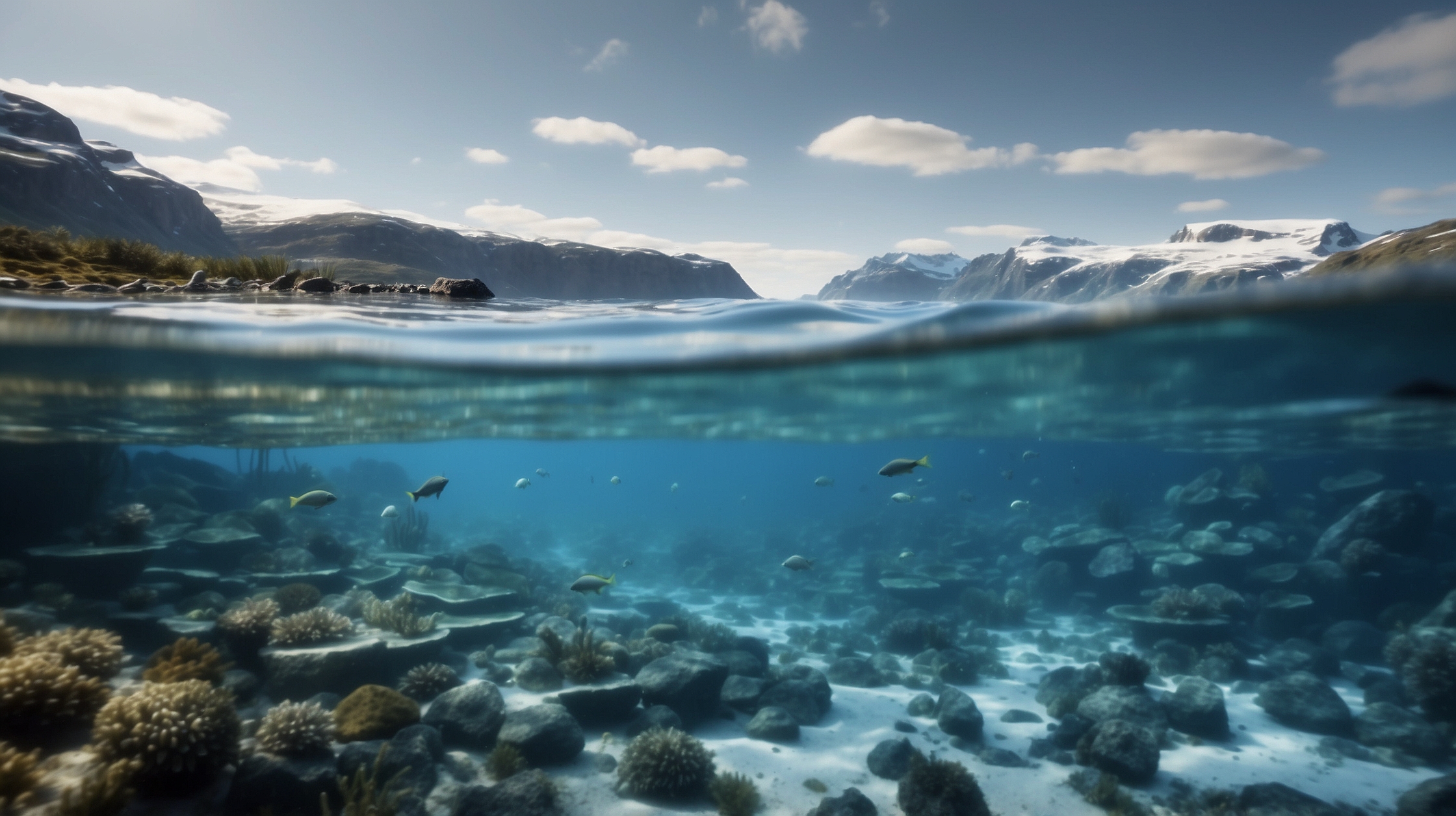
In the dark depths of the North Sea, some 600 meters beneath the surface, a pioneering solution to one of humanity’s most pressing challenges — water scarcity — is being developed in silence. Off the coast of Norway, an extraordinary project with the potential to revolutionize freshwater production has begun making waves in 2026. It’s a piece of good news that echoes far beyond the fjords and icy waters, promising relief for arid regions, sustainable development for urban centers, and renewed hope for future generations grappling with climate-driven water shortages.
As the new year dawned, researchers and technical engineers announced a breakthrough from an underwater desalination initiative dubbed “Subsea RO” (Reverse Osmosis) — the world’s first underwater desalination plant anchored to the ocean floor. Unlike conventional desalination plants that require large land-based infrastructure and costly energy input, the Subsea RO harnesses natural seabed pressure to purify saltwater with unprecedented efficiency and minimal environmental footprint. Combining innovation, environmental stewardship, and engineering genius, this solution represents a quantum leap forward in the world’s quest for sustainable freshwater sources.
The pilot plant, stationed off the coast of Norway, has completed successful long-term testing. But what exactly makes this project so revolutionary, and how could it change the global landscape of water access? Here’s a detailed exploration of the project’s goals, the science behind it, its global impact, and what comes next in this remarkable journey under the sea.
What the underwater desalination breakthrough means
| Project Name | Subsea RO (Reverse Osmosis) |
|---|---|
| Location | 600 meters under the sea, off the coast of Norway |
| Launch Year | 2026 |
| Primary Goal | To create energy-efficient, large-scale freshwater production using natural deep-sea pressure |
| Technology Used | Membrane-based reverse osmosis enhanced by seabed pressure |
| Environmental Impact | Minimal due to deep-sea integration and reduced energy consumption |
| Potential Applications | Water supply in arid regions, emergency freshwater, remote installations |
How the technology leverages ocean pressure
Traditional desalination methods rely on enormous amounts of energy to pump seawater at high pressure through specialized membranes that remove salt. In the case of Subsea RO, nature itself lends a helping hand. At depths of 600 meters, the immense pressure of the surrounding water — equivalent to 60 times atmospheric pressure — naturally forces seawater through reverse osmosis membranes inside sealed containers.
This not only removes the need for artificial pressurization (cutting energy use by up to 40%) but also reduces mechanical wear and tear, slashing maintenance costs and improving component longevity. Moreover, the modular design allows the plant to scale rapidly or adapt to uniquely shaped seabeds.
By using the ocean’s own pressure, we have eliminated the most energy-intensive part of desalination. It’s efficient, quiet, and scalable.
— Lars Hovland, Senior Marine Engineer
Who benefits from this innovation the most
The implications of Subsea RO are vast and transformative. Regions plagued by drought, those with limited land availability, or remote islands that struggle to maintain water supply infrastructure can all benefit immensely. For example, water-scarce regions in the Middle East, Africa, and parts of Australia could install floating or underwater systems without disturbing local environments or requiring major land-based construction.
Additionally, the technology could serve military bases, oil rigs, and research stations in remote locations where logistics make water supply difficult. In emergencies, it could even offer a backup source of clean water during natural disasters.
Economic and geopolitical ripple effects
Water scarcity often fuels political tension, migration, and economic instability. By introducing a renewable, scalable method to generate clean water locally, Subsea RO could ease international water disputes, reduce dependency on imports, and support local agriculture and industry in stressed areas.
Economically, the reduced need for energy and land makes the technology attractive for smart infrastructure investment. Governments and private companies are already showing interest, particularly those aligned with sustainability goals.
This could be one of this decade’s major geopolitical equalizers. Access to water means independence, stability, and growth.
— Dr. Amina Seraj, International Water Policy Analyst
The timeline for global deployment
After successful testing off the Norwegian coast, the technology is now moving into its commercialization and scaling phase. The developers aim to deploy the first full-scale production units by late 2026 or early 2027. Initial deployment will focus on partnerships with nations in pressing need of alternative freshwater sources.
Prototypes are being explored for a range of depths (from 200 to 900 meters), and major shipping and marine logistics firms are expected to collaborate in deploying units quickly and safely across various marine regions.
Environmental and sustainability considerations
One of the notable aspects of Subsea RO is its minimal environmental disruption. Unlike land-based desalination plants that can produce heat, brine, and chemical discharge, this underwater system relies on slow diffusion of purified and brine-flow with negligible temperature or bio-impact changes.
Sensors and AI monitoring systems ensure salinity and balance are strictly regulated. Additionally, the membrane modules can be replaced without lifting the entire system, reducing shipping emissions and other operational impact.
We’ve prioritized ecological harmony by designing systems that integrate with — not fight against — their marine environment.
— Ingrid Moen, Sustainability Director
Winners and losers in this freshwater revolution
| Winners | Losers |
|---|---|
| Water-scarce regions and cities | Outdated desalination technologies |
| Remote installations and islands | Energy-intensive infrastructure companies |
| Environmental NGOs promoting sustainable tech | Land developers formerly needed for water plants |
What comes next in underwater desalination
As with any technological breakthrough, Subsea RO’s journey is just beginning. The creators plan to integrate solar-powered floating hubs to control modular farms of these underwater units. These hubs will allow remote control, supply chain integration, and even AI-driven efficiency improvements.
The ambition does not stop at Norway. Talks are underway with coastal nations to test regional satellites of the project tuned for local oceanic conditions. In the future, marine desalination systems might even become part of international waters agreements, enhancing cooperative governance over precious water resources.
Key challenges to address
Despite the success, several challenges remain. Deep-sea operations come with high initial setup costs, regulatory hurdles, and potential geopolitical sensitivity (especially when placing desalination units near contested waters). Licensing, marine life protection, and operational risks will need comprehensive frameworks.
Furthermore, ongoing maintenance and scaling to megacity levels will test the project’s adaptability. But as of now, optimism is justified and growing.
This isn’t just engineering — it’s diplomacy, science, and survival working as one.
— Dr. Rafael Kim, Ocean Technology Investigator
Frequently asked questions about underwater desalination
How does underwater desalination work?
It uses natural ocean pressure at deep-sea levels to force seawater through membranes that separate salt and impurities, creating freshwater without needing external energy for pressurization.
Is the technology environmentally safe?
Yes, it is considered more sustainable than traditional methods. The minimal need for energy and the gentler brine return ensure it causes less local disruption.
Can this technology supply an entire city?
The technology is modular and scalable, meaning it can be expanded to meet large urban demands. Full implementation is planned city by city over the coming years.
When will this be available worldwide?
Pilot countries will begin deployment from 2026-2027. Broader availability depends on local marine regulations and partnerships.
Who is funding Subsea RO technology?
The project is currently supported by marine research agencies in Norway and emerging international cooperation between public-private partnerships.
Will this affect marine ecosystems?
Sensors and adaptive release systems ensure that marine life is protected, and the environmental footprint is closely managed.
What maintenance is required for deep sea systems?
Modular designs allow membrane swaps and technical checkups without major infrastructure shifts, minimizing maintenance complexities.
Can other countries replicate this on their own?
The intellectual property is protected, but partnerships for co-development with local marine experts are welcomed to encourage global adoption.