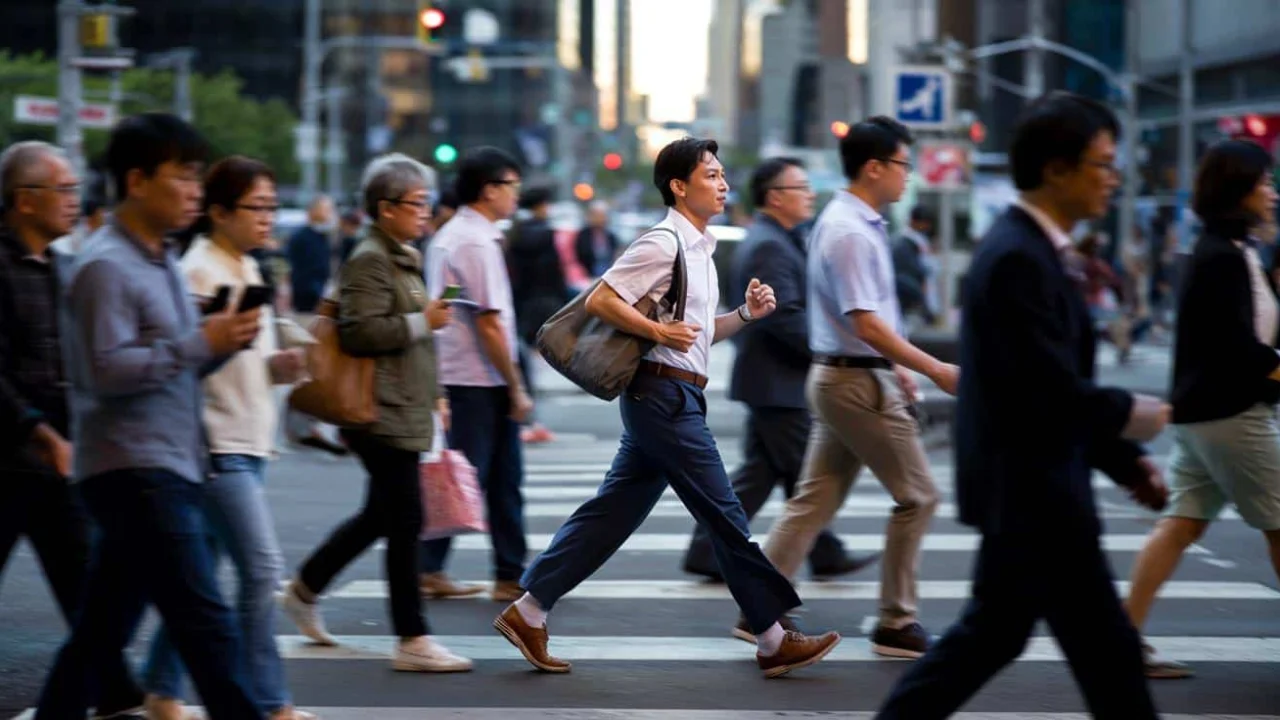
At the crack of dawn, city sidewalks transform into a theater of human rhythm and purpose. Among the various walking styles—casual amblers sipping coffee, social clusters talking as they stroll, and distracted phone-scrollers—one group stands out unmistakably: the fast walkers. They move with a distinctive energy, focused, tuned in, navigating the crowd with a determined stride. They aren’t simply hurrying; their gait reflects a psychological tempo that is both revealing and consistent across diverse cultures and demographics.
Behavioral scientists have delved into this phenomenon, uncovering intriguing links between walking speed and mental states. Research spanning global cities, academic campuses, and age brackets shows fast walkers share unique psychological traits. They tend to be goal-driven, future-focused, and highly aware of their time’s value. The pace of their steps mirrors an internal sense of urgency, not born from anxiety or haste, but from a deep, purposeful engagement with life’s demands.
Understanding these connections offers a subtle yet powerful window into how our physical behaviors embody our mental outlooks. Walking speed becomes much more than a simple indicator of fitness or hurry; it serves as a tangible measure of psychological tempo and life priorities. This article explores the fascinating science behind why people walk fast, how it shapes identity, and what it reveals about broader cultural values.
| Aspect | Key Insights |
|---|---|
| Common Psychological Traits | Driven mindset, clear goals, impatience with delays, high time awareness |
| Geographical Patterns | Fastest walkers found in cities with intense work cultures like Zurich, Tokyo, New York |
| Behavioral Feedback Loop | Goal orientation increases walking speed, which then reinforces identity as purposeful person |
| Social Dimension | Fast walking linked to cultural values of productivity; slow walking sometimes seen as rebellion |
| Effects of Changing Pace | Increasing walking speed slightly can boost alertness, decision speed, and future focus |
How walking speed reflects mindset and motivation
Walking speed is more than just a physical measure; it’s a subtle expression of how the mind sets its internal rhythm. Behavioral scientists have consistently observed that people who naturally walk faster tend to describe themselves as more driven and goal-oriented. Their mental landscape is often marked by a clear set of priorities and a heightened impatience with wasted time or unnecessary delays.
This fast pace is not a sign of panic or stress but reflects a mindset geared toward efficiency and purposeful action. Neuroscientific perspectives suggest that these individuals’ brains operate on a higher pace — a metaphorical “RPM” — aligning thought, decision-making, and emotion with a forward-driving momentum. Walking fast becomes a nonverbal cue signaling readiness, urgency, and a focused approach to daily tasks and life ambitions.
Global cities and cultural work rhythms
This psychological tempo reveals itself not only in individuals but also in entire cities. One comprehensive cross-cultural study measured average walking speeds in dozens of cities worldwide, revealing a striking correlation: locations with the fastest walkers often boast intense work environments and tight schedules. Zurich, Tokyo, and New York consistently register among the quickest pedestrian speeds.
This global pattern illustrates how culture shapes the collective heartbeat of a city’s residents. In these urban environments, speed symbolizes efficiency and productivity, reinforcing the social expectation that time is a valuable commodity. The pace of walking becomes a subtle indicator of the city’s underlying economic pressures and cultural attitudes towards time management.
Universities and individual personality traits
On a smaller scale, studies of university students uncover similar patterns. Students who walk faster tend to score higher on psychological traits such as conscientiousness and future orientation. They plan more carefully, procrastinate less, and experience a higher sensitivity to time wastage. Walking fast correlates with a mindset tuned towards achieving future goals and maintaining discipline.
This alignment between physical pace and mental orientation underscores how intimately our bodily movements and psychological states intertwine. Fast walkers embody a kind of temporal awareness that informs not only their motion but also their approach to studies, work, and life planning.
The internal psychological loop of fast walking
Psychologists believe a self-reinforcing loop connects mental states and walking speed: individuals with a strong internal sense of being “busy” or “purposeful” instinctively walk faster, which in turn strengthens their internal identity as people with important things to do. Walking becomes a physical manifestation of mental urgency.
This loop fosters a constant background hum of “I should be somewhere doing something,” a sensation familiar to many fast walkers. It subtly shapes how they behave in other domains—work, relationships, and rest—creating a consistent pattern between behavioral pace and psychological identity.
Social meanings of walking speed and cultural expectations
Beyond individual psychology, walking speed carries social meaning, varying with cultural values. In societies where productivity and efficiency are highly prized, fast walking can be seen as a marker of value and status. Conversely, moving slowly can sometimes signal a gentle act of rebellion against a culture’s relentless pace.
Fast walkers thus “carry” the cultural message that speed equals value within their very bodies. Their steps communicate, consciously or unconsciously, alignment with social norms that equate busyness with worth, creating an embodied narrative of purpose and accomplishment.
How changing your walking speed influences mental states
The relationship between mind and movement works both ways. Experiments show that people asked to walk just 10–15% faster than their normal pace experience measurable changes in cognition and mood. They tend to feel more alert, make decisions more quickly, and adopt a more future-focused mindset.
This bidirectional link suggests a practical tool for personal development. By intentionally adjusting walking speed, people can gently tune their mental states, shaking off lethargy or distraction. Yet, it’s important to avoid turning this into a stressful workout. A slight increase in pace—walking as if just a little late—is enough to nudge the brain into a more engaged state without causing exhaustion.
Practical advice for mindful fast walking
If you want to experiment with these findings, try picking a familiar route and speeding up your walking pace modestly for about ten minutes. Resist turning it into a race or a workout. Instead, cultivate curiosity: observe how your thoughts shift when your body says, “Let’s go.”
This practice can reveal a lot about your internal tempo and relationship with time. On days when you feel hopeful or motivated, you might naturally walk faster. On days when you feel stuck or tired, your pace may slow, offering an honest reflection of your mental state without needing words.
“Your walking speed is often the most honest schedule you keep — the one your body writes when your calendar isn’t looking.”
— Maria De Luca, Behavioral Scientist
Why walking speed is a window into our mental load and ambitions
Ultimately, walking speed serves as a simple yet profound indicator of how our minds handle ambition, fatigue, and time pressures. Observing the pace at which people move reveals their internal psychological gears. The fast walker is not better or worse—just wired differently, their motions aligned with a quicker mental rhythm and sharper focus on goals.
Once you start noticing walking speed in everyday life, it becomes impossible to look away. The colleague who glides purposefully down the hallway, the parent juggling stroller and watch, even the teenager puffing headphones and stretching out the journey—all display distinct psychological signatures through their steps.
| Winners in Fast Walking Psychology | Losers in Fast Walking Psychology |
|---|---|
| Focused, goal-oriented individuals | People who feel overwhelmed or stuck may naturally walk slower |
| Residents in cultures valuing productivity highly | Those who resist fast pace as a form of subtle rebellion |
| Students with high conscientiousness and future focus | Individuals with less time awareness or lower goal clarity |
Short FAQs about walking speed and psychology
Why do people who walk fast tend to feel more driven?
Fast walkers generally have a clearer sense of goals and time urgency, which translates into a driven mindset. Their pace reflects internal motivation and a priority for efficiency.
Does walking fast mean someone is happier or richer?
No, walking speed is not correlated with happiness or wealth. It relates more directly to mental pace, goal orientation, and time awareness.
Can changing my walking speed actually influence my mood?
Yes, experiments show that modestly increasing your walking pace can make you feel more alert, focused, and future-oriented.
How does culture affect walking speed?
Cultures that prize productivity and time efficiency often have faster average walking speeds, reflecting collective psychological rhythms.
Is it healthy to always walk fast?
Not necessarily. Walking fast is a sign of a particular mental pace, but it’s important to balance speed with rest and awareness of your body’s needs.
What mistakes do people make when trying to walk faster?
Many push too hard, turning it into exercise rather than a mindful pacing shift, which can cause fatigue and frustration.
How can I use walking speed to better understand myself?
Pay attention to how your pace changes with your mood and motivation. Experiment with slight speed increases to notice shifts in alertness and thought patterns.
Does walking slowly ever have benefits?
Yes, moving slowly can be a deliberate act of relaxation or resistance to pressure, offering space for reflection and reducing stress.
What does walking speed reveal about a person’s mindset?
Walking speed reflects a person’s psychological tempo, indicating traits such as being goal-driven, future-focused, and aware of the value of time. It embodies a purposeful engagement with life’s demands rather than mere haste or anxiety.
Which psychological traits are common among fast walkers?
Fast walkers commonly exhibit a driven mindset, clear goals, impatience with delays, and a high awareness of time.
In which cities are the fastest walkers typically found?
The fastest walkers are usually found in cities known for intense work cultures, such as Zurich, Tokyo, and New York.
How does walking speed influence a person’s identity according to behavioral research?
Walking speed creates a behavioral feedback loop where a goal-oriented mindset increases walking speed, which in turn reinforces the person’s identity as a purposeful and driven individual.
What cultural values are associated with fast and slow walking speeds?
Fast walking is linked to cultural values emphasizing productivity, while slow walking can sometimes be interpreted as a form of rebellion against these values.
Why is walking speed more than just an indicator of fitness or hurry?
Walking speed serves as a tangible measure of psychological tempo and life priorities, providing insight into an individual’s mental outlook and broader cultural values beyond physical fitness or rushing.