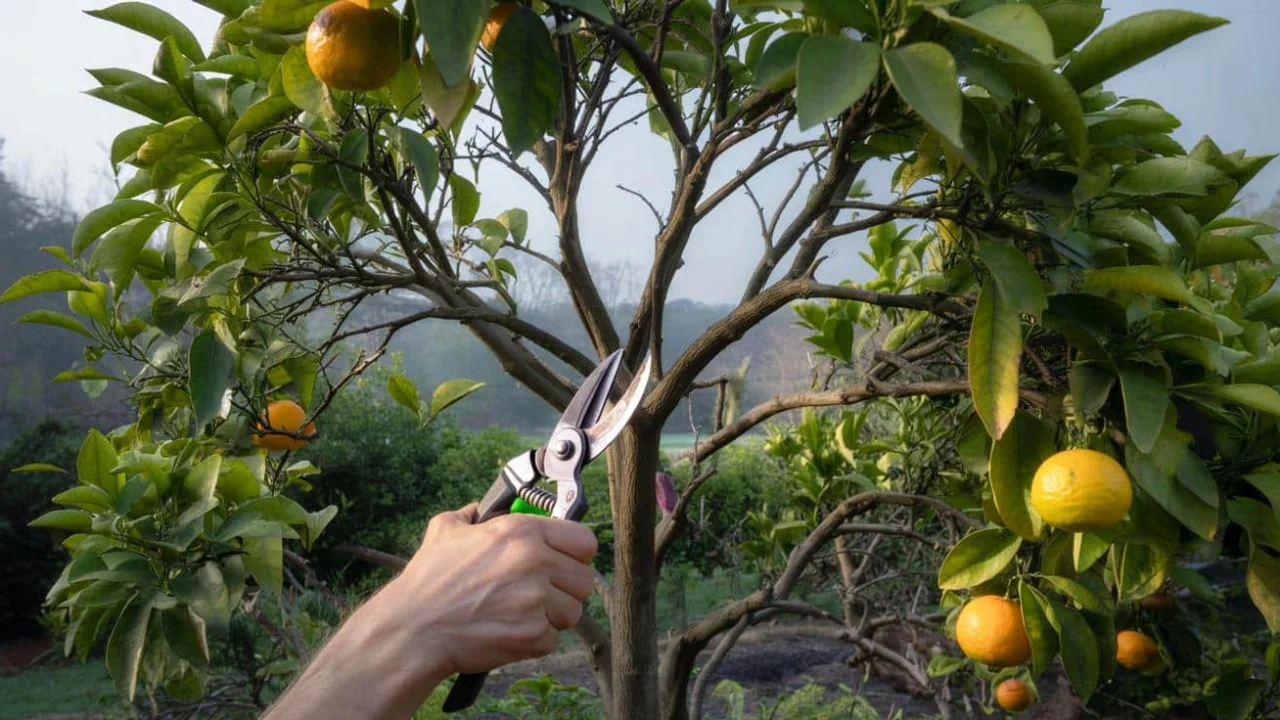
“I’ve seen citrus growers transform struggling trees into prolific producers with just one annual cut at precisely the right moment,” says a certified arborist specializing in fruit tree management.
Across suburban patios and small gardens, thousands of lemon and orange trees are quietly preparing for their most critical weeks of the year. As winter loosens its grip and sap begins to stir, a single pruning decision made in the next few weeks will determine whether your citrus tree spends the coming season as a leafy ornament or a fruit-laden powerhouse.
The difference between success and disappointment often comes down to understanding one fundamental truth about citrus trees: they never truly sleep. Unlike deciduous fruit trees that shut down completely in winter, citrus species maintain a slow but steady pulse of activity even in the coldest months.
| Timing Factor | Late Winter (Optimal) | Mid-Spring (Too Late) | Summer (Counterproductive) |
|---|---|---|---|
| Wound Healing | Rapid, clean closure | Slower, more vulnerable | Stressed, disease-prone |
| Flower Impact | Protects developing buds | Removes formed flowers | Eliminates fruit potential |
| Energy Redirection | Optimal sap flow control | Disrupts growth surge | Forces stress response |
| Disease Risk | Low pathogen activity | Increasing spore levels | Peak infection period |
Which Citrus Varieties Benefit Most From Strategic Winter Cuts
Every major citrus variety responds dramatically to properly timed citrus pruning, though each presents unique characteristics:
- Lemon trees: Naturally vigorous growers that produce long, whippy shoots requiring annual thinning to prevent canopy chaos
- Orange varieties: Dense, rounded growth patterns that quickly self-shade without central opening cuts
- Mandarin types: Compact but prone to crossing branches that create disease-harboring dead zones
- Grapefruit trees: Heavy fruit producers needing structural support through selective branch management
- Lime varieties: Thorny, irregular growers benefiting from shape control and sucker removal
The Revolutionary Single-Cut Approach That Changes Everything
Professional orchardists have long known that one strategic intervention outweighs dozens of random snips. The technique centers on a simple visualization: transform your citrus from a solid green ball into an open bowl shape.
- Light penetration increases: Interior branches receive direct sunlight for the first time in years
- Air circulation improves: Stagnant pockets of humidity disappear, reducing fungal disease pressure
- Energy redistribution occurs: The tree stops wasting resources on tangled, competing branches
- Fruit quality jumps: Better light exposure leads to sweeter, more colorful citrus with thicker skin
- Harvest accessibility improves: Fruit forms on outer branches where it can be easily reached
“The transformation happens within weeks of making the right cuts at the right time. Trees that struggled to produce a dozen decent fruits suddenly yield buckets of high-quality citrus,” explains a commercial citrus consultant.
Understanding The Science Behind Late Winter Timing
The narrow window for effective citrus pruning exists because these trees operate on a different biological clock than temperate fruit species. Research shows that citrus trees maintain active cambium layers even during dormancy, meaning they can respond immediately to pruning wounds.
| Physiological Factor | Late Winter Status | Benefit for Pruning |
|---|---|---|
| Sap Flow Rate | Minimal but present | Clean cuts without bleeding |
| Bud Development | Dormant but formed | Pruning redirects without loss |
| Pathogen Activity | Lowest annual levels | Reduced infection risk |
| Wound Response | Maximum healing capacity | Rapid callus formation |
| Root Activity | Preparing for spring surge | Energy available for regrowth |
Step-By-Step Execution of The Heart-Opening Technique
The revolutionary approach begins with identifying branches that grow inward toward the trunk or cross through the center of the canopy. These seemingly innocent shoots create the dense core that blocks light and traps moisture.
Start by standing directly beneath your tree and looking upward. You should be able to see patches of sky through the branches. If the canopy appears as a solid green ceiling, aggressive thinning is necessary.
Remove crossing branches at their point of origin, not just shortened back to side shoots. This prevents the creation of weak stub growth that contributes nothing to fruit production. Each cut should leave a small collar of bark tissue to promote proper healing.
Focus next on vertical shoots growing straight upward from horizontal branches. These “water sprouts” rarely produce fruit and consume energy that could support productive wood. Clean removal redirects growth hormones to flowering shoots.
“I’ve watched gardeners double their citrus harvest simply by learning to identify and remove the right branches at the optimal moment. It’s not about cutting more—it’s about cutting strategically,” notes a horticultural extension specialist.
Recognizing and Protecting Your Most Valuable Fruiting Wood
Success in citrus pruning depends entirely on understanding where fruit actually develops on these trees. Unlike apples or pears that fruit on older wood, citrus produces best on branches that are one to two years old.
These productive shoots appear as medium-thickness branches with short side twigs called fruiting spurs. They typically grow at gentle angles from main branches and show signs of previous flowering in the form of small scars or tiny branch nodes.
Preserve these branches at all costs during pruning sessions. They represent your tree’s productive capacity for the coming season and removing them forces the plant back into vegetative growth mode rather than fruit production.
Common Timing Mistakes That Destroy Entire Harvests
Even experienced gardeners often sabotage their efforts by pruning just weeks too late. Once citrus trees begin their spring growth surge, every branch removal also removes potential flowers and fruit.
Mid-spring pruning creates a particularly cruel disappointment. Trees appear to respond well initially, producing lush new growth that looks healthy and vigorous. Only months later does the reality become clear: beautiful foliage but virtually no fruit development.
Summer pruning compounds the problem by forcing trees into stress responses during their most vulnerable period. Heat stress combined with wound healing demands can permanently damage productive capacity.
Essential Questions About Late Winter Citrus Care
When exactly should I prune my citrus trees?
Prune in late winter, 4-6 weeks before your last frost date when buds are still dormant but sap is beginning to move.
How much of the tree can I safely remove?
Remove no more than 25-30% of the canopy in a single session to avoid shocking the tree into stress response.
Should I seal large pruning wounds?
Apply wound sealant only to cuts larger than 2 inches diameter in areas prone to citrus canker or other diseases.
Can I prune citrus trees in containers the same way?
Container citrus requires gentler pruning with focus on shape control rather than aggressive thinning due to root restrictions.
What tools work best for citrus pruning?
Use sharp bypass pruners for branches under 1 inch and a pruning saw for larger limbs, disinfecting between cuts.
How do I know if my timing was correct?
Proper timing results in quick wound healing, vigorous spring growth, and abundant flowering within 6-8 weeks of pruning.
The Long-Term Impact of Annual Strategic Cuts
Trees that receive consistent late-winter citrus pruning develop dramatically different architecture over time. Instead of dense, self-shading balls of foliage, they evolve into open, productive structures that can support heavy fruit loads without breaking.
The annual removal of crossing and inward-growing branches also creates a self-reinforcing cycle. Better light penetration leads to stronger wood development, which supports more fruit, which justifies continued careful management.
Perhaps most importantly, properly timed pruning establishes a rhythm that aligns with the tree’s natural cycles. The plant learns to expect and respond to annual intervention, often producing more vigorous spring growth and heavier flowering in anticipation of the cuts.
“The gardeners who see the biggest improvements are those who commit to the same timing year after year. Consistency in timing creates consistency in results—and consistently heavy harvests,” emphasizes a master gardener specializing in citrus cultivation.