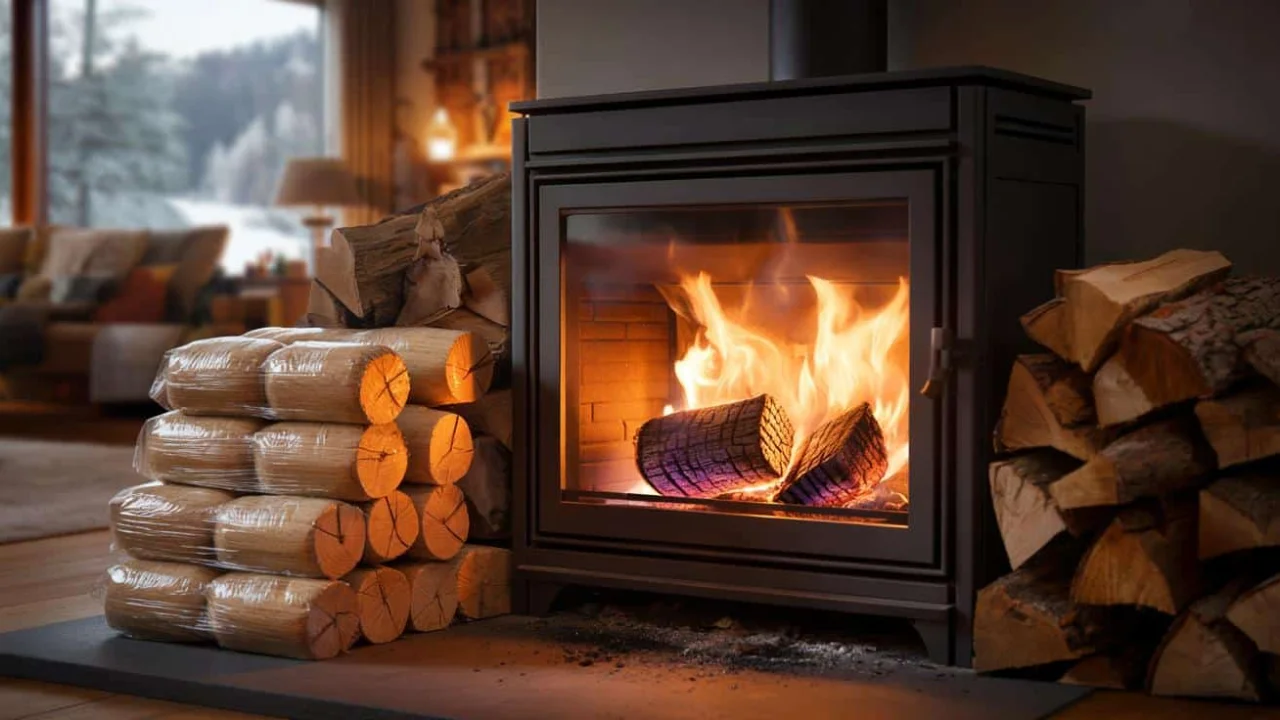
The Revolution in Your Fireplace: How Compressed Logs Are Transforming Home Heating
A quiet revolution is crackling to life in living rooms across Europe and beyond. The familiar ritual of stacking seasoned oak and splitting kindling is giving way to something far more sophisticated: engineered “super logs” that promise to deliver three times the heating power of traditional firewood. These aren’t just another eco-friendly trend – they represent a fundamental shift in how we think about burning wood for warmth.
The transformation is already sweeping across France, Germany, and Scandinavia, where homeowners are discovering that their grandfather’s approach to heating might not be the most efficient. These dense cylinders of compressed logs, made from recycled sawmill waste, are beginning to appear in British and American homes too, challenging everything we thought we knew about wood burning. The promise is almost too good to believe: the same cozy warmth, but with dramatically less fuel, less storage space, and cleaner combustion.
What makes this shift so compelling isn’t just the efficiency gains – though burning one-third the volume of fuel certainly helps the wallet and the back. It’s the elegance of the solution: turning industrial waste into premium heating fuel while reducing the environmental impact of home heating. For families tired of endless log-splitting weekends and smoke-stained ceilings, compressed logs offer a glimpse of a more convenient, cleaner future for wood heating.
The science behind these super-efficient logs reveals why traditional firewood, for all its rustic charm, has been leaving so much energy literally up in smoke. Understanding this transformation helps explain why heating engineers and environmental scientists are paying such close attention to what might seem like a simple product improvement.
Understanding the Technology Behind Compressed Logs
These high-performance heating solutions go by several names across different markets: compressed logs, densified logs, eco logs, biomass briquettes, or simply “engineered firewood.” Despite the varied branding, the fundamental process remains remarkably consistent and surprisingly simple in concept, yet sophisticated in execution.
The manufacturing process begins at sawmills, furniture workshops, and carpentry facilities across the country. What was once considered waste – sawdust, wood shavings, and small offcuts – becomes the raw material for these super-efficient logs. This residue material is collected, sorted for quality, and prepared for compression.
The magic happens under extreme pressure. Industrial presses apply forces exceeding 1,000 bars per square centimeter, compacting the loose sawdust into dense, solid cylinders. Under this immense pressure, the natural lignin in wood fibers acts as a binding agent, essentially gluing the particles together without any artificial additives, chemicals, or binding agents.
- Raw material collection: Sawdust and wood shavings from certified sources
- Quality sorting: Removal of contaminants and non-wood materials
- Moisture optimization: Achieving ideal moisture content for compression
- High-pressure compression: 1,000+ bars creating natural lignin bonding
- Cutting and packaging: Uniform sizing for consistent burning characteristics
The result looks deceptively simple: a solid, uniform cylinder or rectangular block that resembles artificial logs. However, from a combustion engineering perspective, these compressed logs behave completely differently from traditional split wood, delivering far superior performance across multiple metrics.
The Science of Superior Efficiency
The dramatic efficiency claims surrounding compressed logs aren’t marketing hyperbole – they’re based on fundamental differences in moisture content, density, and combustion characteristics that transform how energy is released during burning.
| Characteristic | Traditional Firewood | Compressed Logs | Improvement |
|---|---|---|---|
| Moisture Content | 20-30% | 6-10% | 66% reduction |
| Energy Density (kWh/kg) | 2.0-3.0 | 4.8-5.2 | 73% increase |
| Burn Time (per kg) | 30-45 minutes | 60-90 minutes | 100% longer |
| Ash Production | 1-3% | 0.5-1% | 66% reduction |
| Storage Volume (same heat) | 1 cubic meter | 0.25 cubic meters | 75% less space |
The moisture content difference proves crucial for understanding efficiency gains. Traditional firewood, even when properly seasoned, contains significant water that must be evaporated before combustion can proceed effectively. This process consumes substantial energy that could otherwise be heating your home.
“When you burn wet wood, you’re essentially running a steam engine before you get any useful heat,” explains Dr. Sarah Chen, combustion engineer at the Institute for Renewable Energy. “Compressed logs eliminate most of this waste, converting nearly all their energy directly into usable heat rather than steam.”
The uniform density of compressed logs also creates more predictable, controllable combustion. Unlike traditional logs with varying grain patterns, knots, and moisture pockets, compressed logs burn consistently from start to finish, maintaining steady heat output and reducing the need for constant fire management.
Real-World Performance and User Experience
The theoretical advantages of compressed logs translate into noticeable differences in daily use that go far beyond simple fuel efficiency. Homeowners switching to these engineered logs report transformative changes in their wood-burning experience.
- Immediate ignition: Low moisture content means faster, easier lighting
- Cleaner windows: Complete combustion reduces soot and tar deposits
- Less maintenance: Reduced creosote buildup in chimneys and flues
- Minimal ash: Complete burning leaves 60-70% less ash to clean
- Predictable burn times: Consistent fuel means reliable heating schedules
- No splitting required: Ready-to-burn logs eliminate preparation work
The storage revolution proves particularly appealing for urban and suburban homeowners. A winter’s heating supply that once required a large shed or garage can now fit in a small storage area, stacked neatly in weatherproof packaging.
“I was skeptical about switching from the oak logs my family has used for generations,” shares heating system installer Mike Rodriguez. “But after one season with compressed logs, my customers are reporting 40-50% reductions in fuel consumption while maintaining the same comfort levels. The consistency alone makes them worth the switch.”
Professional chimney sweeps are also noticing significant differences in homes using compressed logs. The cleaner burn characteristics result in less creosote accumulation, potentially extending intervals between professional cleanings and reducing fire hazards.
Environmental Impact and Sustainability
The environmental credentials of compressed logs extend beyond their impressive efficiency statistics. These products represent a circular economy approach to waste management, transforming what would otherwise be industrial waste into premium heating fuel.
Traditional firewood production requires cutting living trees specifically for fuel, even when sourced from sustainable forests. Compressed log manufacturing, by contrast, relies entirely on waste materials from existing wood processing operations – sawdust, wood shavings, and offcuts that would otherwise require disposal.
“We’re essentially closing the loop in wood processing,” notes environmental scientist Dr. James Patterson from the Sustainable Heating Initiative. “Instead of burning or landfilling sawmill waste, we’re capturing nearly 100% of its energy potential while reducing pressure on forest resources.”
The efficiency gains also translate directly into reduced emissions per unit of heat delivered. Burning one-third less fuel for the same warmth means proportionally lower carbon dioxide emissions, particulate matter, and other combustion byproducts.
- Waste reduction: Diverts 100% of raw materials from waste streams
- Forest preservation: Reduces demand for purpose-cut firewood trees
- Transportation efficiency: Higher energy density reduces delivery truck trips
- Carbon footprint: Up to 60% lower emissions per unit of heat delivered
- Air quality: Cleaner combustion reduces particulate matter pollution
The manufacturing process itself requires relatively little additional energy input, as the compression relies primarily on mechanical pressure rather than energy-intensive chemical processes or artificial binding agents.
Market Trends and Adoption Patterns
The compressed log market has experienced remarkable growth across Europe, with annual consumption increasing by 25-30% in key markets like Germany, France, and the Netherlands over the past five years. This growth pattern is beginning to replicate in North American markets as awareness spreads.
Pricing dynamics vary significantly by region, but compressed logs typically cost 20-40% more per unit weight than traditional firewood. However, the efficiency gains mean the cost per unit of heat delivered often favors compressed logs, especially in areas where quality seasoned firewood commands premium prices.
| Market Segment | Adoption Rate | Primary Drivers |
|---|---|---|
| Urban apartments | High (60-70%) | Storage limitations, convenience |
| Suburban homes | Moderate (30-40%) | Efficiency, reduced maintenance |
| Rural properties | Low (10-15%) | Traditional preferences, local wood access |
| Commercial heating | Growing (25-35%) | Consistency, reduced labor costs |
The retail landscape is adapting rapidly to meet growing demand. Major home improvement chains across Europe now dedicate significant shelf space to various brands of compressed logs, while specialized heating retailers report that these products often outsell traditional firewood during peak heating season.
Frequently Asked Questions
Are compressed logs safe to burn in any wood-burning appliance?
Yes, compressed logs work in fireplaces, wood stoves, and outdoor fire pits without modifications.
How much money can I save switching to compressed logs?
Most users see 30-50% reduction in heating fuel costs despite higher per-unit prices.
Do compressed logs produce the same cozy atmosphere as regular firewood?
Yes, they create natural flames and authentic crackling sounds indistinguishable from traditional logs.
Can I mix compressed logs with regular firewood?
Absolutely, many users combine both types to optimize efficiency and manage costs effectively.
How long do compressed logs typically burn compared to regular wood?
Individual compressed logs burn 60-90% longer than equivalent-sized pieces of traditional firewood.
Where can I buy compressed logs in my area?
Check home improvement stores, heating suppliers, and online retailers for local availability and delivery.