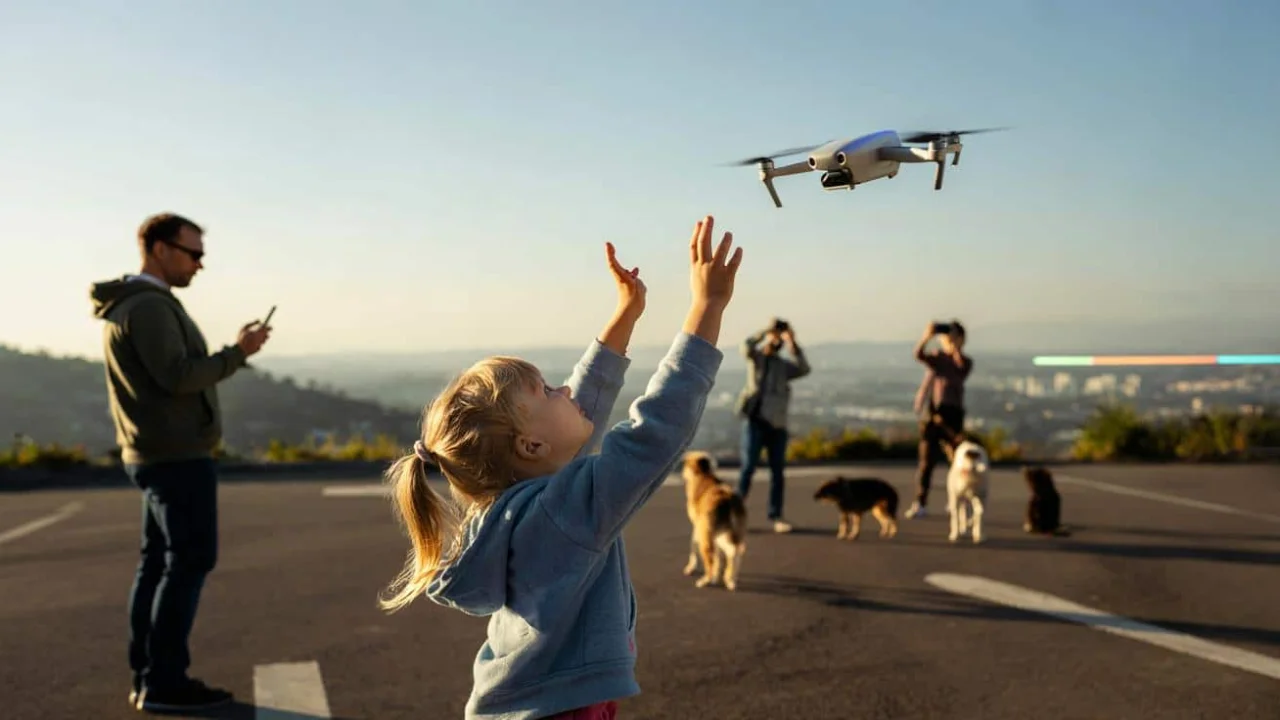
“The moment you realize you can direct a drone with simple hand gestures rather than wrestling with joysticks, everything changes about aerial photography,” says a drone technology consultant who has tested dozens of consumer aircraft.
On wind-swept parking lots and suburban parks across the country, a quiet revolution is unfolding. Fathers watch their daughters wave at machines that respond like trained pets. Teenagers film skateboard tricks without diving into flight menus. Travel vloggers walk toward cliff edges while dji gesture drone technology handles the complex calculations of tracking, framing, and obstacle avoidance.
This isn’t just another incremental upgrade in drone hardware. DJI’s latest offering represents a fundamental shift from “learn to fly” to “decide what story you want to tell.” The aircraft reads human posture, predicts movement paths, and uses advanced computer vision to transform body language into cinematic shots.
| Feature | Traditional Drones | DJI Gesture Drone |
|---|---|---|
| Learning Curve | Weeks of practice required | Immediate use with basic gestures |
| Control Method | Complex joystick combinations | Natural hand movements |
| Crash Risk | High for beginners | Minimal with automated avoidance |
| Shot Complexity | Requires advanced piloting skills | Automated tracking and framing |
Who Benefits Most From Autonomous Flight Technology
The dji gesture drone revolution touches several distinct user groups, each discovering new creative possibilities:
- Complete Beginners: Skip the intimidating learning curve and start creating usable footage immediately
- Content Creators: Focus on storytelling rather than technical flight operations during solo shoots
- Family Documentarians: Capture special moments without designating someone as the “pilot” who misses the action
- Travel Enthusiasts: Document adventures in remote locations where flying mistakes carry higher consequences
- Educators: Introduce students to drone technology without overwhelming them with complex controls
What Changes When Machines Handle The Technical Complexity
The shift from manual piloting to gesture control creates cascading changes across the entire drone experience:
- Stress Reduction: No more white-knuckle flights where beginners pray they don’t crash expensive equipment
- Creative Freedom: Mental energy shifts from “don’t crash” to “what shot do I want?”
- Accessibility: Physical limitations that made traditional controllers difficult become irrelevant
- Social Integration: Groups can include everyone in filming rather than isolating one person as the pilot
- Speed to Results: Usable footage on the first day instead of after weeks of practice crashes
“We’re witnessing the democratization of aerial cinematography,” explains a film production specialist. “When flying becomes invisible, creativity becomes visible.”
The technical achievement behind gesture recognition involves dense computer vision algorithms, real-time obstacle sensing, and predictive flight path calculations. The drone doesn’t simply respond to commands—it interprets human intentions and translates them into smooth, professional-looking camera movements.
| Gesture Type | Drone Response | Typical Use Case |
|---|---|---|
| Raised Palm | Locks tracking onto user | Establishing connection |
| Spread Arms | Widens framing distance | Group shots, landscape reveals |
| Walking Movement | Parallel tracking glide | Follow shots, travel sequences |
| Finger Pinch | Zooms in on subject | Detail focus, intimate shots |
Practical Impact On Real-World Drone Operations
The transformation from technical piloting to intuitive directing creates immediate practical benefits for users across experience levels. Veterans discover they can accomplish complex shots without the mental overhead of manual control. Newcomers find themselves creating footage they never thought possible on their first flights.
Early adopters report a psychological shift that happens within minutes of first use. The anxiety of potential crashes gives way to curiosity about creative possibilities. Instead of focusing on keeping the aircraft stable, users naturally begin thinking about lighting, composition, and narrative flow.
This dji gesture drone approach particularly shines in solo content creation scenarios. Travel bloggers no longer need to carry separate controllers or recruit strangers to operate equipment. The drone becomes a responsive creative partner rather than a complex machine requiring constant attention.
Professional applications emerge in unexpected areas. Real estate photographers can walk through properties while the drone captures exterior establishing shots. Wedding videographers can document ceremonies without the distraction of visible piloting. Documentary filmmakers can maintain eye contact with subjects while aerial cameras follow the action.
“The best technology disappears into the background,” notes a commercial drone operator. “When clients stop noticing the pilot and start focusing on the story, you know the tech is working.”
Optimizing Performance In Semi-Autonomous Flight Systems
Success with gesture-controlled drones depends less on technical flying skills and more on understanding how to communicate clearly with computer vision systems. The aircraft needs clean visual information to track subjects reliably and interpret intentions accurately.
Environmental factors play a crucial role in performance. Wide, open spaces give sensors room to work and reduce the risk of last-second obstacle decisions. Consistent lighting helps the tracking system maintain focus on subjects throughout flights. Clear backgrounds prevent the drone from becoming confused about which person or object to follow.
User behavior significantly impacts results. Slow, deliberate gestures help the drone distinguish intention from random movement. Wearing consistent clothing between takes prevents tracking confusion. Starting flights in optimal conditions builds confidence before attempting more challenging scenarios.
The most successful users treat the dji gesture drone as a collaborative partner rather than a remote-controlled toy. They spend time learning which movements translate into usable footage and which gestures confuse the system. This relationship-building approach yields better results than trying to force the technology to work in unsuitable conditions.
Frequently Asked Questions
Can the new DJI drone really be flown just with gestures?
Yes, basic flight operations work entirely through hand movements and body positioning without traditional controllers.
Do I still need a smartphone to use gesture control features?
A phone is required for initial setup and monitoring, but active flying happens through gestures.
Is gesture control safe for complete beginners?
The automated obstacle avoidance makes it much safer than traditional manual controls for new users.
Will the drone’s sensors prevent every possible crash?
Advanced avoidance reduces risks significantly but cannot eliminate every potential collision scenario.
Can gesture-controlled drones handle professional video work?
The footage quality and shot variety make it suitable for many professional applications.
How long does it take to learn effective gesture control?
Most users create usable footage within their first session, with refinement happening over several flights.
“We’re not just making flying easier,” reflects a drone industry analyst. “We’re changing who gets to tell stories from the sky, and that shift will define the next decade of aerial content creation.”