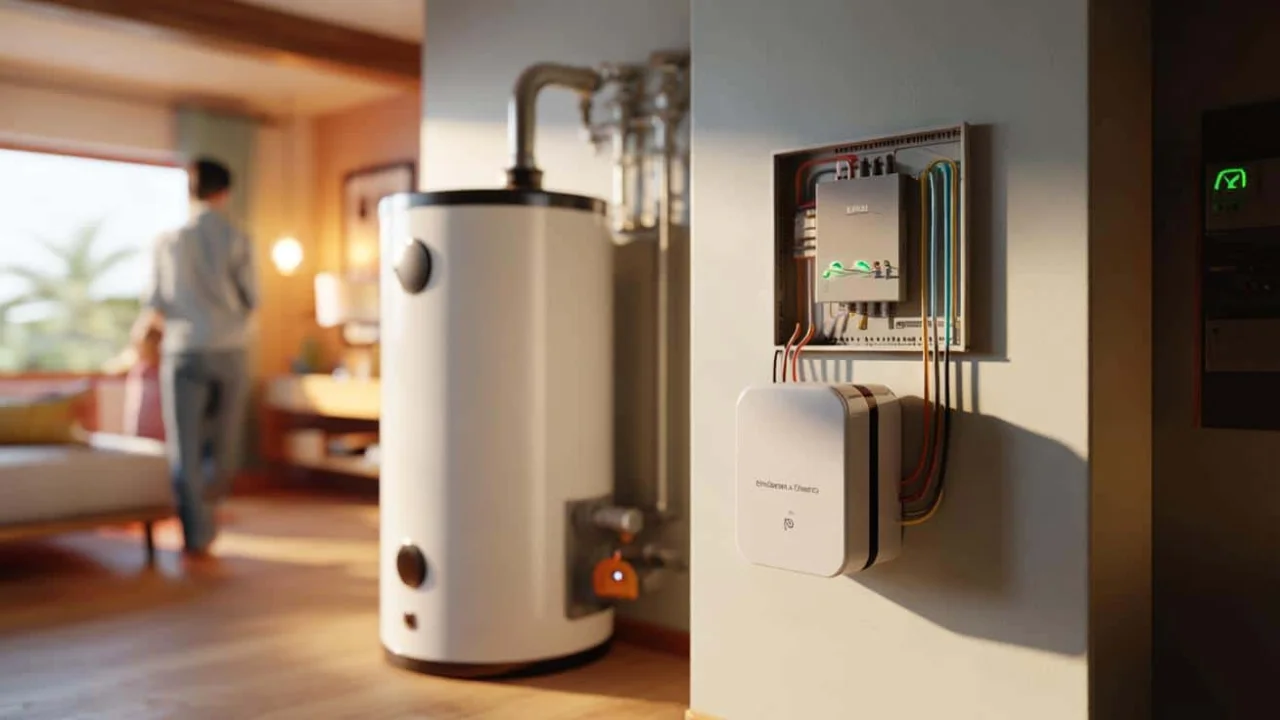
“Most homeowners don’t realize their water heater is burning money 24/7, even when everyone’s asleep,” says a residential energy consultant. “A simple programmer can cut that waste by up to 30% without anyone noticing a difference in their daily routine.”
Electric water heater energy consumption quietly drains household budgets across Europe and North America. While families focus on obvious power hogs like heating systems, their water heaters silently cycle on and off around the clock, maintaining tank temperatures whether hot water is needed or not.
This constant heating creates massive waste during the 16-18 hours daily when most homes use little to no hot water. A palm-sized control device can eliminate this inefficiency, targeting the hidden energy drain without forcing cold showers or lifestyle changes.
Why Standard Water Heaters Waste Energy Around the Clock
Electric water heaters operate like oversized kettles that never truly turn off. They heat water in insulated tanks, then maintain temperature through repeated heating cycles. Every hour water sits unused, it loses heat through tank walls and connecting pipes.
The heater responds automatically, firing up to restore the set temperature. This on-off pattern continues whether families are home, at work, or sleeping. Most electric water heaters rank as the second-highest energy consumers in homes, trailing only heating and cooling systems.
| Household Size | Tank Capacity | Daily Heating Cycles | Potential Waste Hours |
|---|---|---|---|
| Single person | 80-100 litres | 8-12 times | 18-20 hours |
| Couple | 150-200 litres | 10-15 times | 16-18 hours |
| Family of four | 200-300 litres | 15-20 times | 14-16 hours |
Who Benefits Most From Water Heater Control Devices
Several household types see dramatic savings from programmable water heater controls:
- Predictable schedules: Families with consistent morning and evening routines maximize efficiency gains
- Empty homes during work hours: Houses vacant 8+ hours daily waste the most energy through unnecessary heating
- Off-peak electricity users: Households with time-of-use rates double savings by scheduling heating during cheaper periods
- Vacation-prone families: Programmers prevent heating empty tanks during extended absences
- Energy-conscious homeowners: Those tracking consumption appreciate detailed usage data from smart controllers
How Programmable Controls Transform Water Heating Patterns
Water heater programmers don’t change water temperature or tank capacity. Instead, they eliminate waste by controlling when heating occurs:
- Scheduled operation: Heaters run only during programmed windows, typically 2-4 hours daily
- Dead-hour elimination: No heating during predictable low-usage periods like work hours or overnight
- Temperature maintenance: Tank insulation keeps water hot between heating cycles
- Override capability: Manual controls handle unexpected hot water needs
- Tariff optimization: Automatic alignment with cheaper electricity rates where available
“The beauty of these devices is their simplicity,” explains a home energy efficiency specialist. “They don’t require lifestyle changes or temperature compromises. They just stop your heater from working when nobody needs hot water.”
Installation Requirements and Professional Considerations
Most water heater energy controllers require electrical panel installation, though setup complexity varies by home wiring configuration. Older homes with plug-in heaters face different challenges than modern properties with dedicated circuits.
Panel-mounted programmers suit permanent installations best. They handle high wattage loads safely and offer reliable daily operation. Simple plug-in timers often can’t manage the 2,000-3,000 watt draws of standard electric water heaters.
| Installation Type | Difficulty Level | Professional Required | Typical Cost |
|---|---|---|---|
| Panel-mounted digital | Moderate | Recommended | €80-150 + labor |
| Smart Wi-Fi controller | Moderate | Recommended | €120-250 + labor |
| Basic mechanical timer | Low-Moderate | Optional | €30-60 + labor |
| Junction box unit | High | Essential | €60-120 + labor |
Real-World Energy Savings and Payback Periods
Energy consultants consistently document substantial consumption reductions when water heaters operate on scheduled programs. Savings vary by household size, usage patterns, and local electricity rates, but double-digit improvements are common.
A typical family of four can reduce their water heater energy consumption by 20-30% through strategic scheduling. With European electricity prices averaging €0.25-0.35 per kWh, annual savings often reach €150-300 per household.
Single-person households see smaller absolute savings but similar percentage reductions. Couples in well-insulated homes with predictable schedules often achieve 15-25% consumption cuts.
“We installed programmers in 50 homes last year and tracked the results,” reports a residential energy auditor. “Average savings hit 23% on water heating costs, with payback periods under 18 months even including installation labor.”
Advanced Features in Modern Water Heater Controllers
Contemporary programmable controllers offer sophisticated functionality beyond basic time scheduling. Smart models integrate with home automation systems, track energy consumption, and adapt to changing household patterns.
Wi-Fi enabled units allow remote control through smartphone apps. Families can override schedules from work, extend heating periods for guests, or monitor daily consumption trends. Some advanced controllers learn usage patterns automatically, adjusting schedules based on actual hot water demand.
Integration with solar panels or home batteries creates additional optimization opportunities. The water heater becomes a thermal storage system, converting excess solar production or cheap overnight electricity into hot water for later use.
Maximizing Efficiency Through Complementary Upgrades
Programmable controls work best alongside other efficiency improvements. Simple modifications can amplify savings from strategic scheduling:
Thermostat adjustment to 55-60°C balances safety with efficiency. Higher temperatures waste energy and accelerate limescale buildup. Lower settings risk bacterial growth in tank systems.
Regular descaling maintains heating element efficiency. Hard water areas benefit from professional tank cleaning every 2-3 years. Limescale-coated elements work harder and consume more electricity.
Low-flow fixtures reduce hot water volume without comfort loss. Modern shower heads and tap aerators cut consumption by 30-40% while maintaining water pressure.
Frequently Asked Questions
Will I run out of hot water with a programmed schedule?
Well-insulated tanks stay hot for 6-8 hours after heating stops. Most schedules provide adequate hot water for normal usage.
Can I override the program for unexpected hot water needs?
Yes, all programmers include manual override buttons or app controls for immediate heating when needed.
Do these devices work with off-peak electricity tariffs?
Absolutely. Many programmers specifically target cheaper overnight rates, doubling your savings through reduced consumption and lower prices.
How long does professional installation typically take?
Most electricians complete installation in 1-2 hours, including testing and basic programming setup.
Are smart controllers worth the extra cost over basic timers?
Smart units offer convenience and detailed energy tracking but basic mechanical timers provide similar core savings for budget-conscious households.
“The best part about water heater energy controllers is how invisible they are once installed,” concludes a home automation specialist. “Your daily routine stays exactly the same, but your electricity bill drops significantly every month. It’s one of the simplest energy upgrades any homeowner can make.”