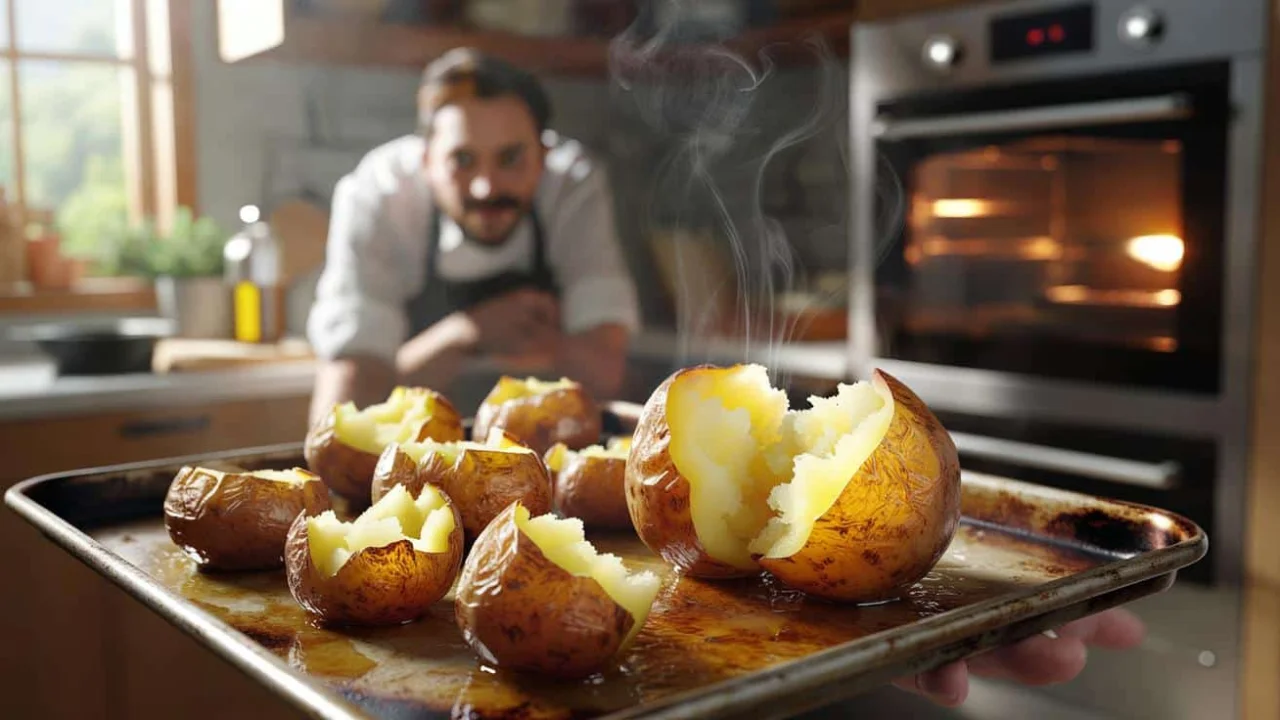
A renowned chef’s revolutionary approach to crispy baked potatoes eliminates the tedious boiling step while delivering restaurant-quality results in under an hour. The technique, developed through years of kitchen experimentation, uses a blazing-hot tray and cornstarch coating to create the perfect contrast between shatteringly crisp exteriors and cloud-like interiors.
Home cooks have struggled for decades with inconsistent potato results, often ending up with pale, stuck-to-the-pan disappointments instead of the golden, crunchy perfection they envision. This method changes everything by treating potatoes with the aggressive heat they actually need.
| Method Component | Traditional Approach | Chef’s Innovation | Time Saved |
|---|---|---|---|
| Preparation | Boil 15 mins + dry 10 mins | Quick rinse + drain 2 mins | 23 minutes |
| Coating System | Oil only after boiling | Oil + cornstarch + salt | No extra steps |
| Cooking Temperature | 180-200°C gradual | 230°C blast heat | Faster browning |
| Total Active Time | 45-60 minutes | 35-45 minutes | 15 minutes |
Temperature and Timing Specifications That Deliver Results
The science behind perfect crispy baked potatoes relies on precise heat application and timing. Professional kitchens understand that potato preparation isn’t about gentle cooking—it’s about controlled aggression.
| Stage | Temperature | Duration | Visual Indicator |
|---|---|---|---|
| Tray Preheating | 230°C (450°F) | 15 minutes | Metal visibly hot, oil sizzles on contact |
| Initial Roasting | 230°C (450°F) | 15 minutes | Edges start bubbling, slight browning |
| Flip and Finish | 230°C (450°F) | 15-25 minutes | Deep golden, audible crackle when tapped |
| Rest Period | Room temperature | 2-3 minutes | Steam settles, crust firms up |
Revolutionary Coating Formula Replaces Traditional Boiling
The breakthrough lies in a simple coating mixture that mimics the starch-building effects of parboiling without touching a pot of water. This cornstarch solution creates the rough surface texture that transforms into an irresistible crackly shell.
| Traditional Method | Chef’s Innovation | Result Comparison |
|---|---|---|
| 15-minute boil to soften edges | Cornstarch coating applied to hot tray | Same starch buildup, zero waiting |
| 10-minute drying on towels | Quick drain, straight to oven | Surface moisture creates instant steam lift |
| Gradual heat application | Immediate sear on blazing metal | Locked-in texture from first contact |
| Multiple pots and timing | Single tray, one-step process | Simpler cleanup, consistent results |
Potato Variety Selection Criteria
Success starts with choosing the right foundation. Not all potatoes respond equally to high-heat roasting, and understanding the differences prevents disappointing results.
- Starchy potatoes (Russet, Maris Piper) – High starch content creates fluffy interiors when steam builds pressure inside
- Avoid waxy varieties (Red, New potatoes) – Lower starch means denser, less impressive texture contrast
- Size consistency matters – Cut pieces to roughly equal dimensions for even cooking throughout the batch
- Fresh potatoes preferred – Older potatoes with soft spots won’t achieve the same structural integrity
- Skin-on option available – Leaving skins adds extra texture and flavor without compromising the technique
“The biggest mistake home cooks make is treating potatoes gently. They need aggressive heat from the start, not gradual warming,” explains a professional culinary instructor with 15 years of kitchen experience.
Step-by-Step Implementation for Consistent Excellence
Executing this technique requires attention to sequence and timing, but the actual hands-on work remains minimal. Each step builds toward that perfect contrast of textures.
Preparation Phase:
- Preheat oven to 230°C (450°F) with empty baking tray inside for 15 minutes minimum
- Peel and cut starchy potatoes into chunky wedges or 2-inch cubes
- Quick rinse under cold water, drain thoroughly in colander for 2-3 minutes
- Mix coating: thin layer neutral oil + 1 tablespoon cornstarch + 1 teaspoon fine salt
Cooking Execution:
- Carefully remove blazing-hot tray, immediately stir oil mixture with tongs
- Add drained potatoes in single layer, roll quickly in cloudy coating
- Return to oven immediately, roast undisturbed for 15 minutes
- Flip once, continue 15-25 minutes until deeply golden with visible browning
Common Failure Points and Prevention Strategies
Understanding where this method typically goes wrong helps ensure success on the first attempt. Most problems stem from rushing the process or second-guessing the high heat requirement.
- Insufficient tray preheating – Cold metal means steaming instead of searing, leading to pale, soft results
- Overcrowding the surface – Potatoes need space for steam to escape and edges to brown properly
- Premature flipping – Moving pieces too early prevents proper crust formation on the bottom side
- Fear of deep browning – Pulling the tray too early stops short of optimal color and crunch development
- Wrong oil temperature – Adding potatoes to cold oil creates sticking and uneven coating distribution
“Home cooks consistently underestimate how much browning potatoes can handle. That deep golden color isn’t burning—it’s flavor development happening in real time,” notes a restaurant consulting chef who trains kitchen teams nationwide.
Scientific Explanation Behind the Texture Transformation
The physics of perfect crispy baked potatoes involves controlled water behavior and starch manipulation. Understanding these processes explains why this method works so reliably compared to traditional approaches.
When potatoes hit the superheated tray, surface moisture instantly converts to steam, creating micro-expansion in the cornstarch coating. This rapid moisture loss forms the foundation for the crispy shell, while interior water continues converting to steam, inflating the potato’s cellular structure from within.
The cornstarch acts as both a protective barrier and a browning catalyst. Unlike flour-based coatings, cornstarch creates a more delicate, glass-like crispness that shatters cleanly when bitten. The high heat ensures this coating dehydrates completely rather than remaining gummy or soft.
Flavor Enhancement Options That Work With High Heat
While the basic technique produces exceptional results, strategic seasoning additions can elevate the final product without compromising the crispy texture. Timing matters significantly when introducing additional flavors.
- Robust spices (paprika, garlic powder, chili) – Add during final 10-15 minutes to toast without burning
- Delicate herbs (parsley, chives) – Sprinkle immediately after removing from oven
- Grated hard cheese – Dust over potatoes in last 5 minutes for golden, crispy coating
- Finishing salt options – Flaky sea salt or flavored salts applied while potatoes are still hot
Frequently Asked Questions About Advanced Potato Roasting
Can I use olive oil instead of neutral oil for the coating?
Yes, but choose regular olive oil rather than extra virgin to avoid smoking at high temperatures.
What happens if I only have waxy potatoes available?
Cut them smaller and extend cooking time, though the interior will be creamier rather than fluffy.
How much cornstarch creates the optimal coating thickness?
One tablespoon per standard tray; more creates powdery texture, less reduces crispiness benefits.
Do I need to peel potatoes for this technique?
No, leaving skins on adds extra texture and requires only thorough scrubbing before cutting.
Can I prepare the coating mixture in advance?
Mix oil and cornstarch fresh each time for best adhesion and browning properties.
What’s the maximum batch size for consistent results?
Single layer only; overcrowding prevents proper air circulation and even browning throughout.
Implementation Timeline for Perfect Execution
Success with crispy baked potatoes depends on precise timing coordination. This schedule ensures each component reaches optimal temperature and texture simultaneously.
| Action Item | Timing | Critical Success Factor |
|---|---|---|
| Start oven preheating with tray | 45 minutes before serving | Tray must be blazing hot before contact |
| Prepare and drain potatoes | 30 minutes before serving | Surface moisture controlled, not eliminated |
| Apply coating, start roasting | 35 minutes before serving | Work quickly to maintain tray temperature |
| Flip and continue cooking | 20 minutes before serving | Allow deep browning without fear |
| Rest and serve immediately | At serving time | Crispness peaks within first few minutes |