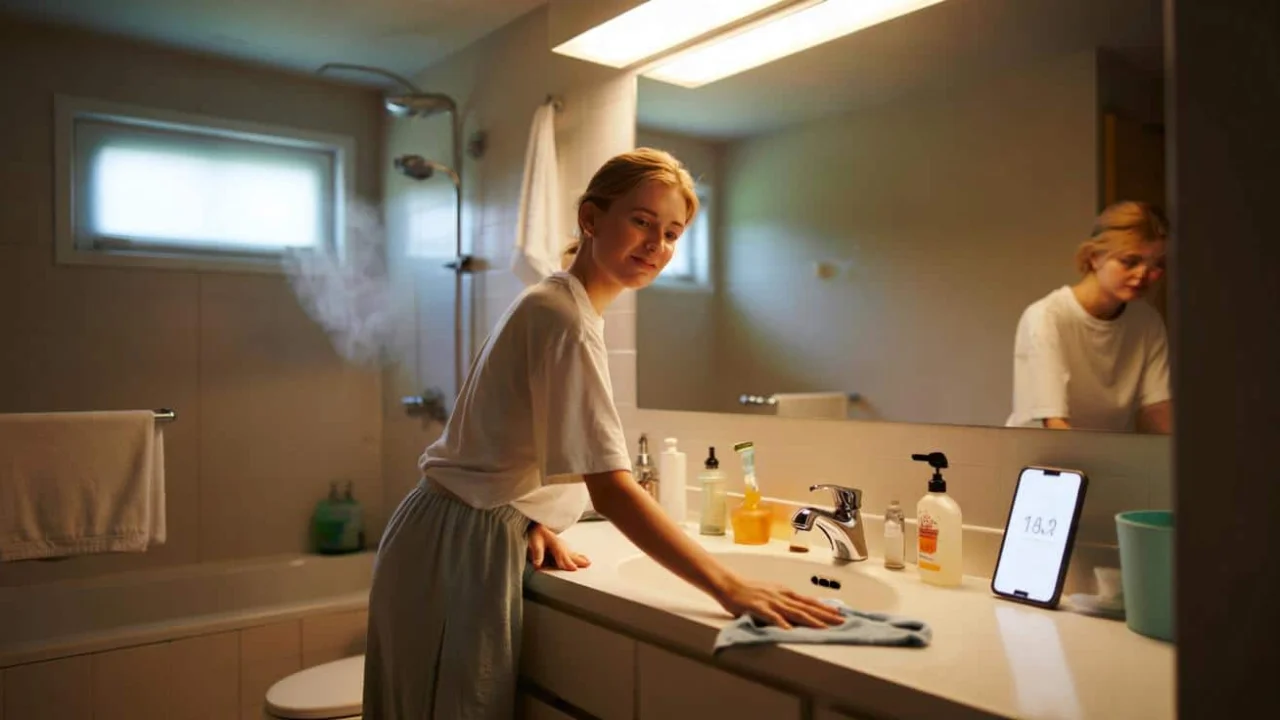
“The difference between a clean bathroom and a chaotic one isn’t discipline—it’s timing,” says a professional home organization consultant. “Most people wait until the mess becomes overwhelming, but the real secret is catching it early and often.”
Every homeowner knows that sinking feeling when unexpected guests ask to use the bathroom. Your stomach drops as you mentally catalog the toothpaste splatters, water spots, and hair accumulating in corners. But what if maintaining a consistently clean bathroom required just ten minutes of your time each week?
The concept of sunday bathroom cleaning isn’t about deep scrubbing or marathon cleaning sessions. It’s about strategic maintenance that prevents small messes from becoming major projects. This approach transforms one of the most dreaded household chores into a manageable weekly ritual that actually works.
Unlike traditional cleaning schedules that demand perfection, this method focuses on consistency over intensity. The psychology is simple: dirt multiplies faster than motivation. When you catch problems while they’re still minor, you avoid the overwhelming buildup that makes bathroom cleaning feel impossible.
| Cleaning Approach | Time Investment | Frequency | Stress Level | Results |
|---|---|---|---|---|
| Traditional Deep Clean | 45-90 minutes | Monthly | High | Perfect then declining |
| Sunday Reset Routine | 10 minutes | Weekly | Low | Consistently good |
| Daily Spot Cleaning | 2-5 minutes | Daily | Medium | Variable compliance |
Who Benefits Most From Weekly Bathroom Maintenance
This sunday bathroom cleaning approach works especially well for specific household situations:
- Busy professionals: Limited time for extensive cleaning but need consistently presentable spaces
- Parents with young children: Bathrooms get messy quickly and need frequent but manageable resets
- College students and renters: Maintaining cleanliness without investing in expensive products or tools
- People with mobility limitations: Shorter, less physically demanding cleaning sessions
- Procrastinators: Those who avoid cleaning because it feels overwhelming
- Perfectionist cleaners: Learning to maintain “good enough” without burnout
How The Ten-Minute Method Changes Everything
The transformation happens through several key shifts in approach:
- Prevention over perfection: Stopping buildup before it requires scrubbing or harsh chemicals
- Routine over motivation: Creating automatic habits that don’t depend on feeling like cleaning
- Maintenance over restoration: Keeping surfaces in good condition rather than rescuing neglected areas
- Speed over thoroughness: Accepting “clean enough” as a sustainable standard
- Consistency over intensity: Small weekly efforts that compound over time
- Systems over products: Relying on predictable routines rather than specialized cleaning solutions
“When clients tell me they don’t have time to clean, I ask them how much time they spend feeling guilty about not cleaning,” explains a residential cleaning specialist. “Usually, the mental energy spent avoiding the bathroom exceeds the actual time needed for upkeep.”
The Essential Steps That Actually Work
The magic of effective sunday bathroom cleaning lies in the specific sequence and timing. Here’s the proven ten-minute protocol that maintains cleanliness without overwhelming effort:
Minutes 1-2: Surface Preparation
Start with a multi-surface spray hitting three areas simultaneously: sink, counter, and exterior toilet surfaces. While the cleaning solution activates, quickly remove obvious trash like empty bottles, packaging, and expired products. This creates immediate visual improvement and workspace.
Minutes 3-4: Wipe Down Sequence
Using one microfiber cloth, work systematically: counter surfaces first, then sink basin, followed by toilet exterior and handles. The key is maintaining flow rather than perfection. If something isn’t stuck on, it comes off easily with basic wiping.
Minutes 5-6: Mirror and Fixtures
Spray the mirror and wipe from top to bottom using either a separate cloth or paper towel. Address visible shower or tub surfaces—soap holders, faucets, and obvious buildup areas. Skip what isn’t immediately visible or problematic.
Minutes 7-8: Floor Management
Empty the trash bin completely and replace the liner. This single action dramatically improves the room’s overall feel. Quickly sweep or vacuum visible floor areas, focusing on hair and debris accumulation zones.
Minutes 9-10: Final Reset
If energy allows, pass a damp mop or cleaning wipe over high-traffic floor areas. Hang towels properly, straighten toiletries, and ensure everything has a designated place. The goal is leaving the space feeling organized and fresh.
| Task | Time Required | Tools Needed | Impact Level |
|---|---|---|---|
| Surface wiping | 3 minutes | Multi-surface spray, cloth | High |
| Mirror cleaning | 1 minute | Spray, paper towel | Medium |
| Trash removal | 1 minute | New liner | High |
| Floor care | 2 minutes | Broom or vacuum | Medium |
| Quick organization | 2 minutes | None | High |
| Shower spot clean | 1 minute | Existing cloth | Medium |
Why Traditional Bathroom Cleaning Methods Fail
Most bathroom cleaning advice assumes unlimited time and energy. The reality for busy households is different. Traditional approaches fail because they’re unsustainable:
Deep cleaning sessions require significant time blocks that rarely appear in busy schedules. When you finally find time, the buildup is so extensive that cleaning becomes genuinely unpleasant. This creates a cycle of avoidance and guilt.
Daily cleaning sounds ideal but lacks flexibility. Missing one day creates guilt, missing several days makes the system feel broken. People abandon daily routines faster than weekly ones because they’re harder to recover from when life interferes.
Product-heavy approaches require purchasing, storing, and organizing multiple specialized cleaners. This adds complexity and cost without proportional benefits. Simple solutions often work just as effectively for regular maintenance.
“The clients who maintain the cleanest homes aren’t the ones with the most products or the most time,” notes a professional organizer. “They’re the ones with the most predictable routines. Consistency beats perfection every time.”
Creating Your Personal Sunday System
Success with sunday bathroom cleaning depends on customizing the approach to your specific situation and preferences:
Timing Flexibility: Sunday evening works for many people because it prepares the space for the busy week ahead. However, Saturday afternoon, Sunday morning, or even Wednesday evening can work equally well. The key is choosing a time you can protect consistently.
Product Selection: One quality multi-surface cleaner handles most tasks effectively. Avoid the temptation to overcomplicate with specialized products for different surfaces. Simple solutions reduce both cost and decision fatigue.
Tool Efficiency: Keep everything in one location—preferably under the bathroom sink or in a small caddy. Having supplies immediately available eliminates excuses and setup time. Replace tools when they become ineffective rather than struggling with worn-out equipment.
Boundary Setting: The ten-minute timer isn’t negotiable. It protects against perfectionism and ensures the routine remains manageable. When time expires, stop. Leaving some imperfection teaches your brain that “good enough” is acceptable.
Recovery Planning: Decide in advance how to handle missed weeks. Sometimes one “reset-plus” session lasting fifteen minutes gets you back on track. Having a plan prevents one missed week from derailing the entire system.
The Hidden Psychology Behind Weekly Success
Understanding why weekly bathroom maintenance works better than other frequencies reveals important insights about sustainable cleaning habits:
Weekly intervals hit the sweet spot for most bathroom messes. Buildup reaches the “mildly annoying” stage rather than the “overwhelming project” phase. This keeps cleaning tasks within the easy category, maintaining motivation and compliance.
The predictable schedule creates mental relief. You stop having random guilt about bathroom conditions because you know exactly when you’ll address them. This reduces the emotional burden that makes cleaning feel worse than it actually is.
Regular maintenance creates positive momentum. A basically clean bathroom encourages small tidy-up actions throughout the week—hanging towels properly, wiping small spills immediately, and keeping surfaces clear. The weekly reset amplifies these micro-habits.
Common Questions About Sunday Bathroom Routines
What if I genuinely don’t have ten minutes on Sunday?
Do a five-minute “half reset”: trash out, quick sink wipe, toilet handle and seat. It’s better to do a tiny version weekly than a perfect version rarely.
Do I need special bathroom products for this routine?
No. A basic multipurpose cleaner that’s safe for your surfaces is enough for regular maintenance. Stronger products are only useful when buildup has already won.
What about deep cleaning, like scrubbing grout or descaling?
That’s extra. Plan those once every month or two, on a separate day, so your Sunday ritual stays light and easy. The weekly reset actually makes deep cleans much faster.
How do I get my partner or kids to join in?
Give each person one tiny, clear job: empty the bin, wipe the mirror, shake the bathmat. Keep it specific and short so it feels doable, not like a lecture about cleaning.
My bathroom is a disaster right now. Where do I start?
First, do one “reset-plus” session: throw away trash, clear surfaces, wipe sink and toilet, sweep the floor. After that initial push, switch to the weekly ten-minute ritual so it never gets that bad again.
Is this method enough for large families or heavily used bathrooms?
You might need to increase frequency to twice weekly or add a quick mid-week touch-up. The principle remains the same: frequent light maintenance prevents major cleaning sessions.
“The most successful cleaning routines are the ones people actually follow,” concludes a home management expert. “Ten minutes of consistent weekly effort beats two hours of sporadic deep cleaning every time. Your bathroom doesn’t need to be perfect—it just needs to be pleasant and functional.”