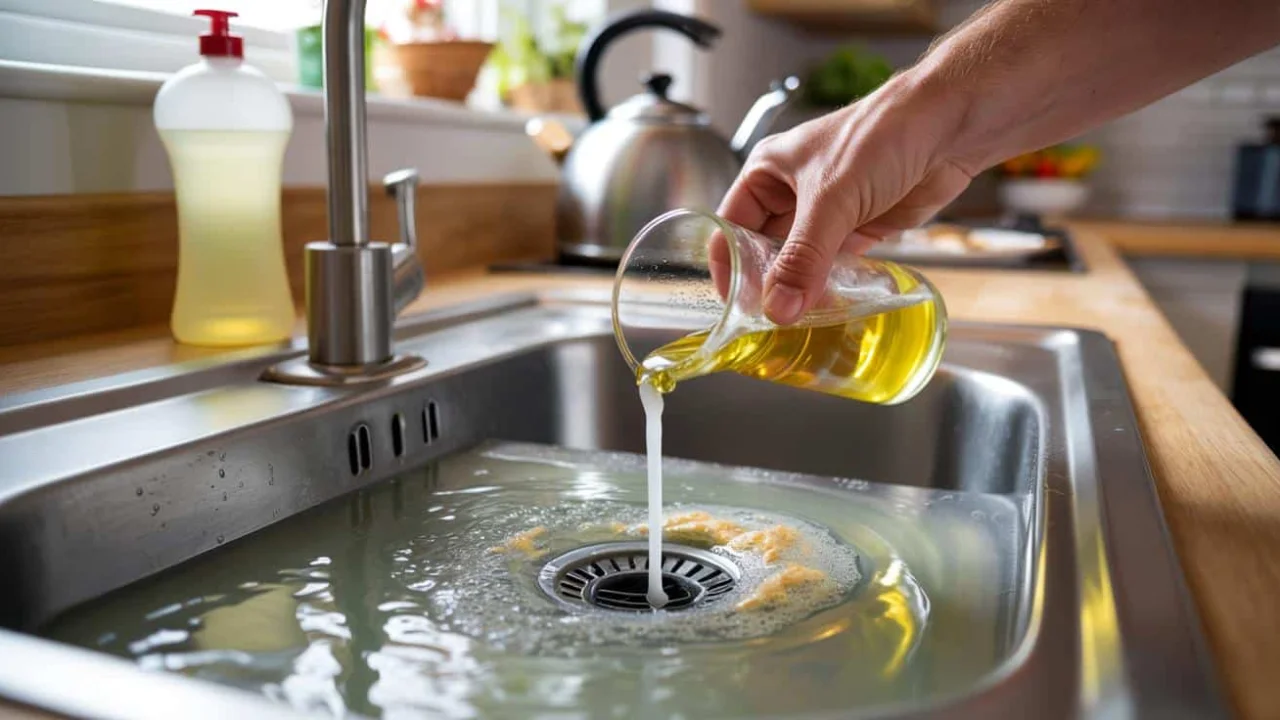
“Most homeowners spend a fortune on expensive drain cleaners when the solution is sitting right next to their kitchen sponge,” says a professional plumber with over 15 years of experience. “Half a glass of dish soap and hot water can clear most clogs without the harsh chemicals or messy reactions.”
Picture this familiar nightmare: you’re washing dishes after dinner when the water suddenly stops draining. Instead of swirling down in a satisfying whirlpool, it sits there forming a greasy puddle with floating food particles. The smell starts creeping up—a nauseating mix of old coffee grounds and mystery grime.
Your first instinct? Rush to find baking soda and vinegar for that classic foaming volcano trick. But what if there was a simpler, quieter solution already in your kitchen? What if the most effective drain cleaning solution was literally sitting next to your dish sponge?
| Traditional Method | Simple Dish Soap Solution |
|---|---|
| Baking soda + vinegar (messy foam) | Half glass dish soap + hot water |
| Harsh chemical drain cleaners | Gentle, everyday ingredients |
| $15-25 per bottle | Under $3 using existing supplies |
| Strong chemical odors | No unpleasant fumes |
| Risk of pipe damage over time | Safe for most plumbing systems |
Who Benefits Most From This Kitchen Sink Strategy
This gentle approach works especially well for specific household situations:
- Busy families: Quick fix for post-dinner cleanup without waiting for store trips
- Apartment renters: Safe method that won’t damage landlord’s plumbing systems
- Budget-conscious households: Uses items already purchased for regular kitchen use
- Chemical-sensitive individuals: Avoids harsh fumes and skin-irritating ingredients
- Regular cooks: Prevents grease buildup from frequent meal preparation
How Grease-Fighting Soap Transforms Into Pipe Cleaner
Most everyday drain clogs aren’t mysterious industrial gunk—they’re fat, soap scum, hair, and food residue clinging to pipe walls like grease on a frying pan. Here’s how this drain cleaning solution tackles the problem:
- Grease dissolution: Dish soap breaks down fatty deposits that trap other debris
- Friction reduction: Slippery soap coating helps stuck particles slide through pipes
- Heat activation: Hot water softens hardened buildup and increases soap effectiveness
- Gentle pressure: Gradual hot water pours create steady flow without pipe stress
- Natural lubrication: Soap creates pathway for future water flow improvement
“The beauty of this method is its simplicity,” explains a residential maintenance specialist. “You’re not creating chemical reactions or forcing blockages—you’re gently dissolving the problem at its source.”
Step-By-Step Process For Maximum Effectiveness
Getting the technique right makes all the difference between success and frustration. Start by removing any visible debris around the drain opening—food particles, hair clumps, or coffee grounds your fingers can easily reach.
Pour approximately half a glass of liquid dish soap directly into the drain. Choose a fluid, degreasing formula rather than thick, creamy varieties that might not flow as easily down the pipes.
Heat water in a kettle or large pot until very hot but not at a rolling boil. Boiling water can potentially warp plastic pipes or create too much pressure in older plumbing systems.
Slowly pour the hot water down the drain in two or three separate rounds, pausing briefly between each pour. This gradual approach allows the water to work with the soap rather than rushing past it.
| Step | Action | Why It Matters |
|---|---|---|
| 1 | Remove visible debris | Prevents soap from getting trapped on surface obstacles |
| 2 | Pour half glass dish soap | Provides adequate concentration to break down grease |
| 3 | Add hot (not boiling) water | Activates soap without risking pipe damage |
| 4 | Wait 10-15 minutes | Gives soap time to penetrate and soften blockages |
| 5 | Flush with more hot water | Carries loosened debris safely through the system |
Common Mistakes That Reduce Success Rates
Patience proves crucial with this method. Many people expect immediate results within 30 seconds, but established clogs need time to soften and dissolve. Think of it like cleaning a greasy oven that hasn’t been maintained for months—one quick wipe won’t cut through built-up residue.
Using too little soap creates another common problem. A few drops work great for washing dishes, but your drain requires a generous amount to coat the pipe walls effectively and break down accumulated grease.
Pouring boiling water too quickly often proves counterproductive. Rushing water flows past the problem area without spending enough contact time where it’s needed most. Gentle, steady pours work more efficiently than dramatic waterfalls.
“I tell my clients that half my emergency calls could be prevented with hot water and a good squirt of dish soap used regularly,” notes a licensed plumber. “It’s about consistency, not intensity.”
When Simple Solutions Meet Their Limits
This gentle approach handles most kitchen sink clogs caused by everyday cooking and dishwashing. However, certain situations require different strategies or professional intervention.
Completely blocked drains where no water passes through need mechanical removal before any drain cleaning solution can work effectively. Hair-heavy clogs in bathroom drains might need physical removal from drain covers first.
Very old, hardened blockages sometimes require multiple treatments over several days rather than expecting one-time miracle results. The key lies in persistence rather than switching immediately to harsh chemicals.
Building Prevention Into Daily Kitchen Routines
Once you’ve experienced success with this method, your relationship with your sink changes completely. Instead of seeing clogs as mysterious disasters, you’ll recognize them as the logical result of daily cooking activities.
Smart timing makes this preventive approach even more effective. After preparing particularly greasy meals—think bacon breakfasts or stir-fry dinners—a quick half-glass of dish soap and hot water becomes a natural closing ritual.
Even weekly maintenance using this technique prevents the kind of major blockages that ruin your morning routine. Small, consistent actions beat dramatic cleaning sessions you never actually perform.
Cost Comparison Over Time
Regular use of this simple drain cleaning solution delivers significant savings compared to emergency plumber calls or repeated purchases of commercial drain cleaners. A typical bottle of liquid dish soap costs under $3 and provides dozens of drain treatments.
Commercial drain cleaners range from $8-15 per bottle, with many requiring multiple applications for stubborn clogs. Professional drain cleaning services typically charge $100-200 for basic blockage removal.
“Prevention always costs less than cure,” emphasizes a home maintenance expert. “This soap method exemplifies that principle perfectly—minimal investment, maximum long-term benefit.”
Frequently Asked Questions
Can I use any kind of dish soap for this method?
Most regular liquid dish soaps work well, especially degreasing formulas. Avoid very thick or creamy varieties.
Is this safe for old or plastic pipes?
Yes, hot water and dish soap are gentle on most plumbing systems. Use warm rather than boiling water for fragile pipes.
What if the drain is completely blocked?
Remove standing water first or use a plunger. Call professionals for completely blocked drains before forcing anything.
Can I mix this with commercial drain cleaners?
Never mix different products. Wait for chemicals to flush completely before trying soap method on another day.
Does this work for bathroom drains too?
Yes, especially for soap scum and oils. Remove hair from drain covers first for better results.
How often should I use this preventive treatment?
Weekly maintenance or after particularly greasy cooking sessions prevents most serious clogs from developing.
“The most effective cleaning solutions are often the simplest ones,” concludes a residential plumbing contractor. “This dish soap method proves that sometimes the best tools are already in your kitchen cabinet, waiting to solve tomorrow’s problems today.”