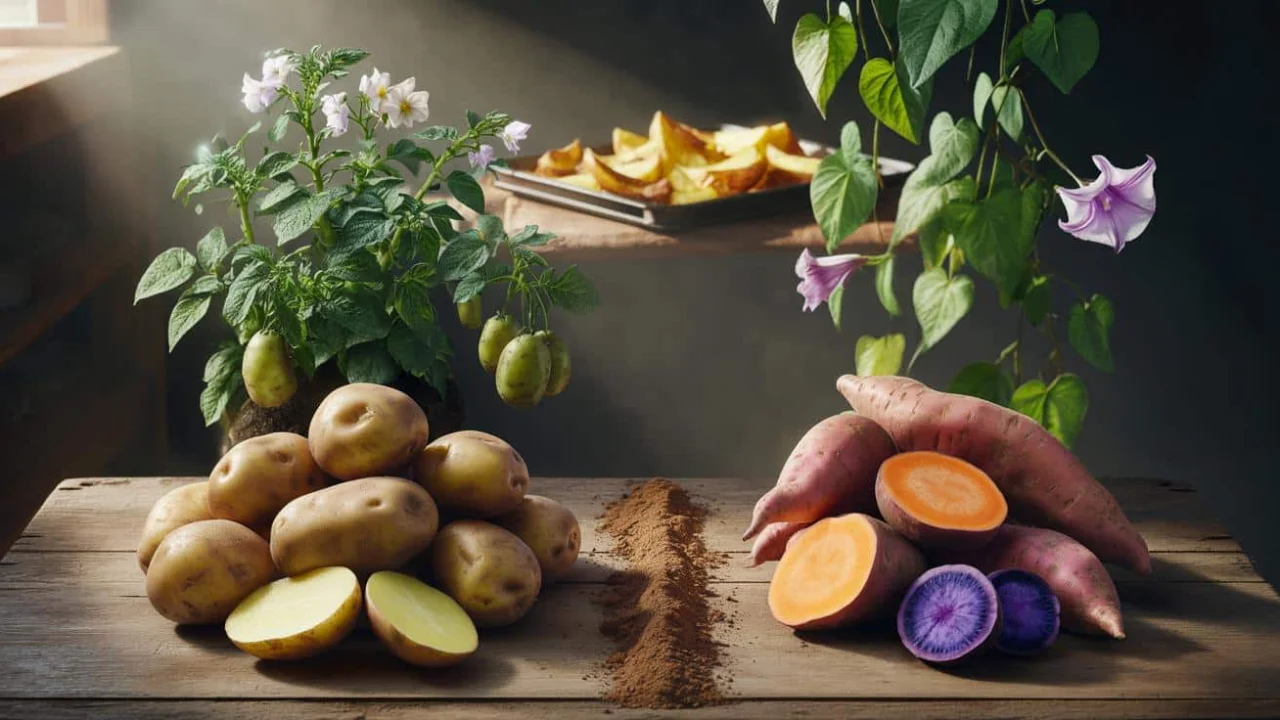
At a grocery store last week, two shoppers stood puzzled in front of the produce bins, debating whether sweet potatoes qualify as “healthier potatoes.” Their confusion reflects a widespread misconception that has persisted for centuries: despite sharing similar names and culinary uses, sweet potatoes and potatoes are about as botanically related as roses and oak trees.
This revelation affects millions of home cooks, gardeners, and health-conscious consumers who make daily decisions based on the assumption that these are simply different varieties of the same plant. The reality challenges everything from grocery shopping habits to dietary choices.
Plant Classification Reality Check
| Characteristic | Regular Potato | Sweet Potato |
|---|---|---|
| Plant Family | Solanaceae (Nightshades) | Convolvulaceae (Morning Glory) |
| Related Plants | Tomatoes, Eggplant, Peppers | Morning Glory Flowers, Bindweed |
| Scientific Name | Solanum tuberosum | Ipomoea batatas |
| Edible Part | Underground stem (tuber) | Storage root |
| Growth Pattern | Bushy upright plant | Trailing vine |
Nutritional Content Breakdown By Numbers
| Nutrient (per 100g) | Regular Potato | Sweet Potato | Winner |
|---|---|---|---|
| Calories | 77 | 86 | Potato |
| Vitamin A (% DV) | 0% | 384% | Sweet Potato |
| Potassium (mg) | 421 | 337 | Potato |
| Fiber (g) | 2.2 | 3.0 | Sweet Potato |
| Glycemic Index | 78-111 | 54-94 | Sweet Potato |
How Evolutionary Paths Diverged Millions Of Years Ago
| Comparison Factor | Regular Potato | Sweet Potato | Impact |
|---|---|---|---|
| Toxic Compounds | Solanine in green parts | None significant | Storage and safety protocols differ |
| Reproduction Method | Seed potatoes (clonal) | Slips from roots | Growing techniques incompatible |
| Climate Needs | Cool weather tolerant | Warm weather required | Different planting seasons |
| Storage Requirements | Dark, cool, ventilated | Warm, humid conditions | Separate pantry strategies needed |
Who Gets Affected By This Botanical Mix-Up
Several groups face practical consequences from treating sweet potatoes and potatoes as interchangeable:
- Home gardeners: Those expecting identical growing conditions often experience crop failures when applying potato techniques to sweet potatoes
- People with nightshade sensitivities: Individuals avoiding tomatoes and peppers may unnecessarily eliminate sweet potatoes from their diet
- Diabetic individuals: Those monitoring glycemic response need different strategies for each root vegetable
- Professional chefs: Recipe developers substituting one for another without understanding structural differences face texture and flavor failures
- Nutrition-focused consumers: Health-conscious shoppers making choices based on “potato” generalizations miss specific benefits of each plant
“When clients tell me they’re avoiding all potatoes for health reasons, I have to explain they’re eliminating two completely different plants with distinct nutritional profiles,” says a registered dietitian specializing in plant-based nutrition.
Practical Kitchen And Garden Applications
Understanding the true relationship between these plants transforms daily cooking and growing decisions:
- Frying performance: Regular potatoes create superior crispy textures due to higher starch content and lower moisture
- Baking characteristics: Sweet potatoes caramelize naturally, requiring different temperature and timing approaches
- Storage protocols: Regular potatoes need darkness to prevent solanine buildup; sweet potatoes tolerate light exposure better
- Seasonal availability: Growing seasons don’t overlap, affecting fresh availability and pricing cycles
- Recipe substitution limits: Direct swaps often fail due to moisture content and structural differences
- Nutritional planning: Each serves different dietary goals – potatoes for potassium and resistant starch, sweet potatoes for beta-carotene and fiber
Growing Season Timeline Comparison
Regular potatoes typically plant in early spring when soil reaches 45°F, harvest in 70-120 days depending on variety. Sweet potatoes require soil temperatures above 60°F, plant after last frost, and need 90-120 warm days to mature.
“Treating these as the same crop is like trying to grow orchids using cactus care instructions – the fundamental needs are completely different,” explains a horticultural extension specialist.
Historical Language Confusion Behind The Mix-Up
The naming confusion stems from 16th-century Spanish colonization. Indigenous peoples in the Americas cultivated both crops, and Spanish explorers roughly categorized them together as starchy root vegetables.
The Quechua word “papa” became “potato,” while “batata” for sweet potato merged with “patata” in various translations. Centuries of linguistic evolution and marketing convenience solidified the connection in popular consciousness, despite the botanical reality.
Modern supermarket organization perpetuates this misconception. Most grocery stores place both in the same produce section, often in adjacent bins, reinforcing the assumption that they represent varieties rather than distinct species.
Frequently Asked Questions
Are sweet potatoes actually healthier than regular potatoes?
Neither is universally healthier – they offer different nutritional strengths depending on individual dietary needs and preparation methods.
Do sweet potatoes and potatoes cause the same sensitivities as other nightshades?
Only regular potatoes are nightshades; sweet potatoes belong to a different family and may be tolerated by nightshade-sensitive individuals.
Can I grow sweet potatoes and regular potatoes side by side?
Yes, but they require completely different growing conditions, planting times, and space requirements for optimal yields.
Why do some sweet potatoes look white or purple inside?
These represent different varieties of the same species, each offering distinct flavors, textures, and antioxidant profiles.
Is it safe to eat green potatoes or sprouted sweet potatoes?
Green potatoes should be avoided due to solanine content, while firm sprouted sweet potatoes are generally safe to consume.
Can these plants cross-pollinate or hybridize?
No – they’re too genetically distant to produce viable offspring, like trying to cross a dog with a goldfish.
Action Steps For Consumers And Growers
Recognition that sweet potatoes and potatoes represent entirely different plants should reshape purchasing, cooking, and growing strategies. Rather than viewing one as superior, consumers can optimize each for its specific strengths.
| Action Item | Timeline | Expected Benefit |
|---|---|---|
| Separate storage areas in pantry | Immediate | Longer freshness, prevent sprouting |
| Learn distinct cooking methods | 2-4 weeks practice | Better texture, flavor outcomes |
| Plan separate growing seasons | Next planting season | Higher yields, reduced crop failures |
| Adjust nutritional expectations | Ongoing meal planning | More targeted health benefits |
| Test nightshade sensitivity separately | With medical guidance | Accurate dietary restrictions |