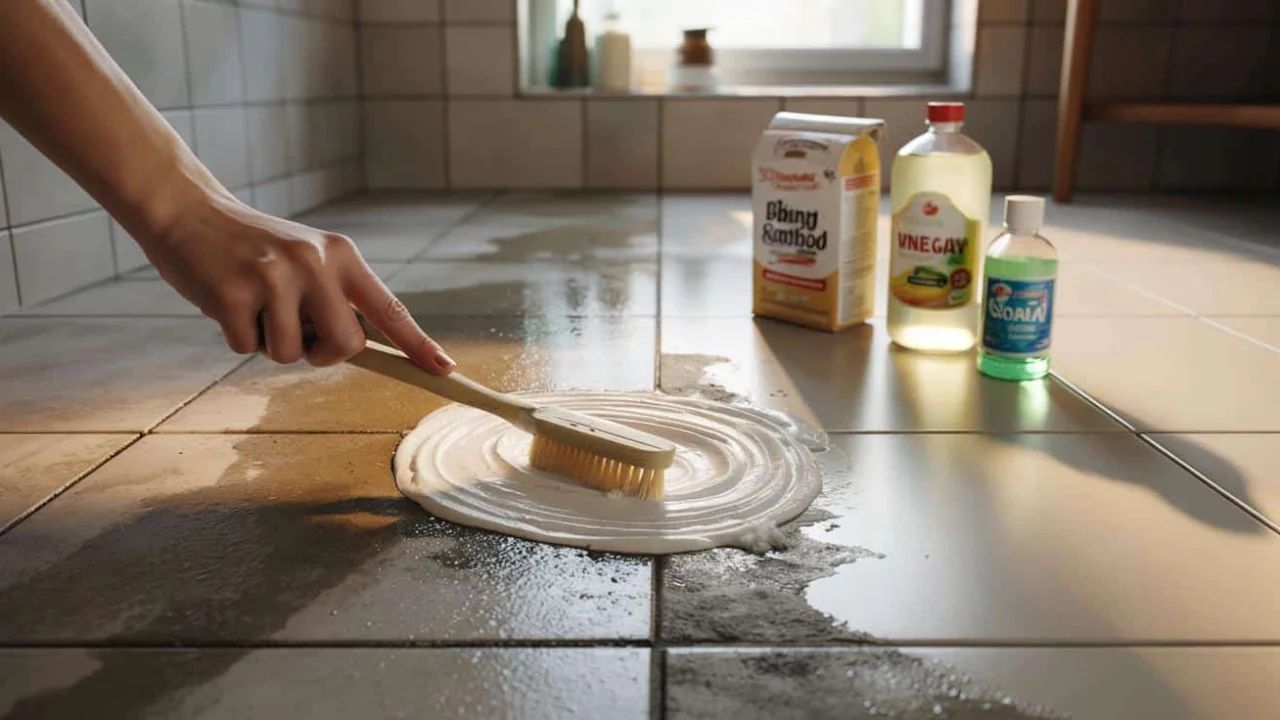
Few things can age a bathroom or kitchen quite like dirty, discolored grout lines. Though your tiles may gleam under fresh cleaning, those narrow strips of grout often tell a very different story—one of months, or even years, of embedded grime, soap scum, oils, and mineral deposits. The problem is that grout acts like a sponge, trapping all sorts of unseen debris that regular cleaning sprays and wipes simply can’t remove. This leads to a subtle but relentless shift from pristine white or light gray to stubbornly dingy shades that make the whole space feel tired and neglected.
The good news is that rejuvenating grout doesn’t require expensive products, hours of scrubbing, or strong chemicals that leave a harsh smell and irritated skin. A simple, natural mixture made from three common kitchen ingredients can restore grout lines quickly and effectively, making them look almost new again in just 15 minutes. This method has become a household favorite because it’s easy, affordable, environmentally friendly, and surprisingly satisfying to watch in action.
By understanding how this mixture works and why patience is key, you can tackle grout cleaning without dread and bring fresh life back to your bathroom or kitchen tiles. Here’s everything you need to know, from preparing the paste to applying it correctly and maintaining those crisp bright grout lines moving forward.
Overview of the three-ingredient grout cleaner
| Ingredient | Role in Cleaning | Common Household Use |
|---|---|---|
| Baking Soda | Loosens dirt, neutralizes odors, mild abrasive | Baking, deodorizing, gentle cleaning |
| White Vinegar | Breaks down mineral deposits, dissolves soap scum, disinfects | Salad dressing, descaling, natural disinfectant |
| Dish Soap | Dissolves grease and oils, helps mixture cling to grout | Washing dishes, cutting through grease |
Why grout is so hard to clean and what’s really happening
Grout is a composite of sand and cement that forms a porous surface between your tiles. This porous nature means that it behaves like a sponge—absorbing everything from water, dust, skin oils, and shampoo residue to microscopic mold spores and dust particles. Unlike tile surfaces, grout is rough and uneven on a microscopic level, creating countless tiny crevices where grime can embed itself deeply.
When you clean regularly with floor cleaners or all-purpose sprays, these products tend to focus on surface dirt and tile shine but often cannot penetrate the grout’s pores deeply. This is why grout can look progressively darker over time without you noticing day-to-day—because the dirt accumulates below the immediate surface layers. Aggressive chemical cleaners marketed for grout can help but often come with drawbacks like strong fumes, skin irritation, and environmental harm.
How the baking soda, vinegar, and dish soap mixture works together
The magic of this three-ingredient grout cleaner lies in how each ingredient targets a specific aspect of grime and works synergistically with the others.
- Baking soda acts as a gentle abrasive that physically loosens dirt and stains without damaging grout. It also neutralizes odors that can build up in damp environments like bathrooms.
- White vinegar is acidic and excellent at dissolving mineral deposits such as limescale and old soap scum that coat grout surfaces. Its natural disinfectant properties help reduce mold and mildew spores as well.
- Dish soap cuts through accumulated oils, grease, and skin residue that cling stubbornly to grout. It also acts like a binder, helping the paste to adhere well to vertical grout lines without sliding off.
When combined, these three create a creamy paste that fizzes lightly as vinegar reacts with baking soda, enhancing the cleaning action. Crucially, this paste clings to grout lines long enough to work deeply—no need to scrub aggressively before it has had a chance to do its job.
Step-by-step guide to cleaning grout using the natural paste
Follow these straightforward steps for the best results:
- Mix the ingredients: In a small bowl, combine about 3 tablespoons of baking soda with 1 tablespoon of dish soap. Slowly add 2 to 3 tablespoons of white vinegar. The mixture will fizz; stir gently until you get a thick, creamy paste that’s not runny.
- Apply the paste: Use an old toothbrush or small scrub brush to spread the paste evenly along all grout lines you want to clean. Cover generously without waiting.
- Wait patiently: Set a timer for 10 to 15 minutes and leave the paste undisturbed. During this time, the ingredients will loosen dirt and break down grime.
- Scrub gently: Return and scrub the grout lines with firm but gentle back-and-forth strokes. Avoid harsh scrubbing, as the paste will have done much of the hard work already.
- Rinse and wipe: Use warm water and a damp cloth to wipe off all residue. You can also rinse with water if accessible. The grout lines should look noticeably lighter and cleaner.
Because the paste clings well, it’s easy to cover vertical surfaces like shower corners or kitchen backsplashes without dripping or wasting product.
Why waiting is the real secret to success
Many people believe the faster you scrub, the better the result. However, this mixture’s power is in letting time do the work. While you relax or do other tasks, the baking soda lifts and neutralizes grime, vinegar dissolves and disinfects, and dish soap emulsifies grease.
Scrubbing too soon or too hard risks smearing grime around rather than removing it and can make you conclude the method doesn’t work when it simply hasn’t had enough time. After the wait, light scrubbing is all that’s needed to reveal a transformation.
How to integrate grout cleaning into your home maintenance routine
To keep your grout looking fresh, perform this deep cleaning once every few months—there’s no need for daily treatment. For regular upkeep, a quick wipe down using mild soap and water while cleaning tiles prevents buildup.
Start by testing the paste on a small grout area—near the sink, in a shower corner, or on a backsplash. Witness the visible difference, then gradually extend to entire floors or walls. This approach helps avoid feeling overwhelmed and motivates continued care.
Light maintenance between treatments allows you to enjoy a brighter, fresher surface that changes how the room feels. Many notice their bathrooms and kitchens suddenly seem “airier” and more inviting when grout no longer distracts the eye.
| Winners | Losers |
|---|---|
| Homeowners wanting affordable, natural cleaning | Harsh chemical cleaners with strong odors and irritants |
| People lacking expensive or specialized grout cleaners | Those scrubbing aggressively without waiting the proper time |
| Those seeking eco-friendly household solutions | Grout stains allowed to build up unchecked for years |
“When I first tried this simple paste, I was amazed at how much grout lines brightened with just a little patience. It’s a minor tweak to my cleaning routine but makes a huge difference visually and mentally.”
— Claire, Nurse from Manchester
Common questions about cleaning grout naturally
How often should I use this baking soda and vinegar paste on grout?
For most households, deep cleaning grout 2 to 3 times per year is sufficient. You can do quick light wipe-downs monthly to reduce buildup, but the paste is best for periodic, thorough refreshes.
Can this mixture damage grout or tiles?
When used as directed, this method is safe for most ceramic, porcelain, and stone tiles and grout. Avoid prolonged soaking or harsh scrubbing to protect grout integrity. If in doubt, test a small hidden area first.
What tools are best for applying and scrubbing the paste?
An old toothbrush or a small stiff cleaning brush works perfectly to spread and scrub the paste. Their small size allows you to focus directly on grout lines without affecting surrounding tiles.
Why does the mixture fizz when I add vinegar?
The fizz is produced by a chemical reaction between acidic vinegar and alkaline baking soda. This reaction helps break down grime and is a satisfying sign the cleaner is active.
Will this method remove mold or mildew in grout?
While vinegar has some antimicrobial properties, this mixture is effective at removing surface mold and mildew stains. For heavy infestations, combining with appropriate mold treatment or professional help may be necessary.
Can I store leftover paste or should I mix fresh each time?
It’s best to mix fresh each time because the reaction between baking soda and vinegar is immediate, and the paste will lose effectiveness after sitting for a while.
Is this safe for use around pets and children?
Yes, the ingredients are food-grade and much safer than harsh chemical cleaners. However, keep the treated surfaces out of reach until fully rinsed and dried.
Are there alternatives to white vinegar if I don’t have any?
White vinegar is preferred for its acidity and lack of staining, but mild lemon juice could work in a pinch. Avoid stronger acids like muriatic acid or bleach for safe household cleaning.
Why is grout so difficult to clean?
Grout is porous and acts like a sponge, trapping embedded grime, soap scum, oils, and mineral deposits that regular cleaning products often can’t remove.
What are the three common kitchen ingredients used to restore grout?
The three ingredients are baking soda, white vinegar, and dish soap.
How does baking soda help clean grout?
Baking soda loosens dirt, neutralizes odors, and acts as a mild abrasive to gently clean the grout.
What role does white vinegar play in the grout cleaning mixture?
White vinegar breaks down mineral deposits, dissolves soap scum, and disinfects the grout lines.
Why is dish soap included in the grout cleaning mixture?
Dish soap dissolves grease and oils and helps the cleaning mixture cling effectively to the grout.
How long does it take for this three-ingredient mixture to restore grout to a like-new look?
The mixture can restore grout lines to a like-new appearance in just about 15 minutes.