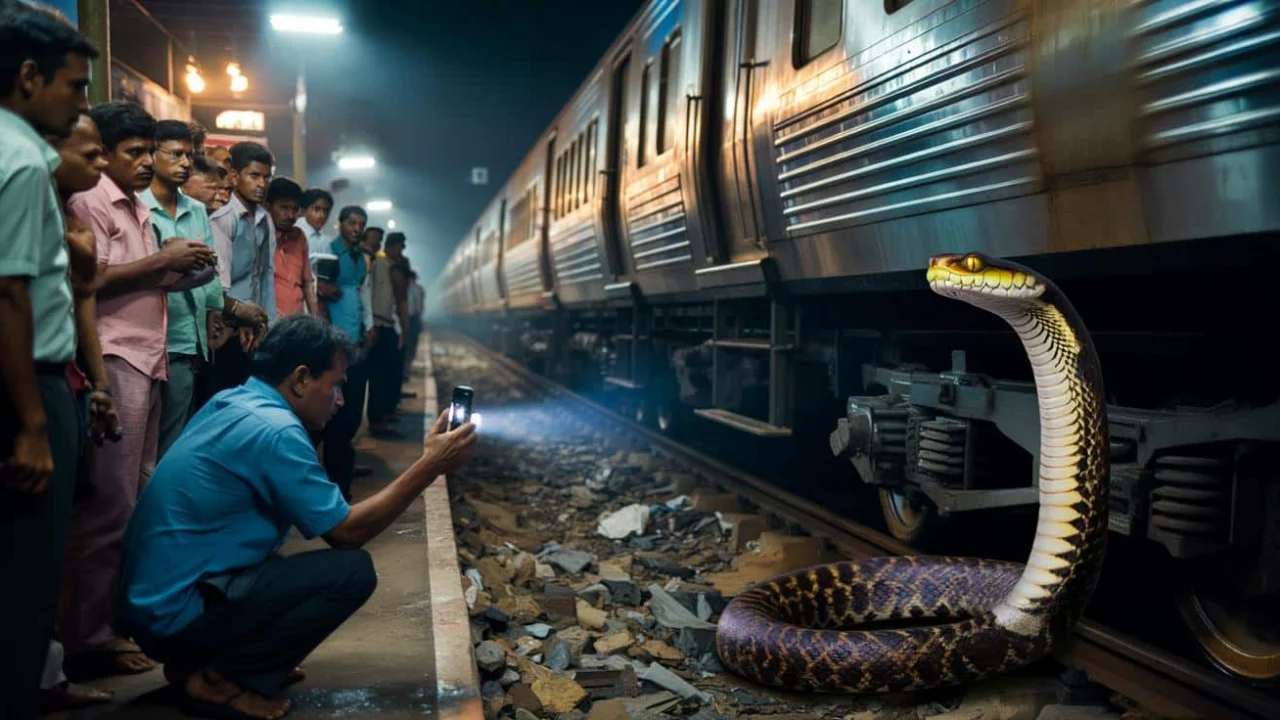
Under the scorching Indian sun, a new and unexpected migration is quietly unfolding — one that involves the country’s most formidable reptilian predator, the king cobra. These awe-inspiring snakes, revered and feared across India, are increasingly hitching unintended rides on freight trains. Far from their usual forest habitats, they are turning railway corridors into unlikely highways, potentially redrawing the map of king cobra populations across southern India and beyond.
What might seem like a freak occurrence is, in fact, a growing phenomenon with complex ecological and safety implications. Railway corridors, cutting through dense forests, agricultural lands, and expanding urban areas, offer a continuous stretch of habitat — or at least cover — that king cobras can exploit. This accidental dispersal raises pressing questions: Are railways becoming conduits for wildlife movement? Could these trains help reconnect isolated snake populations, or might they bring these venomous creatures dangerously close to human settlements ill-prepared for their arrival?
As the lines between wild and human-modified landscapes blur, encounters between humans and king cobras along train tracks are becoming more frequent and fraught with fear. Yet amid the rumors and panic, there is a call for measured understanding. It’s clear that king cobras do not seek out conflict; they simply follow the survival instinct into new terrain, sometimes finding refuge in the unlikeliest of places — the dark gaps under freight wagons.
| Key Aspects | Details |
|---|---|
| Species | King cobra (Ophiophagus hannah) |
| Geographic Area | Southern India – Kerala, Karnataka, Odisha, Western Ghats |
| Dispersal Mechanism | Unintentional transport by freight trains |
| Habitats Affected | Railway tracks cutting through forests, plantations, rural and suburban areas |
| Human Risks | Snakebite risk near rail yards and tracks, increased snake-human encounters |
| Preventative Measures | Manual checks by railway workers, snake rescue networks, public awareness |
Why king cobras are using railways as corridors
King cobras are known for their dependence on dense forest cover and abundant prey, primarily other snakes, frogs, and rodents. Railways slicing through southern India inadvertently form a continuous corridor of such environments — patches of scrub, drainage ditches, and verdant breaks alongside tracks that wildlife can use as cover. These corridors serve as a makeshift habitat buffer in a landscape increasingly fragmented by logging, agriculture, and urbanization.
Moreover, freight trains are often loaded with timber and construction materials sourced directly from snake-rich forest zones. The branching metal carriages, loaded with stacks of logs or coils, create a labyrinth of cool, dark crevices where a stressed or frightened king cobra might hide, especially during the hottest parts of the day. When the train moves, it unknowingly transports its covert passenger over vast distances, bringing snakes into new ecological zones.
Examples of king cobras found near rail yards and villages
Herpetologists and forest officers across multiple states — Kerala, Karnataka, and Odisha — have documented increasing incidents of king cobras being found near railway stations and freight yards. One rescue worker spoke of snakes emerging close to railway sleepers that had just been delivered from distant forests, while another recalled capturing two separate king cobras within months near freight zones handling timber and construction goods.
These encounters don’t involve visible “snake commuters” riding trains but rather concealment in railway cargo that subsequently gets unloaded hundreds of kilometers away from the snake’s origin. This suggests that train transport is an unintentional vector for the dispersion of king cobras, facilitating genetic exchange between isolated populations and possibly placing these wild predators into new habitats.
Human safety and railway workers’ informal protocols
Railway workers loading freight near forests have developed their own cautious routines to reduce the risk of snake bites. Before sealing cargo wagons, they bang hard on metal sides, kick piles of material, and watch for any last-minute snake movements. In some places, long poles are used to shift tarpaulins cautiously. These informal practices underline the persistent and real danger posed by inadvertent snake transport.
Despite these precautions, official procedures remain limited or non-existent. The risk remains low but is perceived differently when it involves a species capable of delivering a potentially fatal bite. For residents living beside railway lines, simple but vital advice includes not walking barefoot, especially at dusk, avoiding touching piles of scrap or slates near tracks, and contacting specialized rescue teams if a large snake is seen.
The irony of railways aiding wildlife dispersal
Railways historically symbolized human dominance over wild India, facilitating trade, mobility, and economic growth. Yet, they now unexpectedly aid the dispersion of wild predators like king cobras. This phenomenon sheds light on how human infrastructure reshapes ecosystems — sometimes linking fragmented animal populations and at other times escalating encounters between wildlife and humans.
Whether these unintended journeys will help breed resilience among king cobra populations or increase conflict remains an open question. What is clear is that understanding and respect for these animals, combined with better railway inspection protocols and public education, are key to minimizing dangerous interactions as the animals ride the rails of a changing India.
| Winners | Losers |
|---|---|
| King cobra populations gaining potential habitat connectivity | Humans at increased risk of snake encounters along rail corridors |
| Railway ecosystems retaining pockets of biodiversity | Local residents and railway workers facing safety challenges |
| Scientific understanding of animal dispersal enhanced | Forests fragmented by human activity forcing snakes to adapt |
How to stay safe around railway corridors in snake habitats
When navigating areas near railway lines passing through forested or rural regions in India, it’s essential to observe precautions tailored to both personal safety and wildlife conservation:
- Never walk barefoot or use short cuts along railway tracks, especially at dawn or dusk when snakes are active.
- Avoid poking hands or feet into piles of timber, ballast, or discarded sleepers where snakes may shelter.
- Stay calm and give space if you encounter a snake; sudden movements can provoke defensive bites.
- Contact local forest officials or specialized snake rescue organizations for assistance rather than attempting to handle venomous snakes yourself.
- Raise community awareness about this issue to reduce panic and misinformation.
The role of snake rescuers and forest officials
Dedicated snake rescuers play a vital role in managing human-snake conflicts around railway corridors. Their mantra stresses patience, space, and professionalism:
“King cobras don’t wake up in the morning planning to bite a human. They wake up planning to not get killed by one.”
— Snake handler, Karnataka
These experts emphasize that most encounters end safely when the snake is given room to retreat. They also push for formal protocols for railway cargo inspections and training for workers to identify and safely manage hidden snakes.
The future of coexistence between railways and wildlife
As freight trains continue to crisscross forests and human settlements, the accidental movement of king cobras illuminates broader questions about balancing human infrastructure with wildlife conservation. Enhanced wildlife corridors, safer transport practices, and community education will shape whether this strange partnership between reptiles and railways becomes a liability or an opportunity for species survival.
Common questions about king cobras and railway corridors
How do king cobras end up on freight trains?
They often hide in gaps within timber stacks, machinery, or other cargo loaded near their native forests, remaining concealed as trains move long distances.
Are king cobra bites common near railway stations?
Snakebite incidents are relatively rare but do occur; most interactions happen when people accidentally come into close contact with the snakes near tracks or yards.
What precautions do railway workers take against snakes?
They bang on wagons, kick cargo piles, and use tools to disturb hiding spots, allowing snakes to escape before sealing the freight.
Can king cobras survive in suburban or urban areas?
They prefer dense cover and prey availability; however, leftover vegetation along rail corridors and rural fringes sometimes provides enough habitat for them.
What should people do if they see a king cobra near the tracks?
Maintain a safe distance, avoid sudden movements, and contact specialized snake rescue or forest departments for help.
Could trains help reconnect isolated king cobra populations?
Potentially yes, as unplanned dispersal might introduce gene flow between separated snake groups, enhancing genetic diversity.
Are there official protocols for inspecting cargo for hidden snakes?
Currently, most railway inspections rely on informal methods by seasoned workers; formal protocols are limited.
What risks do king cobras pose to local communities?
The primary risk is snakebite, which can be fatal without prompt medical treatment; however, most snakes avoid humans and only bite when threatened.
How are king cobras spreading across Indiau2019s railway corridors?
King cobras are unintentionally hitching rides on freight trains that travel through railway corridors cutting across forests and other habitats, enabling these snakes to move beyond their usual territories.
Which areas in India are primarily affected by this phenomenon?
The phenomenon is most notable in southern India, particularly in states like Kerala, Karnataka, Odisha, and regions including the Western Ghats.
What kinds of habitats are impacted by king cobra dispersal on railways?
Railway tracks passing through dense forests, plantations, rural landscapes, and suburban areas are impacted, as these serve as pathways for the snakes to disperse.
What risks do king cobras pose to humans along railway tracks?
There is an increased risk of snakebite and more frequent human-snake encounters near rail yards and tracks, which can lead to fear and potential danger for people in those areas.
Are there any measures in place to prevent conflicts between king cobras and humans on railways?
Yes, preventive measures include manual checks by railway workers and involvement of snake rescue networks to safely relocate any snakes found near tracks.
Do king cobras seek out human conflict as they disperse along railways?
No, king cobras do not intentionally seek conflict; they are driven by survival instincts to explore and find refuge in new terrains, sometimes sheltering in hidden spots like beneath freight wagons.