The Uncanny Valley of Tomorrow: How Humanoid Robots May Transform Human Connection
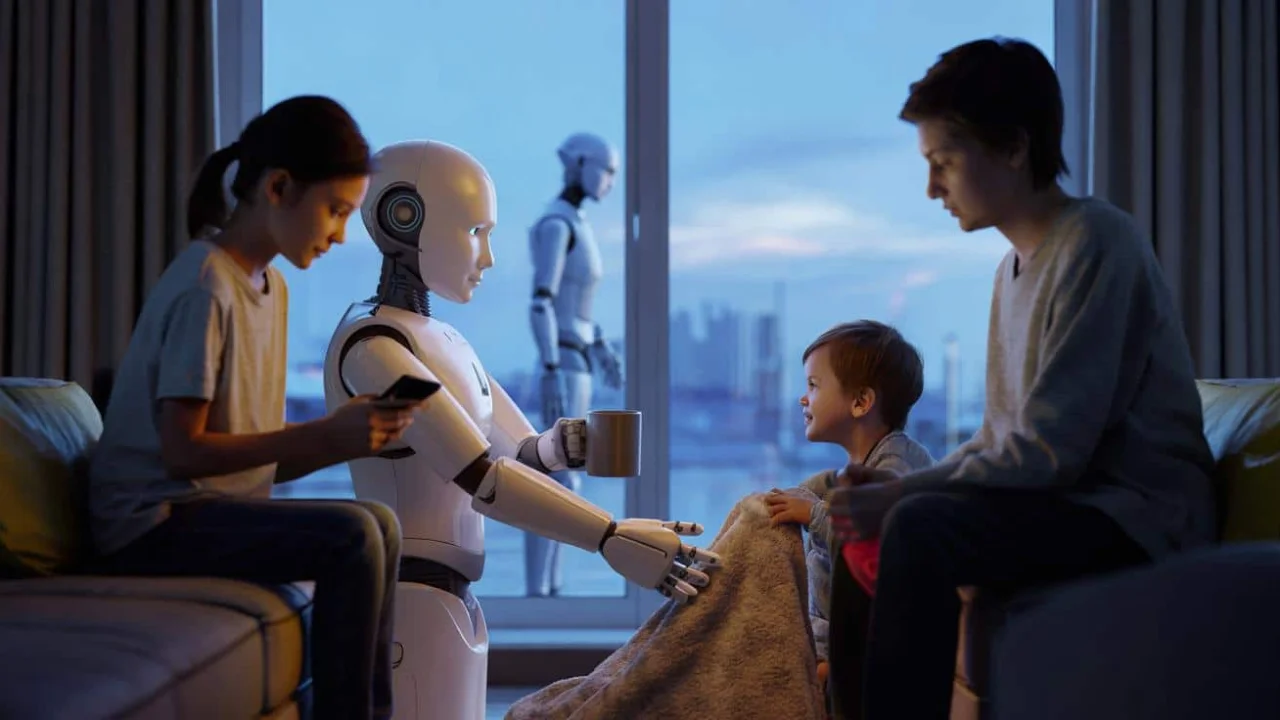
There’s something deeply unsettling about looking into the glowing eyes of a machine that mirrors your own form. As humanoid robots transition from the realm of science fiction into our living rooms and workplaces, we’re witnessing more than just a technological revolution—we’re on the brink of a fundamental shift in how humans relate to one another. The implications stretch far beyond the convenience of having a mechanical assistant fold your laundry or serve your coffee.
Tesla’s Optimus, Boston Dynamics’ Atlas, and countless other humanoid robots are no longer distant dreams but imminent realities. Elon Musk’s audacious vision of millions of these artificial beings working alongside us isn’t just about productivity—it’s about rewiring the very fabric of human social interaction. When machines can walk, talk, and respond with human-like gestures, the boundaries between authentic and artificial companionship begin to blur in ways that could profoundly impact our capacity for genuine human connection.
The emotional weight of this transformation is already becoming apparent. Early interactions with AI assistants have revealed our startling willingness to attribute consciousness and personality to sophisticated algorithms. Now, wrapped in humanoid shells with expressive faces and familiar movements, these systems are poised to exploit our deepest psychological tendencies toward anthropomorphization—with consequences we’re only beginning to understand.
The question isn’t whether humanoid robots will become commonplace, but whether their presence will gradually erode our comfort with the messy, unpredictable nature of human relationships. As we grow accustomed to interactions that feel authentic but lack genuine emotional depth, we risk developing preferences for the predictable over the authentic, the programmed over the spontaneous.
The Billion-Robot Economy: From Factory Floors to Family Kitchens
Elon Musk’s declarations about Tesla’s Optimus project represent more than typical tech industry hyperbole. The vision of millions of humanoid robots transitioning from industrial applications to domestic helpers reflects a calculated understanding of market potential that extends far beyond manufacturing efficiency.
- Industrial Integration: Manufacturing facilities worldwide are already preparing infrastructure for humanoid workers that can adapt to human-designed workspaces without costly redesigns
- Domestic Market Penetration: Home integration represents a trillion-dollar opportunity, with robots designed to navigate stairs, operate household appliances, and interact with family members
- Healthcare Applications: Elderly care facilities are testing humanoid assistants for patient interaction, medication reminders, and emergency response
- Service Industry Expansion: Restaurants, hotels, and retail environments are piloting humanoid staff for customer service roles that require mobility and social interaction
The convergence of generative AI with robotics has created an unprecedented acceleration in capabilities. Where previous generations of robots required extensive programming for specific tasks, modern humanoid systems can interpret natural language instructions and adapt their behavior based on context and learned preferences.
“The integration of large language models with robotic systems has fundamentally changed what’s possible. We’re no longer building tools—we’re creating entities that can engage in meaningful dialogue while performing complex physical tasks,” explains Dr. Sarah Chen, Director of Robotics Research at MIT.
The Compatibility Paradox: Why Human Form Matters
The decision to design robots in human form isn’t merely aesthetic—it’s a pragmatic response to the reality that our entire built environment assumes human proportions and capabilities. This compatibility factor drives the humanoid approach across multiple dimensions:
| Environmental Factor | Human-Optimized Design | Humanoid Robot Advantage |
|---|---|---|
| Door handles and switches | Height: 36-48 inches, grip strength: 20-40 lbs | Direct compatibility without modification |
| Stair navigation | 7-11 inch rise, 11+ inch tread depth | Bipedal locomotion matches human gait |
| Kitchen appliances | Counter height: 36 inches, reach: 24-30 inches | Human-like arm span and dexterity |
| Vehicle operation | Pedal placement, steering wheel, seat adjustment | No vehicle modification required |
Beyond practical compatibility, the human form serves as a powerful psychological interface. Research in human-robot interaction consistently demonstrates that anthropomorphic design elements trigger empathy responses and facilitate social bonding, even when users intellectually understand they’re interacting with machines.
The Emotional Architecture of Artificial Companionship
The psychological impact of humanoid design extends far beyond mere utility. When engineers equip robots with faces, gestures, and vocal patterns that mirror human behavior, they’re tapping into evolutionary mechanisms that developed over millions of years to facilitate social bonding and cooperation.
- Mirror Neuron Activation: Humanoid movements trigger the same neural responses as human actions, creating empathy even with artificial beings
- Attachment Formation: Consistent interaction patterns with responsive humanoid systems can generate genuine emotional bonds
- Social Scripting: Humans automatically apply social rules and expectations to humanoid robots, leading to politeness, gratitude, and even feelings of guilt
- Uncanny Valley Navigation: Modern humanoid robots are increasingly designed to appear friendly rather than perfectly human, avoiding the unsettling effects of near-human appearance
“We’re observing fascinating patterns in how people relate to humanoid robots versus other forms of AI. The physical presence, even when clearly artificial, creates a sense of social presence that purely digital interfaces cannot match,” notes Dr. James Rodriguez, a behavioral psychologist specializing in human-machine interaction at Stanford University.
The Social Substitution Risk: When Artificial Becomes Preferable
Perhaps the most profound concern surrounding the rise of humanoid robots isn’t their potential for malfunction or job displacement, but their capacity to gradually alter human expectations for social interaction. As these machines become more sophisticated and ubiquitous, they may inadvertently train us to prefer interactions that are predictable, accommodating, and free from the complexities that define authentic human relationships.
Early studies of prolonged interaction with conversational AI systems have already revealed troubling patterns. Users frequently report feeling more comfortable discussing personal problems with AI assistants than with friends or family members, citing the absence of judgment, consistent availability, and lack of reciprocal emotional demands. When these characteristics are embodied in humanoid form, the psychological impact intensifies significantly.
“The danger isn’t that people will mistake robots for humans, but that they’ll develop preferences for robotic interactions over human ones. Robots don’t have bad days, don’t judge, and don’t require emotional labor in return. For some individuals, especially those already struggling with social anxiety, this could become a pathway to further isolation from authentic human connection,” warns Dr. Elena Kozlova, a clinical psychologist researching the social implications of AI integration.
Market Forces and Social Engineering
The commercial incentives driving humanoid robot development create a complex web of interests that may not align with broader social well-being. Companies profit from engagement and dependency, leading to design choices that maximize user attachment and interaction time rather than promoting healthy boundaries between artificial and human relationships.
Marketing strategies consistently emphasize emotional connection over functional utility. Advertisements showcase robots comforting lonely individuals, playing with children, and serving as confidants rather than simply demonstrating task completion. This positioning suggests that manufacturers understand the real value proposition lies in addressing human emotional needs rather than purely practical ones.
Cultural and Generational Impacts
The integration of humanoid robots into daily life will likely affect different demographic groups in dramatically different ways. Children who grow up with humanoid companions may develop fundamentally different expectations for social interaction, potentially viewing human unpredictability and emotional complexity as bugs rather than features.
- Digital Native Generation: Children may struggle to appreciate the value of difficult but rewarding human relationships
- Elderly Population: Seniors may find robotic companionship less threatening than human vulnerability, potentially accelerating social isolation
- Working Adults: Professional environments with humanoid colleagues may blur boundaries between authentic collaboration and artificial accommodation
- Individuals with Social Anxiety: Robots may provide a comfortable alternative that inadvertently prevents development of crucial social skills
Regulatory and Ethical Considerations
As humanoid robots become more sophisticated and widespread, policymakers face unprecedented challenges in balancing innovation with social protection. Current regulatory frameworks, designed primarily for industrial robots and digital AI systems, are inadequate for addressing the unique psychological and social impacts of humanoid companions.
Key regulatory questions include establishing disclosure requirements for AI capabilities, setting limits on emotional manipulation tactics, protecting vulnerable populations from exploitation, and ensuring that humanoid robots don’t deliberately undermine human relationships. The urgency of these considerations increases as deployment timelines accelerate and market forces prioritize rapid adoption over careful integration.
The Path Forward: Conscious Integration
The rise of humanoid robots represents an inflection point for human society. While the technology offers genuine benefits in terms of assistance, productivity, and accessibility, the potential for unintended social consequences demands careful consideration and proactive management.
Rather than rejecting humanoid robotics entirely or embracing it without reservation, society needs frameworks for conscious integration that preserve the irreplaceable value of human connection while harnessing the benefits of artificial assistance. This requires ongoing research into psychological impacts, the development of ethical design principles, and the creation of educational programs that help people maintain healthy boundaries between artificial and authentic relationships.
Frequently Asked Questions
Will humanoid robots replace human companionship entirely?
No, but they may reduce demand for human interaction, particularly among vulnerable populations seeking predictable, non-judgmental relationships.
How soon will humanoid robots be available for home purchase?
Basic models are expected within 3-5 years, with advanced conversational and task-performing versions following within the decade.
Are humanoid robots safe for children to interact with regularly?
Safety depends on design and usage patterns. Excessive reliance could impact social development and empathy formation.
What jobs are most at risk from humanoid robot adoption?
Service positions requiring mobility and basic interaction, including retail, hospitality, cleaning, and elder care roles.
Can humanoid robots develop genuine emotions or consciousness?
Current technology simulates emotional responses without true consciousness, though the distinction may become less meaningful functionally.
How will humanoid robots change workplace dynamics?
They may reduce human collaboration needs while increasing efficiency, potentially weakening workplace social bonds and teamwork skills.
Conclusion: Navigating the Human-Robot Future
The emergence of humanoid robots as commonplace companions and colleagues represents more than technological progress—it marks a fundamental experiment in human social evolution. As these artificial beings become increasingly sophisticated and emotionally engaging, they challenge our understanding of relationship, authenticity, and what it means to be truly connected to others.
The path forward requires vigilance, wisdom, and a commitment to preserving the irreplaceable value of human connection even as we embrace the benefits that humanoid technology can provide. The choices we make today about how to integrate these systems into our lives will shape the social fabric of tomorrow, determining whether we emerge with enhanced human capabilities or diminished human connections.