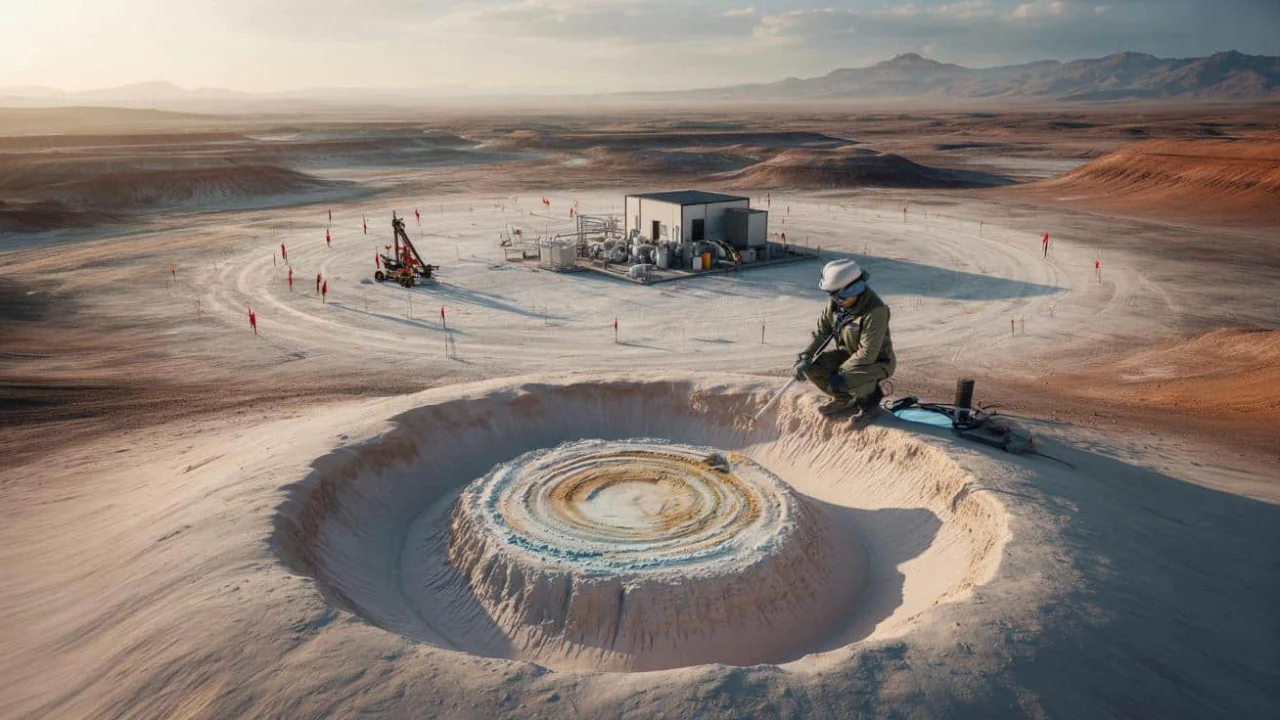
In the windswept expanse of Utah’s desert, where sagebrush dots endless horizons and the nearest town feels like a world away, something extraordinary lies hidden beneath layers of ancient clay. The discovery at Silicon Ridge Utah has sent shockwaves through boardrooms from Beijing to Brussels, as geologists confirm what could be the most significant mineral find in decades. This isn’t just another mining story – it’s a potential game-changer that could reshape America’s position in the global race for critical materials.
The numbers are staggering, almost too good to believe. An estimated €120 billion worth of rare earth elements and critical minerals, concentrated in a relatively small area of Utah scrubland. For a nation that has watched China dominate these crucial supply chains for decades, Silicon Ridge Utah represents more than economic opportunity – it’s a chance at strategic independence. The quiet drilling operations and soil sampling that began as geological curiosity have evolved into something that defense officials, technology executives, and policymakers now view as essential to national security.
What makes this discovery particularly remarkable isn’t just the scale, but the composition. While most people imagine mining as blasting through granite mountains or carving massive open pits, Silicon Ridge operates on an entirely different principle. The wealth here sits in clay – ancient sediments that absorbed and concentrated metals over millions of years, creating what geologists describe as natural “sponges” saturated with the elements that power our digital age.
The Geological Marvel Beneath Silicon Ridge
Ionic Mineral Technologies has spent years methodically documenting what lies beneath this unassuming plateau. Their comprehensive exploration program included 106 boreholes totaling over 10,000 meters of core samples, plus 35 trenches to analyze the clay layers sitting just below the surface. The results have exceeded even the most optimistic projections.
The average grade across tested areas reaches approximately 2,700 parts per million (ppm) in critical metals – a concentration that surpasses many of China’s leading deposits, which typically range between 500-2,000 ppm. This exceptional grade, combined with the deposit’s accessibility and the variety of metals present, positions Silicon Ridge Utah as potentially one of the world’s most valuable mineral resources.
| Deposit Characteristics | Silicon Ridge Utah | Typical Chinese Deposits |
|---|---|---|
| Average Grade (ppm) | 2,700 | 500-2,000 |
| Confirmed Value | €45-65 billion | Varies widely |
| Total Potential | €120+ billion | – |
| Area Size | 260+ hectares | Typically larger |
| Processing Method | Ion-adsorption clay | Ion-adsorption clay |
Critical Elements for Modern Technology
The treasure trove at Silicon Ridge contains at least 16 strategic elements that form the backbone of modern technology. This isn’t just about rare earth elements – though those are certainly present – but a comprehensive suite of materials that tech manufacturers desperately need:
- Lithium: Essential for electric vehicle batteries and grid-scale energy storage systems
- Gallium: Critical component in advanced semiconductors and 5G telecommunications equipment
- Germanium: Used in infrared optics, satellite systems, and fiber-optic networks
- Tungsten: Vital for cutting tools, military applications, and high-temperature electronics
- Heavy Rare Earths: Including dysprosium and terbium for high-performance permanent magnets
- Scandium: Aerospace applications and advanced aluminum alloys
- Vanadium: Energy storage systems and steel strengthening
“Silicon Ridge represents a paradigm shift in how we think about critical mineral security in North America. The combination of high grades, diverse metal content, and domestic location addresses multiple supply chain vulnerabilities simultaneously,” explains Dr. Sarah Chen, a mineral economics specialist at the Colorado School of Mines.
Strategic Implications for National Security
The discovery comes at a crucial time when supply chain security has become a matter of national priority. China currently controls over 70% of global heavy rare earth production, creating vulnerabilities that policymakers have long sought to address. Silicon Ridge Utah offers a potential pathway to reducing this dependence while establishing a secure domestic source for critical materials.
Defense applications alone make this discovery strategically significant. Modern weapons systems, satellite technology, and electronic warfare capabilities all depend on these elements. The Pentagon’s recent focus on supply chain resilience has identified rare earth dependence as a critical vulnerability that Silicon Ridge could help address.
“From a national security perspective, having a domestic source of this quality and diversity is invaluable. It’s not just about the economics – it’s about ensuring our technological edge doesn’t depend on potentially hostile supply chains,” notes former Deputy Secretary of Defense John Richardson.
Environmental and Processing Advantages
Ion-adsorption clay deposits like those at Silicon Ridge offer significant environmental advantages over traditional hard-rock mining. The extraction process is less invasive, requiring minimal excavation and producing less waste. The metals can be leached from clay using relatively mild chemical processes, avoiding the harsh acids and high-temperature processing often required for conventional rare earth mining.
Key environmental benefits include:
- Lower energy requirements for processing
- Reduced water consumption compared to traditional mining
- Minimal landscape disruption during extraction
- Less toxic waste generation
- Potential for progressive rehabilitation during operations
Economic Impact and Development Timeline
The economic implications extend far beyond the immediate value of the minerals themselves. Development of Silicon Ridge Utah could catalyze the creation of a domestic rare earth processing industry, potentially bringing thousands of jobs to the region and establishing Utah as a hub for critical mineral production.
Ionic Mineral Technologies estimates that full development could generate:
| Development Phase | Timeline | Investment Required | Projected Employment |
|---|---|---|---|
| Pilot Operations | 2024-2026 | $50-100 million | 200-300 jobs |
| Commercial Production | 2027-2030 | $500-800 million | 800-1,200 jobs |
| Full Development | 2030+ | $2-3 billion | 2,000-3,000 jobs |
“This isn’t just a mining project – it’s the foundation for rebuilding America’s critical materials industrial base. The ripple effects could transform multiple sectors of our economy,” states Maria Gonzalez, senior analyst at the Critical Materials Institute.
Challenges and Competition
Despite the promising geology and strategic importance, Silicon Ridge faces significant challenges. Developing a new mine requires substantial capital investment, regulatory approvals, and infrastructure development. The remote location, while advantageous for security reasons, necessitates significant investment in transportation and processing facilities.
International competition remains fierce. China’s established processing capabilities, lower labor costs, and integrated supply chains provide significant competitive advantages. Success at Silicon Ridge will require not just geological excellence but also innovative processing technologies and strategic partnerships with end-users.
Future Prospects and Global Impact
If development proceeds as planned, Silicon Ridge could fundamentally alter global critical materials markets. The prospect of a large-scale, high-grade domestic source would provide American manufacturers with supply security they haven’t enjoyed in decades. This could encourage reshoring of electronics manufacturing and reduce the strategic leverage that supply chain dominance currently provides to competitor nations.
The broader implications extend to allied nations as well. A secure North American source of critical materials could support broader efforts to diversify global supply chains and reduce collective dependence on single-source suppliers.
Frequently Asked Questions
What makes Silicon Ridge Utah different from other rare earth deposits?
Ion-adsorption clay deposits with exceptionally high grades and diverse metal content in a politically stable location.
When will Silicon Ridge begin commercial production?
Pilot operations could start by 2024-2026, with full commercial production potentially beginning around 2027-2030.
How does this discovery affect global rare earth markets?
It could significantly reduce Western dependence on Chinese rare earth supplies and provide price stability.
What environmental impacts are expected from Silicon Ridge development?
Ion-adsorption processing is less environmentally intensive than traditional hard-rock rare earth mining methods.
Which industries would benefit most from Silicon Ridge production?
Electric vehicle manufacturers, renewable energy companies, defense contractors, and semiconductor producers would benefit significantly.
How much investment is required to develop Silicon Ridge?
Full development could require $2-3 billion in capital investment over the next decade.
The story of Silicon Ridge Utah is still being written, but its opening chapters suggest a narrative that could reshape American industrial competitiveness for generations. In the quiet expanses of Utah’s desert, beneath layers of ancient clay, lies not just a mineral deposit but potentially the foundation of a new era in critical materials security. The question now is whether American industry and government can move quickly enough to realize this extraordinary opportunity.