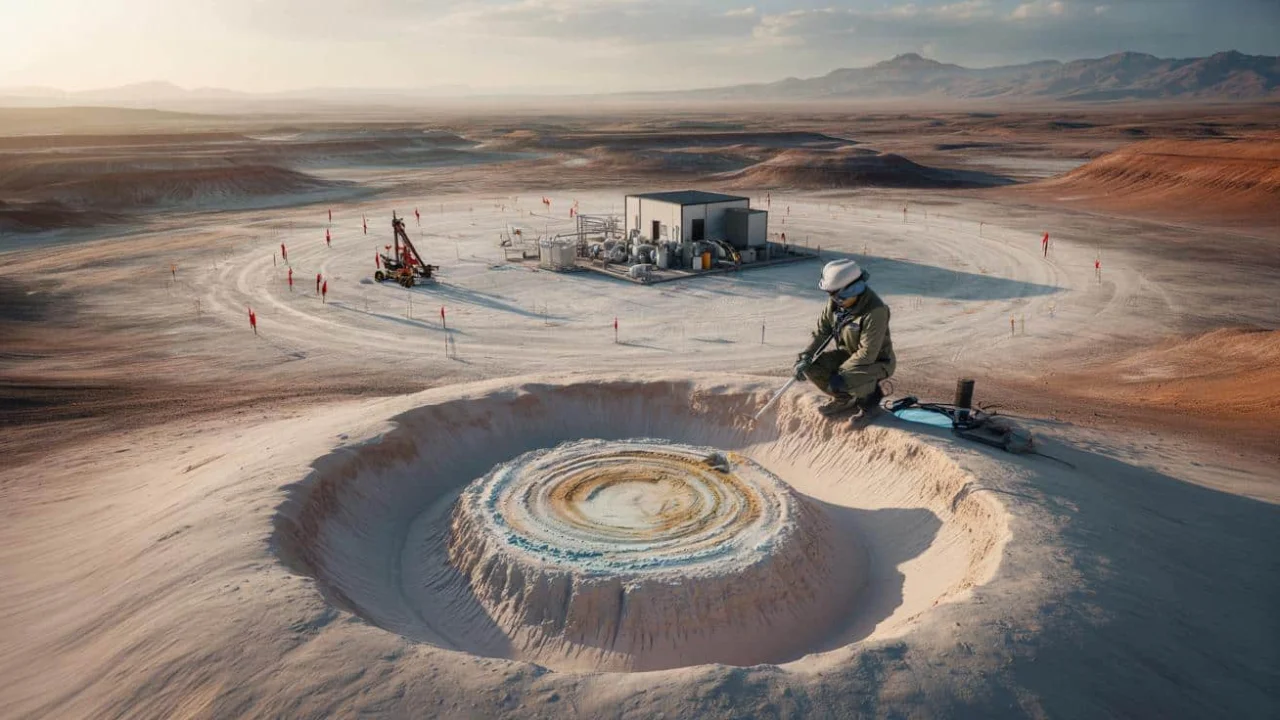
Are you worried about the growing dependence on foreign countries for the metals powering your smartphone, electric car, and defense systems? Have you watched supply chain disruptions drive up prices for everything from batteries to semiconductors? A remarkable discovery in the Utah desert could fundamentally shift global power dynamics in critical mineral supplies.
In a remote stretch of scrubland known as Silicon Ridge mining operations, geologists have uncovered what may be the most significant strategic mineral deposit found in North America in decades. The site contains an estimated potential value exceeding €120 billion in critical metals essential for artificial intelligence, electric vehicles, and advanced manufacturing.
| Key Detail | Specification |
|---|---|
| Location | Silicon Ridge, Utah |
| Total Potential Value | Over €120 billion |
| Confirmed Section Value | €45-65 billion |
| Average Metal Grade | 2,700 parts per million |
| Strategic Elements Found | 16 critical minerals |
| Area Under Development | 260 hectares confirmed |
Defense Officials and Tech Manufacturers Most Directly Affected
The Silicon Ridge discovery impacts multiple critical sectors across the American economy:
- Pentagon procurement officers seeking domestic sources for weapons systems components
- Electric vehicle manufacturers requiring lithium and rare earth magnets
- Semiconductor companies dependent on gallium and germanium supplies
- Wind turbine producers needing neodymium and dysprosium for generators
- Battery manufacturers sourcing vanadium and lithium for grid storage
- Aerospace contractors using tungsten and specialty alloys
- Data center operators relying on rare earth elements for cooling systems
Revolutionary Clay-Based Extraction Changes Mining Paradigm
Unlike traditional hard-rock mining operations, silicon ridge mining utilizes ion-adsorption clays that act as natural sponges for critical metals. Over millions of years, these sediments captured metal ions from groundwater, creating concentrated deposits just below the surface.
- Ion-exchange processing replaces acid leaching and high-temperature roasting
- 95% metal recovery rates projected using low-temperature salt solutions
- Reduced environmental impact compared to conventional rare earth operations
- Processing permits already secured for both mining and initial refining
- 35 trenches and 106 boreholes totaling 10,000 meters confirm deposit quality
| Element | Price (€/kg) | Primary Applications |
|---|---|---|
| Neodymium | 140-150 | EV motors, wind turbines |
| Dysprosium | 420-450 | High-temperature magnets, defense |
| Terbium | 780-980 | Lighting, magnet technologies |
| Scandium | 3,200-3,300 | Aerospace aluminum alloys |
“This deposit represents a game-changer for US strategic mineral independence, offering grades significantly higher than most Chinese operations while maintaining environmental standards,” says a defense industry analyst familiar with critical materials procurement.
Supply Chain Disruptions Could End Within a Decade
China currently controls over 80% of global rare earth supply chains, from mining through magnet manufacturing. Beijing’s periodic export restrictions have repeatedly disrupted Western manufacturers and driven prices higher.
The Utah discovery arrives as governments worldwide scramble to secure domestic sources of critical minerals. The Pentagon already funds rare earth separation projects, while European leaders push for strategic autonomy in battery materials.
Silicon Ridge could supply multiple elements from a single site, eliminating the current need to source materials from dozens of politically sensitive locations. The 2,700 parts per million average grade substantially exceeds most Chinese deposits, which typically range from 500-2,000 ppm.
“Having a domestic source of this caliber fundamentally alters negotiating positions with foreign suppliers and provides supply security for our most sensitive defense applications,” explains a former Pentagon procurement specialist.
Economic Impact Extends Beyond Mining Operations
Utah Senate President Stuart Adams describes the project as historic for the state’s industrial sovereignty. Investment banks are already structuring financing packages, signaling confidence in commercial viability.
The confirmed 12 million tonnes of clay contain approximately 32,400 tonnes of payable metals. At current market prices averaging €1,400 per kilogram, even the initial zone holds €45-65 billion in gross value.
Manufacturing implications stretch across multiple industries. Electric vehicle makers could reduce dependence on volatile supply chains. Data centers powering artificial intelligence systems need germanium and gallium for advanced semiconductors. Wind turbine manufacturers require neodymium and dysprosium for efficient generators.
Silicon ridge mining operations could begin commercial production by the early 2030s if geological surveys confirm similar grades across the broader 2,400-hectare prospective area. Linear extrapolation of current findings suggests total potential exceeding €120 billion.
Frequently Asked Questions About Strategic Mineral Independence
What makes these Utah deposits different from existing rare earth mines?
Ion-adsorption clays allow cleaner extraction using salt solutions instead of harsh acids and high-temperature processing.
How quickly could Silicon Ridge impact global supply chains?
Commercial production could begin by early 2030s if financing and permitting proceed smoothly.
Why are these minerals considered strategically critical?
They’re essential for defense systems, electric vehicles, renewable energy, and advanced semiconductors powering modern technology.
Could this discovery reduce dependence on Chinese rare earth exports?
Yes, Silicon Ridge could supply significant portions of US demand for multiple critical elements from one location.
What environmental safeguards protect against mining pollution?
Ion-exchange processing eliminates acid waste streams and high-temperature roasting used in conventional rare earth operations.
“This represents the most significant strategic mineral discovery in North America since World War II, with implications extending far beyond mining into national security and technological sovereignty,” notes a geological survey specialist tracking critical materials.
Strategic Actions Required for Maximum Benefit
The Silicon Ridge discovery demands immediate attention from policymakers, investors, and industry leaders. Success requires coordinated action across multiple fronts to realize the full strategic potential.
Contact your congressional representatives about supporting domestic critical mineral initiatives. Investment opportunities in silicon ridge mining and related processing technologies warrant serious consideration for portfolios seeking strategic exposure.
Manufacturing executives should evaluate supply chain diversification strategies incorporating domestic rare earth sources. Defense contractors must assess how reliable domestic supplies could enhance bid competitiveness and reduce geopolitical risks.
The Utah desert may hold the key to technological independence, but only if stakeholders act decisively to transform geological potential into operational reality.