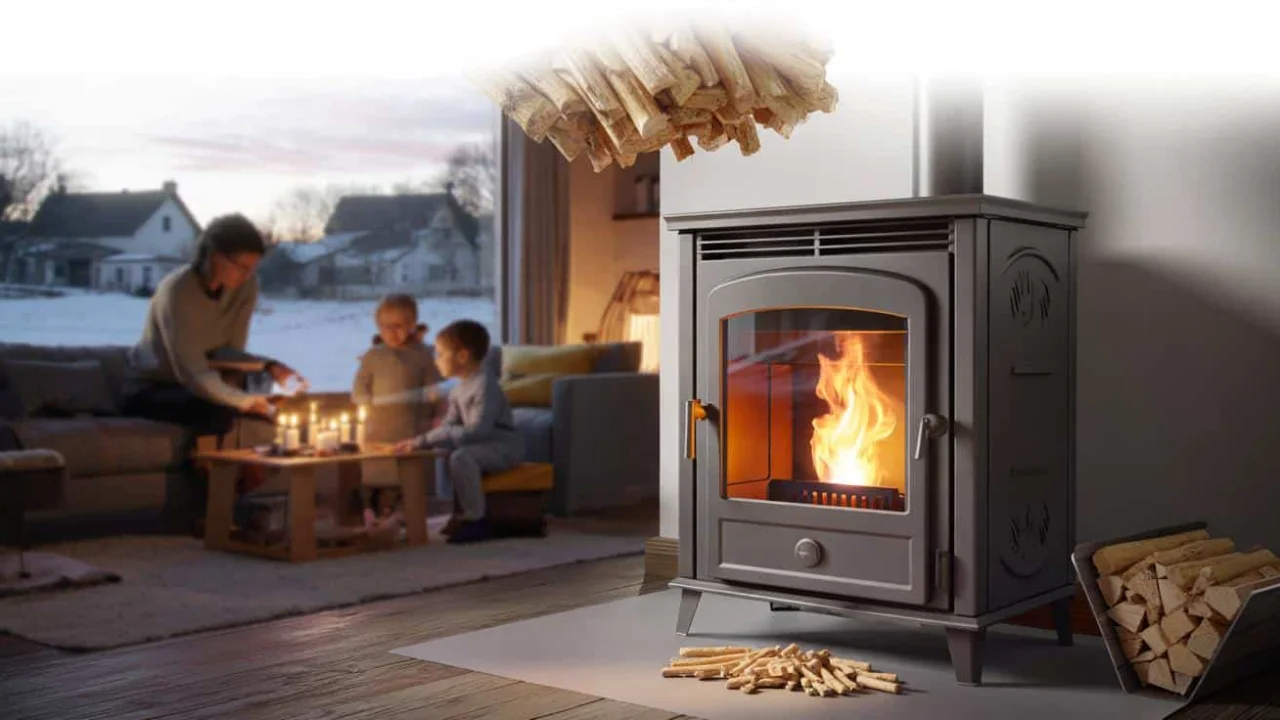
As energy prices soar and power outages become increasingly common across France, thousands of households are discovering a remarkably simple solution that their grandparents would recognize. While neighbors struggle with complex heating systems that fail during blackouts, families with nonelectric pellet stoves continue enjoying steady warmth, regardless of what happens to the electrical grid.
The appeal goes beyond mere convenience. In a world where technology often feels fragile and unreliable, these gravity-fed heating devices represent something profoundly reassuring: independence. When winter storms knock out power lines or energy crises trigger rolling blackouts, these silent workhorses keep burning, transforming compressed wood pellets into life-sustaining heat through nothing more sophisticated than gravity and good engineering.
For French families watching their electricity bills climb while questioning the stability of their energy supply, nonelectric pellet stoves offer more than warmth—they provide peace of mind. No circuit boards to fail, no motors to burn out, no digital displays to go blank when you need heat most. Just reliable, steady warmth that works exactly when everything else stops working.
How Nonelectric Pellet Stoves Actually Work
Most people imagine pellet stoves as high-tech appliances humming with fans, sensors, and digital controls. Nonelectric pellet stoves look similar from the outside, but their operation is refreshingly different—and deliberately simple.
Instead of electric augers that can jam or fail, these stoves use gravity to feed pellets from an overhead hopper into a small metal basket or burn pot. As pellets burn away, fresh fuel naturally drops down to replace them. The process continues automatically, requiring no electricity, sensors, or computerized controls.
- Gravity-fed fuel system: Pellets drop naturally from hopper to firebox without motors or augers
- Manual ignition: Started by hand using firelighters or kindling, like traditional wood stoves
- Simple air controls: Heat output adjusted with basic levers controlling airflow to the fire
- Natural heat distribution: Warm air rises through convection while the stove body radiates heat
- Silent operation: No fans, blowers, or moving parts creating noise or vibration
The result feels more like heating with a traditional wood stove than operating a modern appliance. Users control the fire’s intensity by adjusting air dampers—more air creates a livelier flame and higher heat output, while restricting airflow slows the burn and extends fuel duration.
Why French Households Are Making the Switch
The growing popularity of nonelectric pellet stoves across France reflects deeper concerns about energy security and rising utility costs. Families are seeking heating solutions that work independently of increasingly strained electrical infrastructure.
“After three power outages last winter left us shivering in our own home, we decided enough was enough. Our nonelectric pellet stove kept the main living area warm for two days straight during the worst blackout. Now we sleep better knowing we’re not completely dependent on the grid.” – Marie Dubois, homeowner in Lyon
| Aspect | Traditional Pellet Stove | Nonelectric Pellet Stove |
|---|---|---|
| Power Requirements | Requires 110-300 watts continuously | Zero electrical consumption |
| Operation During Outages | Stops completely without power | Continues operating normally |
| Installation Complexity | Electrical connection required | Only chimney/venting needed |
| Maintenance | Motors, sensors, control boards | Basic cleaning and chimney care |
| Noise Level | Fan and auger noise | Silent operation |
| Initial Cost | €800-€3,000 | €600-€2,500 |
Beyond emergency preparedness, these stoves appeal to households seeking lower operating costs. Without electrical consumption for fans and controls, they reduce overall energy bills while providing the same heating capacity as their powered counterparts.
Installation and Practical Considerations
Installing a nonelectric pellet stove is often simpler than conventional models since no electrical connections are required. However, proper venting remains crucial for safe operation.
- Chimney requirements: Adequate draft essential for proper combustion and pellet feeding
- Clearances: Standard safety distances from walls and combustible materials
- Ventilation: Fresh air intake important for efficient burning and indoor air quality
- Floor protection: Non-combustible hearth pad required under and around stove
- Professional assessment: Chimney inspection recommended before installation
“The biggest adjustment for customers switching from electric pellet stoves is learning to start and control the fire manually. But most find it satisfying—they feel more connected to their heating system rather than just pushing buttons on a remote control.” – Jacques Martin, certified pellet stove installer
Heat distribution differs significantly from fan-forced systems. Natural convection and radiant heating create comfortable warmth but may require strategic placement to heat larger areas effectively. Some users install small battery-powered fans to help circulate air when needed.
Fuel Efficiency and Environmental Impact
Pellet fuel offers consistent quality and predictable burning characteristics, whether used in electric or nonelectric stoves. The compressed wood pellets burn cleanly and efficiently, producing minimal ash while maximizing heat output per kilogram.
Environmental benefits include carbon-neutral burning (trees absorb CO2 while growing), reduced transportation emissions from local pellet production, and utilization of wood waste that might otherwise decompose or be burned as slash. Modern pellet manufacturing creates a dense, consistent fuel with low moisture content ideal for efficient combustion.
“Nonelectric pellet stoves actually burn more efficiently than many electric models because users pay closer attention to the fire and adjust air controls manually for optimal combustion. This hands-on approach often results in cleaner burning and better fuel economy.” – Dr. Catherine Rousseau, combustion engineer at ADEME
A typical 40-pound bag of pellets provides 8-12 hours of steady heat, depending on stove size and heat output settings. Most households use 2-4 tons of pellets per heating season, costing significantly less than equivalent heating oil, propane, or electric resistance heating.
Maintenance and Longevity
Simplified mechanics mean reduced maintenance requirements and longer operational life. Without motors, circuit boards, or sensors to fail, these stoves require only basic upkeep:
- Weekly cleaning: Remove ash from firebox and empty ash pan
- Monthly inspection: Check chimney draft and clean glass if equipped
- Seasonal maintenance: Deep clean chimney and inspect gaskets
- Annual service: Professional chimney cleaning and safety inspection
Many nonelectric models operate reliably for 15-20 years with proper maintenance, compared to 8-12 years typical for electric pellet stoves with their complex mechanical and electronic components.
Frequently Asked Questions
Do nonelectric pellet stoves heat as well as regular pellet stoves?
Yes, they produce equivalent heat output but distribute it through natural convection rather than forced air.
How do you control the temperature without electricity?
Manual air dampers control burn rate and heat output, similar to traditional wood stoves.
Can these stoves work in any home with a chimney?
Most existing chimneys work well, but professional assessment ensures adequate draft for proper operation.
What happens if the pellets run out overnight?
The fire gradually dies out safely as remaining pellets burn away completely.
Are nonelectric pellet stoves harder to start than electric ones?
Manual lighting requires more attention initially but becomes routine with practice.
Do they produce any emissions indoors?
Properly installed stoves vent all combustion gases outside through the chimney system.