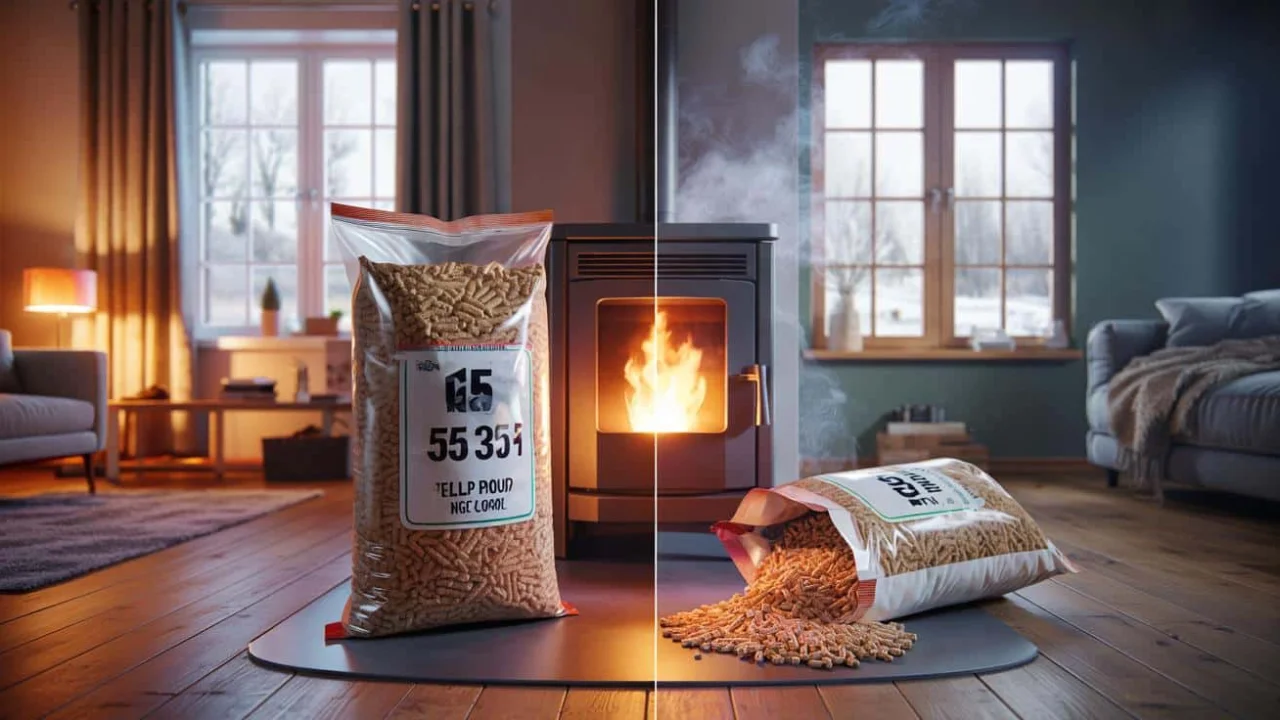
Rising energy costs are pushing thousands of homeowners toward pellet stove heating, but a critical question lingers in garages across the country: how long will that 15-kilogram bag of pellets actually last? The answer varies dramatically—from under 8 hours on full blast to nearly 40 hours in eco mode—depending on factors most people never consider when calculating their winter heating budget.
| Heating Scenario | Power Setting | Burn Rate | Hours per 15kg Bag | Daily Cost |
|---|---|---|---|---|
| Well-insulated home, eco mode | 2 kW | 0.5 kg/hour | 30 hours | €2.50-4.00 |
| Average home, mixed settings | 4-6 kW | 1 kg/hour | 15 hours | €5.00-8.00 |
| Poor insulation, high power | 8-10 kW | 2 kg/hour | 7.5 hours | €10.00-16.00 |
Pellet Consumption Rates Vary Dramatically by Home Type
The stark reality is that pellet stove heating efficiency depends more on your home’s characteristics than the stove itself. A modern 90-square-meter house with proper insulation can stretch one 15kg bag across three days of comfortable heating, while an older, drafty home might burn through multiple bags daily during harsh winter conditions.
| Home Size | Insulation Quality | Season Usage | Bags Needed | Total Weight |
|---|---|---|---|---|
| 100m² well-insulated | Modern standards | 5 months | 100-130 bags | 1.5-2 tonnes |
| 100m² average insulation | Basic standards | 5 months | 150-180 bags | 2.25-2.7 tonnes |
| 100m² poor insulation | Older construction | 5 months | 200+ bags | 3+ tonnes |
Power Settings Create the Biggest Usage Differences
Most homeowners underestimate how dramatically power settings affect pellet consumption. Running a stove at maximum 10kW output during startup can consume pellets five times faster than maintaining steady temperatures on eco mode.
High-power heating typically serves two purposes: rapidly warming cold spaces when people return home, or compensating for severe outdoor temperatures. However, this intensive usage pattern can drain a 15kg bag in just 8-10 hours of continuous operation.
| Power Level | Typical Use Case | Pellet Rate kg/hr | 15kg Bag Duration | Best For |
|---|---|---|---|---|
| 2-3 kW (Eco) | Maintenance heating | 0.4-0.6 | 25-37 hours | Well-insulated homes |
| 4-6 kW (Medium) | Standard comfort | 0.8-1.2 | 12-18 hours | Average conditions |
| 7-10 kW (High) | Rapid heating/cold weather | 1.5-2.2 | 7-10 hours | Poor insulation/extreme cold |
Eco Mode Delivers Maximum Value for Most Households
Smart homeowners have discovered that eco mode operation provides the best balance between comfort and pellet conservation. Rather than cycling between off and high-power settings, maintaining steady low-level heat proves more efficient and comfortable.
Pellet Quality Standards Impact Burn Duration Significantly
Not all 15kg bags deliver equal heating value. Premium pellets with moisture content below 8% and proper certification can extend heating duration by 15-25% compared to budget alternatives. This quality difference becomes expensive over a full heating season.
“The difference between premium and economy pellets often pays for itself within two months of regular use,” explains a certified heating system installer. “Higher-quality pellets burn more completely and produce less ash, which means better heat output per kilogram.”
Home Insulation Standards Determine Real-World Performance
Installers use a simple formula: approximately 1kW of heating power per 10 square meters of reasonably insulated space. However, this calculation assumes modern insulation standards that many older homes don’t meet.
Key insulation factors affecting pellet stove heating efficiency include:
- Wall cavity insulation depth and quality
- Window glazing performance (single vs. double vs. triple)
- Roof and attic insulation coverage
- Air leakage around doors, windows, and penetrations
- Foundation and basement insulation status
Thermal Bridging Wastes Significant Pellet Energy
Thermal bridges—areas where heat escapes through structural elements—can increase pellet consumption by 20-30% in poorly designed homes. Steel beams, concrete balconies, and uninsulated window frames create continuous heat loss paths that force stoves to work harder.
“We see homes where residents burn twice as many pellets as necessary simply because heat escapes through predictable thermal bridges,” notes a residential energy consultant. “Simple upgrades like weatherstripping and window treatments can extend each bag’s heating duration considerably.”
Seasonal Usage Patterns Reveal Budget Planning Opportunities
Successful pellet heating requires understanding seasonal consumption patterns. Early winter typically sees moderate usage, while January and February often demand maximum pellet consumption. Late winter usage depends heavily on regional climate patterns.
Practical budget considerations for pellet stove heating:
- Calculate worst-case monthly consumption (coldest months)
- Account for 10-15% extra pellets for unexpected cold snaps
- Consider bulk purchasing discounts for seasonal supply
- Plan storage space for 2-3 months of pellets minimum
- Budget for quality pellets during peak demand periods
Maintenance Schedules Directly Affect Pellet Efficiency
Regular maintenance can improve pellet efficiency by 10-15%, effectively extending each bag’s useful life. Ash buildup, dirty heat exchangers, and clogged air intakes force stoves to burn more pellets for the same heat output.
Weekly maintenance tasks include ash removal and visual inspection of the burn pot. Monthly tasks involve cleaning heat exchanger surfaces and checking door gaskets. Seasonal maintenance requires professional inspection of venting systems and internal components.
Regional Climate Factors Create Consumption Variations
Geographic location dramatically influences pellet consumption patterns. Northern regions with sustained sub-zero temperatures require consistent high-power operation, while temperate climates allow greater use of eco modes.
| Climate Zone | Heating Season Length | Average Daily Usage | Monthly Bags (100m²) | Season Total |
|---|---|---|---|---|
| Northern (harsh winters) | 6-7 months | 1.2-1.8 bags | 36-54 bags | 200-300 bags |
| Central (moderate winters) | 4-5 months | 0.8-1.2 bags | 24-36 bags | 120-180 bags |
| Southern (mild winters) | 3-4 months | 0.4-0.8 bags | 12-24 bags | 60-100 bags |
Frequently Asked Questions About Pellet Bag Duration
How can I calculate my home’s exact pellet needs?
Track daily pellet usage for two weeks during typical weather, then multiply by seasonal heating days for your region.
Do expensive pellets actually last longer than cheap ones?
Premium pellets with lower moisture content typically provide 15-25% more heat per kilogram than budget alternatives.
Should I buy pellets in bulk or as needed?
Bulk purchases offer 10-20% cost savings, but require proper dry storage space for 2-3 tonnes of pellets.
Can programmable thermostats reduce pellet consumption?
Smart scheduling can reduce usage by 20-30% by automatically lowering temperatures when homes are unoccupied.
How much can home insulation improvements save on pellets?
Basic weatherization typically reduces pellet consumption by 15-25%, while major insulation upgrades can cut usage in half.
Cost-Effective Strategies for Extending Pellet Bag Life
The most successful pellet heating strategies combine smart operational practices with targeted home improvements. Simple changes like programming temperature setbacks during sleeping hours and away periods can extend each 15kg bag significantly without sacrificing comfort.
Advanced users implement zone heating strategies, using pellet stoves to heat occupied areas while allowing unused spaces to remain cooler. This targeted approach can reduce overall pellet consumption by 25-40% in larger homes.
| Optimization Strategy | Implementation Cost | Pellet Savings | Payback Period | Difficulty Level |
|---|---|---|---|---|
| Weekly maintenance routine | €0 (labor only) | 10-15% | Immediate | Easy |
| Programmable thermostat | €100-300 | 20-30% | 1-2 months | Medium |
| Window weatherstripping | €50-150 | 15-25% | 2-3 months | Easy |
| Attic insulation upgrade | €1500-3000 | 30-50% | 1-2 years | Professional |
Understanding how long a 15kg pellet bag lasts requires considering your specific home conditions, climate, and usage patterns. While eco mode can stretch one bag across 30-40 hours, high-power heating in poorly insulated homes can consume the same amount in under 8 hours. The key to successful pellet stove heating lies in balancing comfort requirements with efficiency optimization through proper maintenance, smart scheduling, and gradual home improvements that reduce overall heating demands.