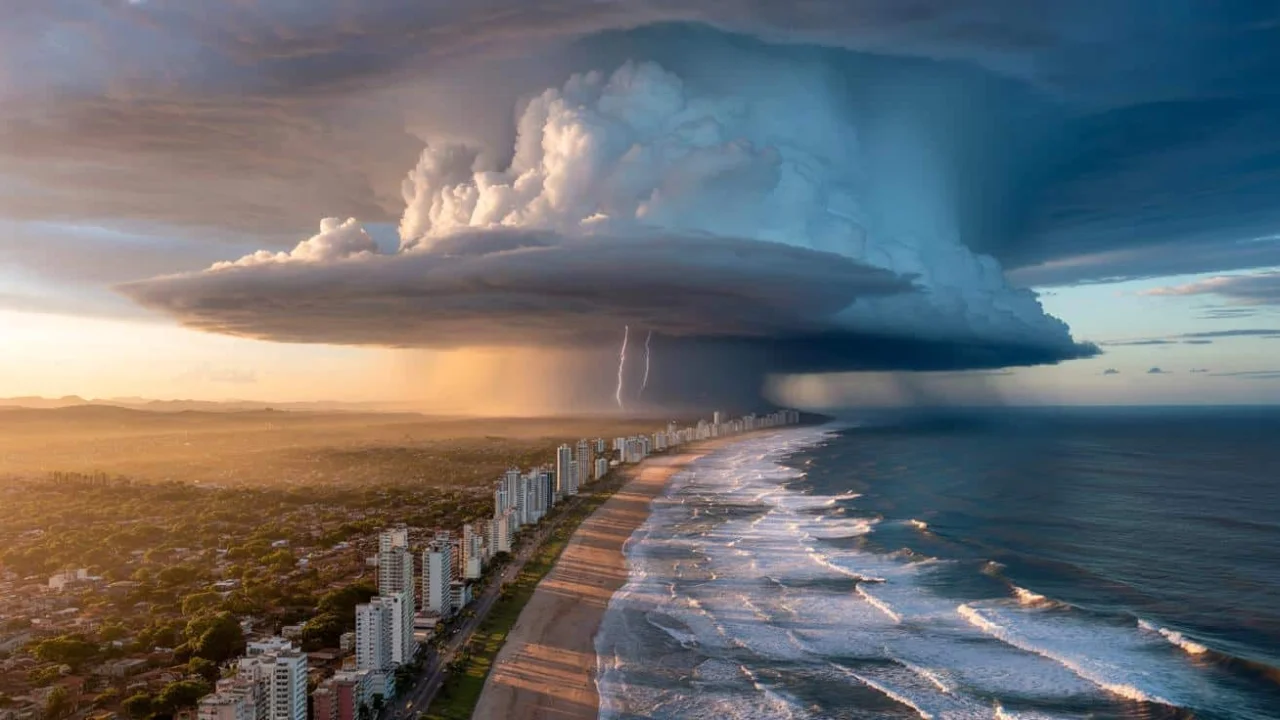
The tranquil days of scorching heat across southern Brazil are about to give way to a meteorological drama of epic proportions. As families seek refuge from temperatures soaring near 40°C, a new threat is brewing on the horizon – a powerful cyclone that meteorologists are closely monitoring with growing concern. The brazil cyclone forecast indicates this weather system will make its presence felt by the end of this week, bringing with it a cascade of severe storms, torrential rainfall, and dramatic temperature swings.
For millions of Brazilians currently enduring the suffocating embrace of an intense heatwave, the approaching cyclone represents both relief and peril. While the system promises to break the oppressive heat that has gripped the South and Southeast regions, it also threatens to unleash nature’s fury through violent storms and potentially dangerous weather conditions. The emotional toll on communities already stressed by extreme heat cannot be understated, as residents brace themselves for yet another weather extreme.
The human stories emerging from this weather pattern are deeply moving. Families in Rio Grande do Sul have been struggling with temperatures that make daily activities nearly unbearable, with children unable to play outdoors and elderly residents facing serious health risks. Now, these same communities must prepare for the opposite extreme – violent storms and flooding that could disrupt their lives in entirely different ways.
This dramatic weather shift embodies the increasing volatility of Brazil’s climate patterns, leaving meteorologists and emergency services working around the clock to protect vulnerable populations. The brazil cyclone forecast has become a critical tool for planning evacuations, securing infrastructure, and ensuring that hospitals and emergency services are prepared for the challenges ahead.
Current Heat Crisis Across Southern Brazil
Before the cyclone arrives, southern Brazil continues to endure a punishing heatwave that has pushed temperatures to dangerous levels. The oppressive conditions have created a sauna-like atmosphere that begins from the early morning hours and intensifies throughout the day.
- Temperature extremes: Maximum temperatures approaching 40°C in multiple locations
- Regional impact: Rio Grande do Sul experiencing daily temperatures above 36°C before midday
- Humidity factor: High moisture levels creating suffocating conditions
- Geographic spread: Heat extending across Santa Catarina and Paraná states
- Duration: Extreme conditions expected through Wednesday, January 28
- Most affected areas: Western and interior zones of Rio Grande do Sul bearing the brunt
Timeline of the Approaching Cyclone System
| Date | Weather Development | Affected Regions | Intensity Level |
|---|---|---|---|
| Tuesday, Jan 27 | First isolated thunderstorms emerge | Paraná | Low to Moderate |
| Wednesday, Jan 28 | Storm risk expands significantly | All southern states | Moderate |
| Thursday, Jan 29 | Widespread storms develop | Entire southern Brazil | High |
| Friday, Jan 30 | Cyclone formation begins | Coastal areas, Atlantic Ocean | Very High |
| Saturday, Jan 31 | Full cyclone development | South and Southeast coasts | Extreme |
Expert Analysis and Meteorological Insights
Leading meteorologists across Brazil are expressing significant concern about the rapid development of this weather system. The brazil cyclone forecast represents a textbook example of how extreme heat can contribute to explosive cyclogenesis – the rapid formation of intense low-pressure systems.
“The contrast between the extremely hot, humid air mass currently dominating southern Brazil and the cooler air pushing up from higher latitudes creates the perfect recipe for cyclone formation. We’re seeing atmospheric conditions that favor rapid intensification, which makes this system particularly concerning for coastal communities.”
The meteorological community emphasizes that this cyclone formation is directly linked to the current heatwave conditions. As the hot air mass becomes increasingly unstable, it creates an environment ripe for explosive weather development.
“What we’re witnessing is a classic pattern where extreme heat gives way to extreme storms. The energy stored in this hot, humid air mass will be released violently as the cyclone develops. Communities need to prepare for a complete weather reversal within just a few days.”
Regional Impact Breakdown
The approaching weather system will affect different regions of Brazil in varying ways, with coastal areas facing the most severe impacts from the cyclone itself, while inland regions deal with the transition from extreme heat to violent storms.
- Rio Grande do Sul:
- Western regions: Intense early-morning storms with strong winds
- Northeastern areas: Heavy rainfall and thunderstorms
- Coastal zones: Direct cyclone impact with dangerous storm surge
- Santa Catarina:
- Central-western regions: Severe storm alerts in effect
- Coastal areas: High surf and dangerous marine conditions
- Inland valleys: Flash flood risks from intense rainfall
- Paraná:
- Eastern regions: Storm progression throughout Thursday
- Coastal plains: Potential tropical storm conditions
- Mountain regions: Landslide risks from saturated soils
Emergency Preparedness and Safety Measures
As the brazil cyclone forecast becomes increasingly concerning, emergency management officials are implementing comprehensive preparedness measures across the affected regions. The rapid transition from extreme heat to severe storms presents unique challenges for public safety.
“We’re dealing with a population that’s already stressed from days of extreme heat, and now they need to prepare for potentially dangerous storm conditions. Our emergency shelters are being equipped not just for storm refugees, but also for heat-related medical emergencies that may continue even as the cyclone approaches.”
Essential safety preparations include:
- Immediate actions: Securing outdoor furniture, checking emergency supplies, identifying shelter locations
- Communication plans: Ensuring family emergency contact information is current and accessible
- Medical preparations: Extra medications for those with chronic conditions, first aid supplies
- Water and food storage: Non-perishable items for potential power outages
- Transportation planning: Alternative routes in case of flooding or road closures
- Technology preparedness: Charged devices, portable chargers, battery-powered radios
Long-term Climate Implications
This dramatic weather pattern highlights broader concerns about climate volatility in South America. The rapid oscillation between extreme heat and violent storms reflects global climate trends that are making weather prediction increasingly challenging and dangerous weather events more frequent.
Climate scientists note that the intensity of both the heatwave and the subsequent cyclone formation represents a concerning trend toward more extreme weather swings. These patterns strain infrastructure, challenge emergency response capabilities, and create cumulative stress on communities already adapting to changing climate conditions.
The economic implications are substantial, affecting agriculture, transportation, energy production, and tourism across multiple states. The brazil cyclone forecast has already prompted adjustments in shipping schedules, agricultural planning, and energy grid management as utilities prepare for potential widespread outages.
Frequently Asked Questions
When exactly will the cyclone reach Brazil’s coast?
The cyclone is expected to form between Friday, January 30 and Saturday, January 31, off the Brazilian coast.
Which areas face the highest risk from this weather system?
Coastal regions of Rio Grande do Sul, Santa Catarina, and Paraná face the greatest cyclone impact risks.
How severe will the temperature drop be after the cyclone arrives?
Temperatures could drop 15-20°C within 24 hours as the cyclone brings cooler air masses northward.
Should residents evacuate coastal areas before the cyclone hits?
Local authorities will issue evacuation orders if necessary; residents should monitor official emergency communications closely.
How long will the severe weather conditions persist?
Storm conditions may continue for 2-3 days after cyclone formation, with gradual improvement by early February.
What makes this cyclone formation particularly dangerous?
The rapid development from extreme heat creates explosive cyclogenesis, potentially producing very intense storm conditions quickly.
As Brazil prepares for this significant weather transition, the importance of accurate forecasting and community preparedness cannot be overstated. The shift from punishing heat to potentially dangerous storm conditions represents one of the most dramatic weather changes the region has experienced in recent years, underscoring the critical importance of staying informed and prepared for rapidly evolving meteorological conditions.