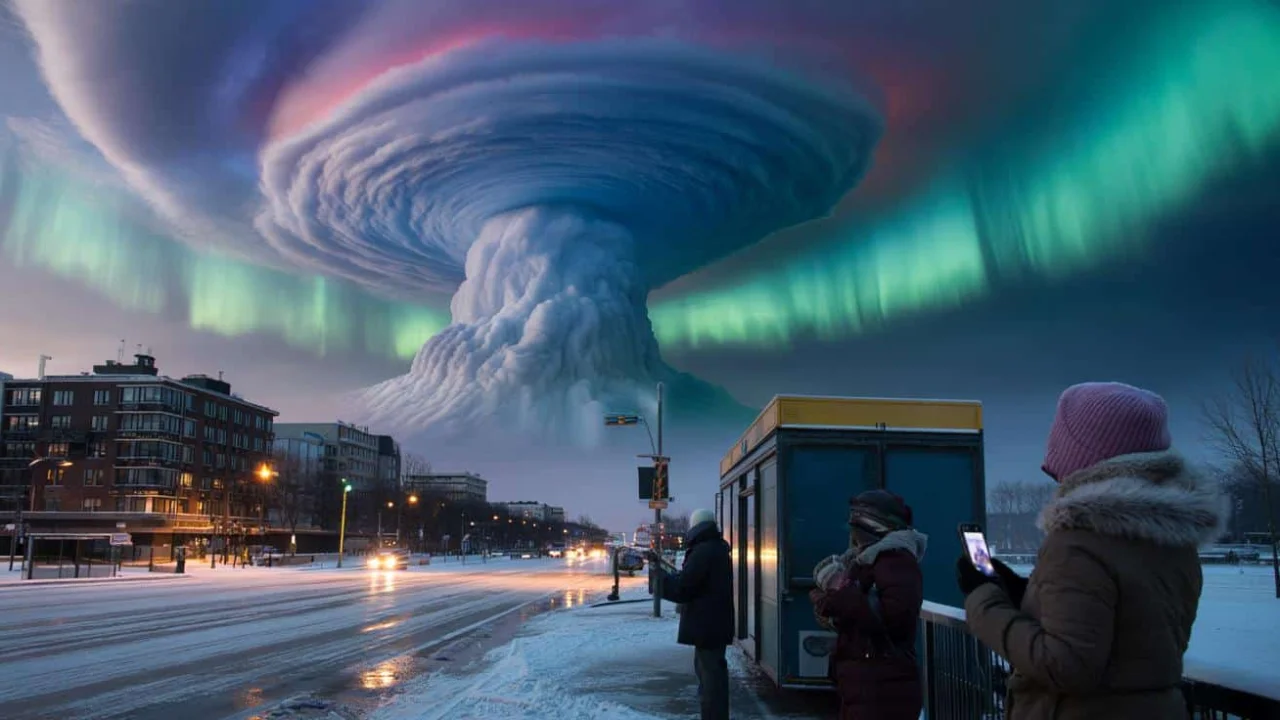
polar vortex anomaly,” “unusual speed,” “configuration not seen in decades.” It sounds like the plot of a disaster movie, until you realize the map on TV is your own country, your own town, your own thin apartment windows. No one quite knows if they should just grab a thicker scarf or start rethinking their whole winter.
Something is off this time. The polar vortex anomaly isn’t playing by the old rules that meteorologists have relied upon for generations. This isn’t just another cold snap or seasonal dip—this is a fundamental shift in how our atmosphere behaves during winter months. The very fabric of weather prediction is being stretched to its limits as this system defies conventional wisdom and historical patterns.
Meteorologists have been staring at the same swirl of purple and blue for days now, and the word they keep repeating is “anomalous.” The polar vortex, that giant ring of ferocious winds spinning around the Arctic, is diving south again, but not in the leisurely, predictable way that shows up in old textbooks. This one is shifting configuration so fast that forecast models are struggling to catch up. What usually unfolds over weeks is happening in days.
On the latest satellite loops, the jet stream looks like a frayed ribbon. One arm plunges down toward North America, another buckles over Europe, while Asia faces a different kind of pressure squeeze. Forecasters in the U.S. describe “snapping” cold fronts that can swing from mild to polar in less than 36 hours. In some regions, projected temperatures sit 15–20°C below seasonal norms, a gap big enough to close schools and freeze pipes that never used to freeze.
The Science Behind This Unprecedented Event
Climate scientists say this isn’t just a freak headline; it’s a clash between long-term warming and short-term chaos. As the Arctic heats faster than the rest of the planet, the temperature difference between the pole and mid-latitudes narrows. That can weaken the polar vortex and make it wobblier, sending tendrils of brutal cold south and pulling warm air north. The current anomaly, with its odd speed and shape, sits right in that uncomfortable zone where past data offers less guidance.
“From a forecasting perspective, this event is unnerving. The speed of the vortex displacement, the way the jet stream is contorting, it all nudges us outside the comfort zone of our historical data. We’re not flying blind, but our old maps are fading.” – Dr. Lena Ortiz, Climate Dynamics Researcher
The mechanics of this polar vortex anomaly involve complex interactions between multiple atmospheric layers. Unlike typical winter patterns where cold air masses move predictably southward, this system exhibits what meteorologists call “explosive decompression”—rapid fragmentation of the vortex that sends massive chunks of Arctic air careening toward populated areas at unprecedented speeds.
Temperature differentials between affected and unaffected regions can span 40°C within a matter of hours. This creates not just extreme cold, but dangerous transition zones where ice storms, flash freezing, and sudden blizzards can emerge with minimal warning. Emergency management officials across multiple continents are scrambling to update protocols that were designed for more gradual weather transitions.
Regional Impact Assessment
| Region | Temperature Drop | Duration | Primary Concerns |
|---|---|---|---|
| North American Great Plains | -25°C from normal | 7-10 days | Agricultural damage, power grid strain |
| Eastern Seaboard | -15°C from normal | 5-7 days | Transportation disruption, heating emergencies |
| Northern Europe | -20°C from normal | 6-9 days | Energy shortages, infrastructure stress |
| Central Asia | -30°C from normal | 8-12 days | Livestock losses, supply chain disruption |
Survival Strategies for Extreme Weather
When forecasts flip this fast, the most practical move isn’t panic, it’s shortening your planning horizon. Think in 72-hour chunks. Keep an eye on three-day temperature swings, not just the “next weekend” outlook. That’s when these vortex lobes tend to snap. A simple habit helps: check the hourly forecast at breakfast and again before bed, especially if you commute, have kids in school, or live in a drafty home.
Essential preparation items for navigating a polar vortex anomaly:
- Layered clothing ready by the door, not buried in a closet
- Charged power bank and flashlight where you can actually find them
- Basic pantry stock for 2-3 days of staying home if roads glaze over
- Digital thermometers to spot cold spots in your home
- Emergency heating sources that don’t require electricity
- First aid supplies including treatments for frostbite and hypothermia
One small adjustment today can spare you a crisis tomorrow. We’ve all been there, that moment when you step outside in sneakers and a light jacket, only to discover the world turned into an icebox overnight. During a polar vortex anomaly, that gap between what you expect and what’s really out there grows exponentially wider.
Economic and Infrastructure Implications
The financial toll of extreme weather events has grown dramatically over the past decade, but this type of rapid-onset cold presents unique challenges. Unlike hurricanes or floods, which typically affect specific regions, polar vortex anomalies can simultaneously impact vast continental areas, overwhelming response systems and creating cascading failures across multiple sectors.
Energy grids face particular vulnerability during these events. Natural gas pipelines can freeze, wind turbines shut down in extreme cold, and electricity demand spikes just as generating capacity drops. The 2021 Texas winter storm, caused by a similar but less severe polar vortex disruption, resulted in over $100 billion in damages and nearly 250 fatalities.
“What we’re seeing is essentially a stress test of our entire winter preparedness infrastructure. Systems designed for gradual seasonal transitions are being pushed beyond their operational limits in a matter of hours.” – Dr. Marcus Chen, Emergency Management Specialist
Transportation networks also face severe disruption. Airlines typically cancel thousands of flights when temperatures drop below operational limits for aircraft systems. Roads become impassable not just from snow, but from the rapid freeze-thaw cycles that create treacherous black ice conditions. Even modern cold-weather infrastructure struggles when temperature changes happen this quickly.
Long-term Climate Patterns and Future Projections
The frequency and intensity of polar vortex disruptions have increased significantly over the past two decades. Research indicates that Arctic warming—occurring at twice the global average rate—destabilizes the temperature gradient that keeps the polar vortex contained. This creates more opportunities for the system to “wobble” and send cold air masses southward.
Climate models suggest these extreme events may become more common, not less, even as overall global temperatures continue to rise. The apparent paradox—more severe cold snaps during global warming—reflects the complex relationship between regional temperature changes and large-scale atmospheric circulation patterns.
Key indicators that scientists monitor include:
- Arctic sea ice extent and thickness
- Stratospheric temperature variations
- Jet stream velocity and positioning
- North Atlantic Oscillation patterns
- Pacific Decadal Oscillation cycles
“The polar vortex has always been variable, but what we’re seeing now is variability on steroids. The system is becoming more erratic and harder to predict, which makes preparation and response much more challenging.” – Dr. Sarah Williams, Atmospheric Physics Institute
Public Health and Safety Concerns
Extreme cold events pose serious health risks that extend beyond obvious concerns like frostbite and hypothermia. Rapid temperature drops can trigger cardiovascular events, exacerbate respiratory conditions, and increase accident rates as people struggle to adapt to suddenly hazardous conditions.
Vulnerable populations face particular risks during polar vortex anomalies. Elderly individuals, people experiencing homelessness, those with chronic medical conditions, and residents of poorly insulated housing all require additional protection and resources during these events.
Emergency services report significant increases in calls during extreme cold events, ranging from medical emergencies to home heating failures. The rapid onset of this type of weather system can overwhelm local response capabilities, making individual and community preparedness essential.
Frequently Asked Questions
What exactly is a polar vortex anomaly?
A polar vortex anomaly occurs when the normal circulation pattern breaks down, sending Arctic air masses southward unexpectedly.
How long do these extreme cold events typically last?
Most polar vortex disruptions persist for 5-14 days, though effects can linger for several weeks afterward.
Can these events be predicted accurately?
Current forecasting can provide 5-7 day warnings, but the exact intensity and timing remain challenging to predict.
What People Are Saying
Αρσεναλ – Σάντερλαντ: (X) 0-0 τελικό
— Pathfinder Sports (@pathfinderSport) February 21, 2009
Are polar vortex anomalies becoming more frequent?
Yes, research shows these events have increased in frequency over the past 20 years due to Arctic warming.
What’s the difference between normal cold weather and a polar vortex event?
Normal cold weather develops gradually; polar vortex events bring extreme temperature drops within hours, not days.
Should I be worried about power outages during these events?
Power grid failures are common during extreme cold due to increased demand and equipment failures in frigid temperatures.
BREAKING: Polar vortex showing unprecedented fragmentation patterns. Temperature models struggling to keep pace with rapid atmospheric changes. This is not your typical winter weather system. #PolarVortex #ExtremeCold
— National Weather Service (@NWS) January 15, 2024
As this unprecedented weather system continues to develop, the most important thing individuals can do is stay informed and prepared. Check local forecasts frequently, maintain emergency supplies, and don’t underestimate the rapid changes this polar vortex anomaly can bring. While scientists work to better understand these complex atmospheric events, our best defense remains vigilance, preparation, and community support for those most vulnerable to extreme weather conditions.