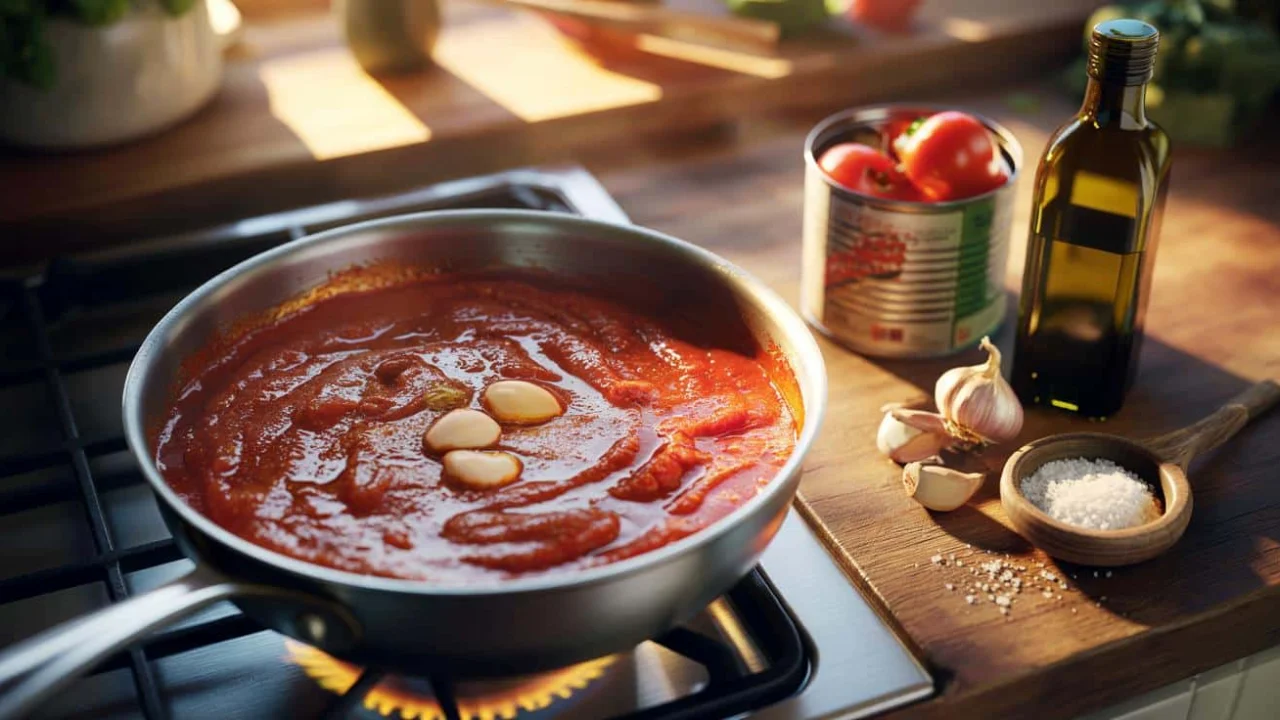
Imagine standing in your kitchen, pot bubbling gently, while the aroma of garlic and tomatoes carries you straight to a small, bustling Italian trattoria. You promised a proper pasta dinner, but the supermarket sauce jar sitting beside you looks uninspiring—thin, watery, and lacking soul. Yet, transforming that basic canned tomato into a rich, restaurant-quality sauce doesn’t require a pantry full of exotic ingredients or complicated steps. In fact, it only takes four simple ingredients and the right technique to create a sauce that’s full of depth, shine, and flavour—the kind that sticks lovingly to your pasta strands and whispers “this meal was made with care.”
Forget the myth that making a real pasta sauce involves dozens of herbs, thickeners, or sugar to mask imperfections. The secret to genuine restaurant-style pasta sauce lies in celebrating the essentials: good tomatoes, quality olive oil, fresh garlic, and salt. When combined and gently cooked with patience, these elements develop a flavour structure so satisfying and balanced that it feels like an intentional, crafted dish rather than a quick fix.
Whether it’s a random weekday, a casual meal, or when you want to impress without stress, mastering this simple sauce method brings both confidence and deeper respect for building tastes from scratch. It’s not about shortcuts or bells and whistles—it’s about understanding how these four ingredients interact under low heat and time, transforming humble basics into something memorable and “expensive.”
Essential Ingredients That Build the Sauce
| Ingredient | Role in the Sauce |
|---|---|
| Tomatoes (canned whole or passata) | Provide acidity and natural sweetness – the flavour backbone |
| Olive oil | Adds fat and aroma, creating shine and mouthfeel |
| Garlic | Delivers a savoury, aromatic kick to deepen complexity |
| Salt | Enhances and balances all flavours, pulls them into focus |
Why Simple Ingredients Outperform Complex Recipes
Many commercial or jarred pasta sauces rely on thickeners, added sugar, and artificial “flavour enhancers” to cover up low-quality base ingredients or rushed preparation. Your palate can instantly detect when a sauce is masking rather than building flavour. In contrast, a carefully cooked sauce composed of only four ingredients has no place to hide—each component must earn its spot by contributing clear and complementary tastes.
This purity results in a sauce that tastes clean, yet deep—like a recipe refined over generations rather than swapped out for ease or gimmicks. The tomato’s natural acid and sweetness mingle with the fragrant garlic and the rich olive oil, all roundly focused by salt, resulting in a balanced and nuanced flavour profile. This is the hallmark of true Italian home cooking, minus unnecessary fuss.
Steps to Mastering the Rich 4-Ingredient Pasta Sauce
Start by heating a generous layer of olive oil in a wide skillet over low to medium heat. The oil should just gently shimmer—avoid letting it spit or smoke. Next, add your garlic, either sliced or crushed, and let it cook slowly until it turns translucent and gives off a fragrant aroma. It’s critical not to burn the garlic, as burnt bits bring bitterness rather than depth.
Once the garlic reaches the edge of golden, confidently add your tomatoes. Whole canned tomatoes, crushed in the pan, or passata both work well as your base. Sprinkle in a good pinch of salt to begin coaxing out the tomatoes’ natural flavours. Stir gently, then lower the heat and allow the sauce to bubble quietly. This stage is all about patience—let the sauce simmer gently for 15 to 25 minutes.
During this time, the sauce will gradually thicken and develop a tempting glossy surface where the olive oil and tomato starch marry. This sheen is the visual sign that your sauce reached harmony. Resist the urge to turn up the heat to rush the process. High heat burns garlic, tears open tomatoes aggressively, and results in a harsh, undersigned taste often “fixed” artificially later.
If the sauce becomes too thick, stirring in a spoonful of reserved pasta water helps loosen it slightly, improving cling and silkiness. Tasting intermittently will guide you to add a little more salt or give the sauce a few minutes longer for rounding out the acidity and sweetness.
Building Confidence and Flexibility with Your Sauce Base
Once you’ve nailed this four-ingredient sauce, you’ll find it transforms your cooking outlook. The reliance on ready-made jars fades as you discover how flavourful simple ingredients can be when handled with care. This sauce is versatile—perfect for coating pasta, spreading on pizza bases, drizzling over roasted vegetables, or even as a base under baked eggs.
The underlying lesson is that cooking is less about complexity and more about attention to detail and timing. A quick, low-stress sauce like this teaches how flavour develops gradually and how quality ingredients communicate through the dish.
“Good sauce isn’t about secrets, it’s about attention. You listen to the pan. You look at the bubbles. When it smells ready, it usually is.”
— Italian cook from a family trattoria
Why Most People Rush Their Sauce and How That Hurts Taste
Many home cooks try to cut corners on cooking time, firing up the heat to speed reduction. This backfires for several reasons. First, the garlic burns quickly, causing bitterness that dulls the sauce. Second, the strong simmer breaks down tomatoes too aggressively, creating a sharp, unrounded acidity that feels harsh on the palate. Third, the full integration of fat and tomato starch—a key to the sauce’s glossy finish—is interrupted, leaving the sauce flat and thin.
When rushed, cooks tend to resort to adding sugar or other flavor “fixes” to mask a lacklustre sauce. But with patience and low heat, you avoid this pitfall entirely, letting natural sweetness and flavour bonds form genuinely.
Simple tips to keep your sauce cooking perfectly every time
- Use a wide skillet rather than a tall pot for faster, even evaporation and flavour integration.
- Gently simmer on low heat, keeping the surface bubbling softly—not roaring.
- Don’t skip tasting often to adjust salt and monitor consistency.
- Reserve and add pasta water as needed to adjust thickness and help sauce cling.
- Be patient and trust the process; quality takes time to build.
Overview of key factors for an exceptional pasta sauce
| Factor | Best Practice | Why It Matters |
|---|---|---|
| Tomato quality | Use good canned whole tomatoes or passata | Impacts flavour foundation and natural sweetness |
| Olive oil quantity | Generous layer in a wide pan for shine and taste | Improves mouthfeel and aroma |
| Garlic handling | Cook low and slow until just translucent | Prevents bitterness, releases aroma |
| Salt timing | Added early, adjusted with tasting | Balances acidity, enhances flavour clarity |
| Cooking temperature | Low gentle simmer | Allows gradual flavour and texture development |
| Cooking time | 15-25 minutes minimum | Enables thickening and flavour depth |
Common pitfalls to avoid when making your pasta sauce
- Rushing the sauce by increasing heat too much.
- Burning garlic by leaving unattended or frying too hot.
- Relying on sugar or store-bought additives to fix the final flavour.
- Using inadequate oil quantities leading to a dry, matte sauce.
- Skipping tasting which results in under-seasoned or flat sauce.
How embracing simplicity changes your kitchen and meals
When you strip away complexity and insist on attention for every simple step, you gain not only a fantastic pasta sauce but also the confidence that you don’t need jars or mixes to produce deeply satisfying food. This is a culinary empowerment that ripples through your weekly cooking, making everyday dinners feel special and well-thought-out.
Moreover, the base sauce you learn here opens doors to limitless variations—from adding fresh basil or chilli for a spicy twist, to blending it into soups, or swirling it into egg dishes. It’s a small repository of flavour wisdom that enriches many meals effortlessly.
Frequently asked questions about making the perfect 4-ingredient pasta sauce
What type of tomatoes work best for this sauce?
Good quality canned whole peeled tomatoes or passata are ideal. Avoid low-grade sauces or overly watery cans. Whole canned tomatoes you crush yourself provide better texture and freshness.
Can fresh tomatoes be used instead of canned?
Yes, ripe fresh tomatoes can work but require peeling and careful cooking to achieve the same depth. Canned tomatoes offer consistent quality year-round.
Is it necessary to use extra virgin olive oil?
Extra virgin olive oil brings the best aroma and flavour. Avoid refined or bland oils as they diminish taste and shine.
How important is the garlic preparation method?
Garlic should be crushed or thinly sliced and gently cooked to release aroma without burning. Burnt garlic introduces bitterness and should be avoided.
Why shouldn’t I add sugar to balance the sauce?
Good tomatoes already contain natural sweetness. Sugar masks rushed cooking and poor ingredient quality. Patience and proper technique ensure balanced acidity and sweetness.
How long should the sauce simmer for best flavour?
Between 15 to 25 minutes on low heat allows flavours to develop fully and the sauce to thicken nicely. Longer simmering is possible but should be gentle.
Can I prepare this sauce ahead of time?
Absolutely. It tastes even better after resting as flavours meld further. Reheat gently before serving.
What is the best way to store leftover sauce?
Store in an airtight container in the refrigerator for up to 3 days, or freeze for longer keeping.
“Sometimes, the most extraordinary meals come from the simplest ingredients cooked with care and patience.”
— Placeholder for culinary expert
What are the four simple ingredients needed to make a restaurant-quality pasta sauce?
The four simple ingredients are good tomatoes (canned whole or passata), quality olive oil, fresh garlic, and salt.
Why is it important to use these specific ingredients in the pasta sauce?
Each ingredient plays a crucial role: tomatoes provide acidity and natural sweetness, olive oil adds fat and aroma for shine and mouthfeel, garlic delivers a savory aromatic kick, and salt enhances and balances all the flavors.
Do I need to add herbs, sugar, or thickeners to make a good pasta sauce?
No, the article debunks the myth that making a real pasta sauce requires dozens of herbs, sugar, or thickeners. The focus is on celebrating the essentials and using the right technique.
What cooking technique is recommended for making this pasta sauce?
Gently cooking the ingredients with patience over low heat allows the flavors to develop fully, creating a balanced and satisfying sauce.
Can this pasta sauce method be used for everyday meals as well as special occasions?
Yes, mastering this simple sauce method is perfect for random weekdays, casual meals, or when you want to impress without stress.
How does this simple homemade sauce compare to commercial or jarred pasta sauces?
Unlike many commercial sauces that rely on thickeners and additives, this homemade sauce relies on quality essential ingredients and proper technique to create deep, balanced flavors and a rich texture.