“From a stratospheric perspective, this is one of the strongest February disruptions we’ve seen in many years,” says a senior atmospheric scientist at a European research center. “What worries us isn’t just the intensity, it’s the timing. We’re loading late-winter dice for more volatility right when people think the worst is over.”
Two weeks ago, the sky over Chicago had that washed-out blue that tricks you into thinking spring might be early. People were walking dogs without hats, coffee shops had their doors cracked open, and social feeds filled with screenshots of 10-day forecasts that looked almost boring.
Then, almost overnight, the maps started bleeding purple and dark blue again. Meteorologists began talking faster, posting stranger-looking charts, and using a phrase that still sounds more like sci-fi than weather: polar vortex disruption.
Stratospheric Winds Drop Off A Cliff In Unprecedented February Event
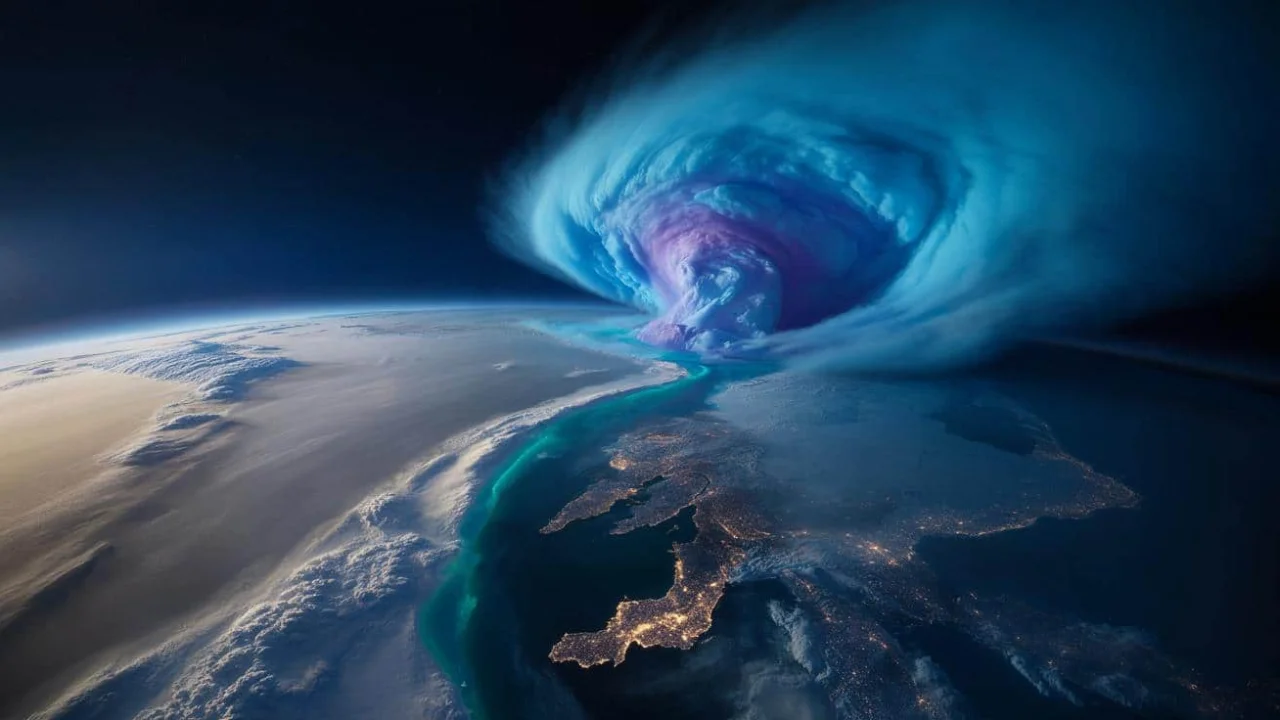
High above the North Pole, more than 20 miles up, the polar vortex is supposed to be the quiet backstage of winter. A cold, spinning pool of air locked in place, away from our daily lives. Yet this February, that backstage is suddenly the main show.
The vortex is wobbling, stretching, and shifting southward with a strength that veteran scientists say they rarely see this early in the year. Some models show pressure waves punching into the vortex like ripples in a drum, slowing its swirling winds and cracking open the cold that usually stays locked near the Arctic.
| Key Disruption Indicators | Current Status | Impact Timeline |
|---|---|---|
| Stratospheric Wind Speed | Dropping rapidly from normal levels | Already underway |
| Polar Vortex Shape | Elongating and weakening | Next 1-2 weeks |
| Surface Weather Effects | Cold air masses mobilizing southward | 2-4 weeks ahead |
Northern Hemisphere Regions Face Weather Whiplash Scenarios
Weather Twitter is crowded with animated maps where the once-perfect polar circle warps into a lopsided blob, one arm drooping toward North America, another teasing Europe. One well-known climate scientist shared a graphic of stratospheric wind speeds, calling it “one of the most intense February disruptions in decades.”
- Eastern United States: Mild winter patterns could shatter with sudden arctic plunges lasting days to weeks
- European Plains: Record warmth may give way to late-season snow events and freezing temperatures
- Central Canada: Already cold regions could see extreme temperature drops beyond normal winter ranges
- Northern Asia: Siberian cold pools may shift unpredictably, affecting agricultural and energy sectors
Infrastructure And Daily Life Brace For Sharp Temperature Swings
The practical takeaway is simpler than the atmospheric science behind it. Over the next 1-3 weeks, the odds of blocking patterns, sharp cold snaps, and late-season snow spikes across parts of the Northern Hemisphere are rising dramatically.
- Transportation Networks: Airlines and highways may face sudden weather-related delays and closures
- Energy Grids: Power systems designed for mild winter loads could strain under unexpected demand spikes
- Agricultural Sectors: Early spring crops and livestock operations face potential freeze damage
- Urban Planning: Cities unprepared for late-winter extremes may struggle with snow removal and heating capacity
“This isn’t just cold versus warm – it’s sharp contrasts rubbing against each other, creating the kind of extremes that strain roads, grids, and nerves,” explains a meteorologist specializing in extreme weather patterns.
Climate Models Show Atmospheric Gears Attempting Dangerous Alignment
Scientists are watching three layers of the atmosphere trying to sync up like gears in a clock. First, the stratospheric shift high over the pole, then the jet stream closer to where planes fly, and finally the weather patterns at the surface.
What’s happening is a classic “sudden stratospheric warming” event, but with an unusual twist. When waves of energy from below crash into the polar vortex disruption, they can rapidly heat the stratosphere above the pole by tens of degrees.
| Atmospheric Layer | Current Condition | Expected Timeline |
|---|---|---|
| Stratosphere (20+ miles up) | Rapid warming and wind weakening | Ongoing for 2-3 weeks |
| Jet Stream (6-9 miles up) | Beginning to buckle and sag | 1-2 weeks to full effect |
| Surface Weather | Temperature patterns destabilizing | 2-4 weeks of volatility |
Emergency Preparedness Experts Recommend Low-Tech Survival Strategies
The best strategy for a winter shaped by a rogue polar vortex is surprisingly low-tech. Think in layers, not in outfits. Keep your warmest gear handy even if your forecast app shows a week of double-digit highs.
Check your home the way you’d check a tent: look for tiny drafts, loose windows, gaps around doors. A cheap roll of weatherstripping can matter on the one night your town suddenly drops 25 degrees below average. Cold air always finds the smallest invitation.
For drivers, a small trunk kit turns a random icy jam from a crisis into an inconvenience. Include a blanket, gloves, hat, phone charger, a bottle of water, and even a spare pair of socks.
“We’re not predicting a specific disaster, but the potential for high-impact weather events has increased significantly,” notes a senior forecaster at the National Weather Service. “The key is preparing for rapid changes rather than banking on stable patterns.”
Historical Context Reveals Rare February Timing Creates Unique Risks
In 2021, a major polar vortex disruption helped unleash the deep freeze that slammed Texas, shattering pipes and power grids never designed for that kind of cold. This year’s setup isn’t a copy-paste replay, but experts keep circling back to the same phrase: “high-impact potential.”
The strange part this year is how early and aggressively it’s happening for February, compressing a process that usually unfolds more slowly into a sharp, disruptive jolt. February disruptions are uncommon because the polar vortex typically maintains strength through mid-winter.
Climate records show only three comparable February events in the past four decades, each leading to memorable weather extremes across multiple continents. The 1985 event brought record cold to Europe, while 2018’s disruption triggered the “Beast from the East” that paralyzed the UK.
Frequently Asked Questions About Polar Vortex Events
What exactly is the polar vortex and why does it matter for my weather?
It’s a belt of cold air spinning around the North Pole. When it weakens, arctic air spills south into populated areas.
Is this early-season shift proof that climate change is getting worse?
Scientists are still studying connections between warming and vortex behavior. Individual events don’t prove broader trends.
Could this event trigger another disaster like the 2021 Texas freeze?
The setup is different, but infrastructure vulnerable to extreme cold remains at risk during any major disruption.
How long can the effects of a polar vortex disruption last at the surface?
Typically 2-6 weeks, though some patterns can influence weather for months through feedback loops.
What’s the best way to follow this without getting overwhelmed by every update?
Focus on local meteorological services rather than viral social media maps. Check forecasts every 2-3 days, not hourly.
Should I cancel travel plans or major outdoor events?
Monitor forecasts within 72 hours of travel dates. Have backup plans but avoid panic-level responses to long-range predictions.
Living With Atmospheric Uncertainty In An Era Of Climate Extremes
As this early-season polar vortex shift unfolds, the story extends beyond how cold your city might get next week. It’s about living in a time when the atmosphere seems to surprise us more often, when “unusual” appears in forecast discussions almost every month.
Some of that reflects better monitoring and sharper models. Some stems from a slowly warming climate bending the rules of old patterns, nudging extremes into new shapes. You can feel the quiet unease behind the technical phrases, even from the most cautious experts.
Maybe this odd February becomes a story you tell in a few years – the winter that looked done until the sky flipped the script. Or maybe it passes as a near-miss, a warning shot with softer consequences than models hinted.
Either way, it serves as a reminder that what happens 30 kilometers above the pole can reshape a school day, a commute, or a power bill. Our lives remain stubbornly written in the language of the air we share.
“The atmosphere is sending us a message about volatility and timing that we need to take seriously,” concludes a climate researcher tracking polar dynamics. “Preparation isn’t about predicting exact outcomes – it’s about building resilience for whatever comes next.”