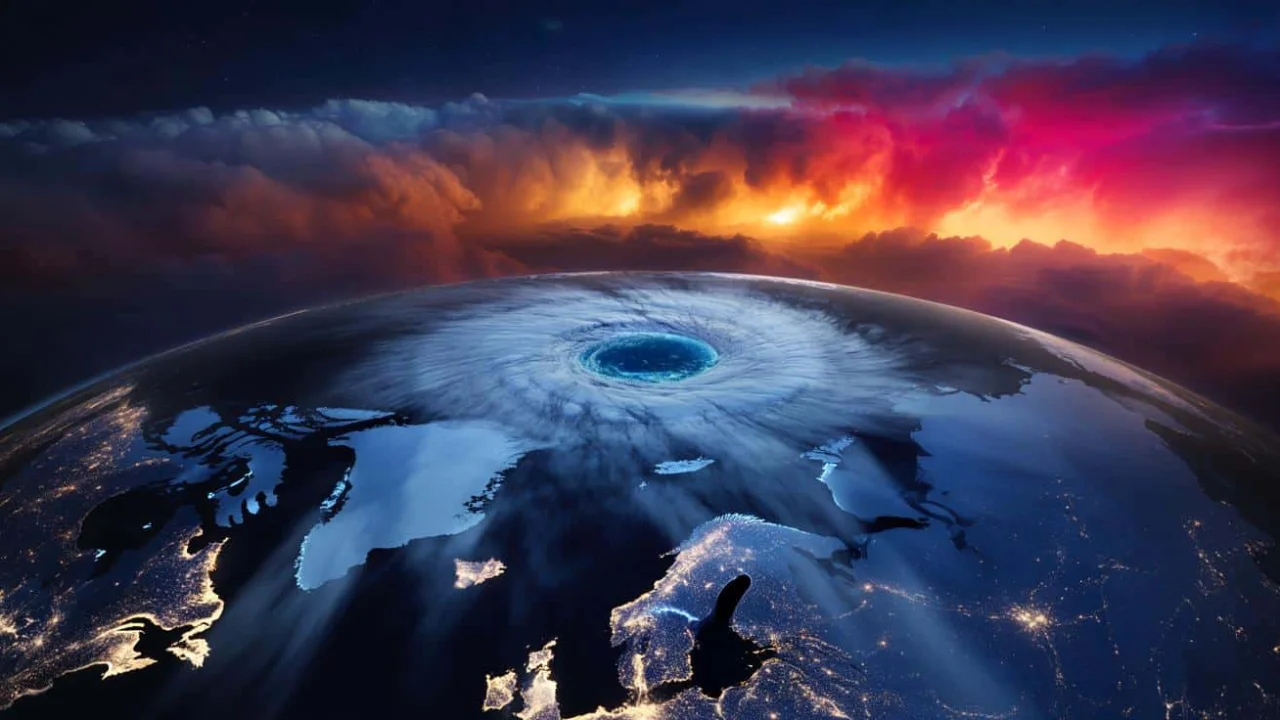
A faint tremor in satellite data at 3 a.m. revealed something extraordinary happening 30 kilometers above the Arctic. The polar vortex disruption now unfolding is tracking to become one of the most intense February stratospheric warming events on record, threatening to unleash weeks of chaotic weather across North America and Europe.
Meteorologists are watching temperatures in the stratosphere spike by 40-50°C in just days, causing the polar vortex to buckle and potentially split. The timing makes this event particularly unusual — major disruptions typically occur earlier in winter, not when the vortex should still be maintaining its grip on Arctic air.
February Polar Vortex Disruption Overview
| Aspect | Current Event | Normal February Pattern |
|---|---|---|
| Stratospheric Temperature Rise | 40-50°C increase in days | Gradual 5-10°C warming |
| Vortex Strength | Severely weakened/splitting | Strong and stable |
| Historical Precedent | Nearly unprecedented for February | Occasional minor disturbances |
| Surface Impact Timeline | 10-20 days from onset | Minimal surface effects |
| Geographic Reach | Continental-scale disruption | Localized Arctic containment |
Critical Numbers Behind This Stratospheric Chaos
| Measurement | Current Values | Impact Threshold |
|---|---|---|
| Stratospheric Temperature (10mb) | -15°C to +35°C shift | +30°C triggers major SSW |
| Vortex Wind Speed | Dropping from 60m/s to 20m/s | Below 25m/s indicates breakdown |
| Surface Pressure Anomalies | +15 to +25 mb above normal | +10 mb signals pattern shift |
| Arctic Oscillation Index | Forecast: -3 to -4 range | Below -2 brings cold outbreaks |
| Temperature Departure (Mid-latitudes) | Potential: 10-20°F below normal | 5°F below disrupts infrastructure |
How This February Event Compares to Historic Disruptions
| Event | Date | Vortex Impact | Surface Consequences |
|---|---|---|---|
| Beast from the East | February 2018 | Complete vortex split | Europe-wide freeze, snow in Rome |
| Texas Deep Freeze | February 2021 | Displaced polar air mass | Power grid failure, $195 billion damage |
| Current February 2024 | Ongoing | Severe weakening/potential split | TBD – 10-20 day lag expected |
| January 2009 SSW | January 2009 | Major vortex displacement | Record cold across eastern US |
Regional Vulnerability Assessment for Late February Weather
The polar vortex disruption doesn’t affect all regions equally. Areas most susceptible to dramatic temperature swings include:
- Northeast Corridor (US): High probability of sudden temperature drops, potential ice storms affecting 50+ million people
- Great Lakes Region: Lake-effect snow amplification possible as Arctic air moves over relatively warm water
- Central Europe: Risk of repeat “Beast from the East” scenario with easterly wind patterns
- Eastern Canada: Extreme wind chill values potentially reaching -40°F with displaced Arctic air masses
- Northern Plains (US): Agriculture at risk from late-season freeze damage to early emerging crops
“What we’re seeing now is a real structural hit to the stratospheric circulation. That doesn’t guarantee a disaster on the ground, yet it strongly tilts the odds toward unusual late-winter weather in the mid-latitudes,” says a senior National Weather Service forecaster.
Immediate Action Items for the Next 20 Days
Smart preparation focuses on flexibility rather than panic. Consider these evidence-based steps:
- Transportation Planning: Build 2-3 extra days into any critical travel between February 20-March 15
- Home Systems Check: Test backup heating, insulate pipes, charge emergency devices before temperatures potentially plummet
- Supply Management: Stock 7-10 days of non-perishable food and medications — not for apocalypse, but for potential delivery disruptions
- Communication Networks: Establish check-in protocols with family members, especially elderly relatives in affected regions
- Workplace Coordination: Discuss remote work contingencies with employers, particularly for roles requiring commuting during potential ice events
Financial Preparation for Weather-Related Disruptions
Major weather events carry economic ripple effects. Energy costs typically spike during extreme cold snaps, while transportation delays affect supply chains. Having $500-1000 in easily accessible funds helps cover unexpected heating bills, alternative transportation, or extended hotel stays if travel plans collapse.
“These stratospheric warming events are becoming our new stress test for infrastructure resilience. The question isn’t if we’ll see impacts, but how quickly communities can adapt when the pattern flips,” explains a climate adaptation specialist at NOAA.
Scientific Context Behind February’s Atmospheric Rebellion
The stratospheric polar vortex operates like Earth’s refrigerator door — when it stays shut, Arctic cold stays contained. When it swings open, that cold spills southward. This February’s polar vortex disruption represents the door being violently kicked open at an unusual time.
Sudden stratospheric warming occurs when atmospheric waves from the lower atmosphere propagate upward and crash into the vortex like ocean waves hitting a seawall. The energy transfer heats the stratosphere dramatically while simultaneously disrupting the wind patterns that normally keep Arctic air locked in place.
Current atmospheric models show wave activity patterns similar to the 2018 event that brought the “Beast from the East” to Europe. However, this February’s disruption is occurring against a backdrop of warmer-than-normal ocean temperatures and reduced Arctic sea ice — factors that could either amplify or modify the traditional cold outbreak patterns.
Technology and Early Warning Systems at Work
Modern satellite networks and computer models give us unprecedented visibility into stratospheric conditions. The European Centre for Medium-Range Weather Forecasts (ECMWF) and NOAA’s Global Forecast System detected this warming event weeks before surface impacts begin.
Weather services now issue “polar vortex watches” similar to hurricane warnings, giving communities lead time to prepare. However, the 10-20 day lag between stratospheric disruption and surface weather creates communication challenges — people struggle to maintain preparedness alertness over extended periods.
“The science has advanced dramatically in the past decade. We can see these events coming, but translating that knowledge into effective public preparation remains an ongoing challenge,” notes a meteorologist specializing in stratosphere-troposphere interactions.
Frequently Asked Questions
What exactly is the polar vortex, and why does it matter for my weather?
The polar vortex is a ring of fast-moving winds 20-50 kilometers above the Arctic that normally contains cold air. When disrupted, Arctic air escapes southward.
How is this February’s polar vortex disruption different from a “normal” winter pattern?
Major disruptions typically occur in December-January when the vortex is building strength. February events are rare and often more intense.
Does a polar vortex disruption always mean a deep freeze where I live?
Not necessarily. Some areas get extreme cold while others see unusual warmth as atmospheric patterns reorganize globally.
How long could the effects of this sudden stratospheric warming last?
Surface impacts typically persist for 2-6 weeks after the initial stratospheric event, with peak effects 10-20 days after onset.
What are the simplest steps I can take now to be ready for potential extreme swings?
Monitor 5-7 day forecasts closely, maintain flexible travel plans, and ensure basic home resilience like backup heating and charged devices.
Could climate change be making these disruptions more common or severe?
Research suggests Arctic warming may increase vortex instability, but the relationship remains scientifically debated with mixed evidence.
Preparing for an Unpredictable March
This polar vortex disruption serves as a reminder that late winter can deliver surprises even as spring approaches. The atmospheric mechanics unfolding 30 kilometers above us will shape weather patterns for weeks to come, potentially affecting everything from heating bills to crop emergence to travel safety.
The key insight isn’t to fear the unusual, but to respect it. Weather systems this powerful demand attention and preparation, not panic. By understanding the science, monitoring reliable forecasts, and maintaining basic resilience, we can navigate whatever atmospheric curveballs this disrupted February delivers.
| Action Item | Timeline | Priority Level |
|---|---|---|
| Check heating system and backup power | Next 7 days | High |
| Stock emergency supplies (food, water, medications) | Next 10 days | High |
| Review travel plans for flexibility | Ongoing through March 15 | Medium |
| Establish family communication plan | Next 5 days | Medium |
| Monitor daily forecast updates | Daily through March | Ongoing |