“The space environment turned out to be an unexpected evolutionary laboratory that created viral variants we might never have discovered on Earth,” says Dr. Jennifer Martinez, a microbiology researcher specializing in space-based biological studies.
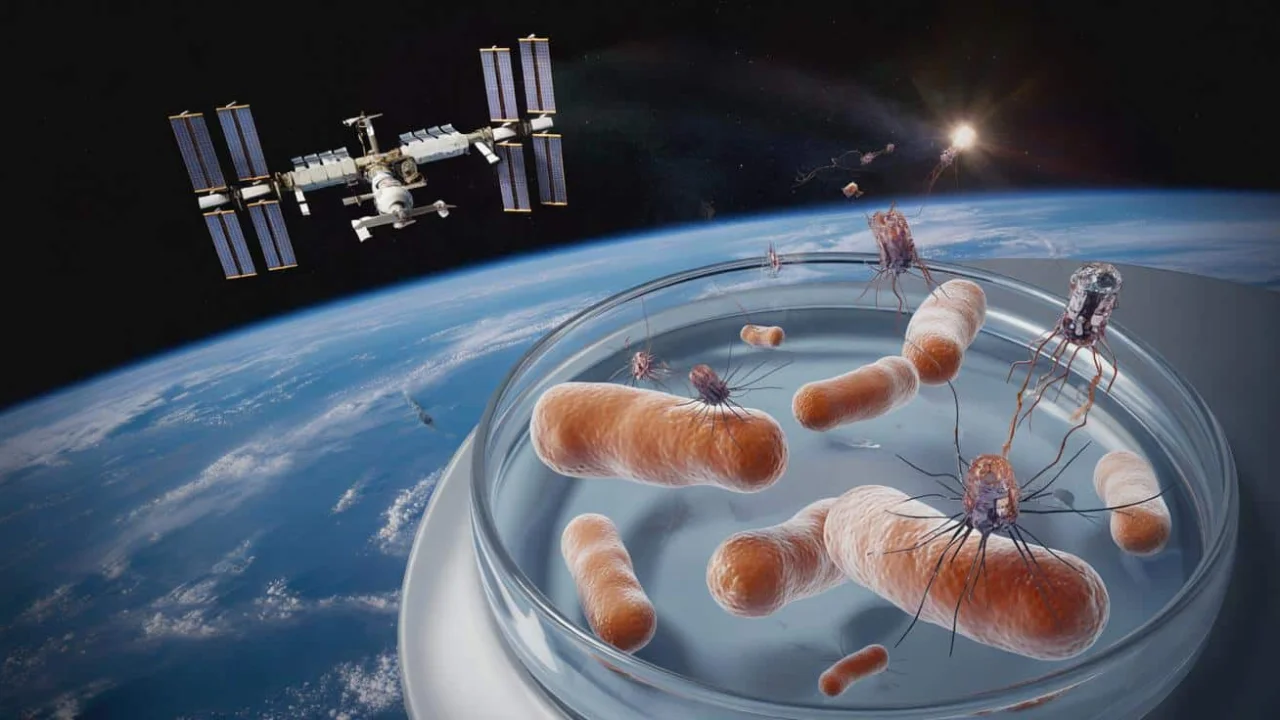
High above Earth, inside the International Space Station, researchers have been conducting an extraordinary experiment that reads like science fiction but promises very real medical breakthroughs. Scientists sent common gut bacteria and their viral predators into orbit, then watched in amazement as microgravity fundamentally altered their evolutionary battle. What returned to Earth were space evolved viruses with enhanced abilities to kill certain disease-causing bacteria that had previously resisted treatment.
The implications stretch far beyond the confines of the space station. These orbital-trained viruses could represent a new weapon against antibiotic-resistant infections that plague hospitals worldwide, offering hope where traditional treatments have failed.
Microgravity Creates Unexpected Viral Adaptations
| Environment | Infection Speed | Evolutionary Pressure | Final Result |
|---|---|---|---|
| Earth (Control) | Normal | Standard gravity mixing | Typical viral efficiency |
| International Space Station | Slower initially | Low collision environment | Enhanced bacterial killing ability |
Who Benefits From This Space Research
- UTI patients: Space-adapted viruses showed improved effectiveness against urinary tract infection-causing bacteria strains that typically resist standard treatments
- Hospital systems: Potential new tools against antibiotic-resistant infections that cost healthcare systems billions annually
- Future astronauts: Custom phage therapies designed for long-duration space missions where traditional antibiotics may be limited or less effective
- Phage therapy researchers: New insights into viral adaptation mechanisms that could accelerate development of targeted bacterial treatments
Revolutionary Changes Observed in Orbital Conditions
- Binding efficiency: Viruses developed superior mechanisms for attaching to bacterial receptors despite fewer random collisions in microgravity
- Genetic mutations: Distinctive DNA changes appeared only in space-exposed samples, creating unique evolutionary pathways impossible to replicate on Earth
- Infection patterns: Space evolved viruses demonstrated enhanced ability to overcome bacterial resistance mechanisms that had evolved on Earth
- Therapeutic potential: Laboratory tests confirmed improved effectiveness against clinically relevant bacterial strains responsible for human infections
“What surprised us most was how the space environment forced these viruses to become more efficient hunters, and that efficiency translated into better performance against resistant bacteria back on Earth,” explains Dr. Robert Chen, an evolutionary biologist studying microgravity effects.
Quantifying the Space Advantage Over Earth-Based Controls
| Measurement | Earth Viruses | Space-Evolved Viruses | Improvement |
|---|---|---|---|
| UTI bacteria killing rate | Standard effectiveness | Enhanced performance | Significant increase |
| Receptor binding efficiency | Normal attachment | Improved specificity | Measurable enhancement |
| Resistance breakthrough | Limited success | Overcame bacterial defenses | Notable advancement |
Medical Applications Transform Infection Treatment Strategies
The practical implications of this research extend directly into modern medicine, where antibiotic resistance poses an escalating threat. Traditional antibiotics work like sledgehammers, attacking broad ranges of bacteria including beneficial microbes. In contrast, these space evolved viruses operate with surgical precision, targeting specific bacterial strains while leaving healthy bacteria untouched.
Hospitals already struggle with infections that resist multiple antibiotics. The space-adapted viruses offer a new approach by exploiting evolutionary changes that occurred in the unique environment of orbit. These modifications enhanced the viruses’ ability to latch onto bacterial cells and initiate infection cycles, particularly against strains that had developed resistance to conventional treatments.
The research team used deep mutational scanning to map exactly which genetic changes made the space viruses more effective. This technique allows scientists to test thousands of genetic variations simultaneously, identifying the specific modifications responsible for enhanced performance. Such detailed mapping could guide future development of engineered phage therapies without requiring expensive space missions.
“The space station essentially ran a massive evolutionary experiment for us, testing viral variants under conditions we could never replicate in earthbound laboratories,” notes Dr. Sarah Kim, a phage therapy specialist.
Cost Considerations and Alternative Approaches for Future Development
Sending biological samples to the International Space Station involves significant expenses and logistical challenges. Launch slots remain limited, and experiments must survive the harsh conditions of space travel and the controlled environment of the station. However, the insights gained from this orbital research could guide more cost-effective approaches on Earth.
Ground-based microgravity simulators, including clinostats and random positioning machines, can partially replicate weightless conditions by continuously rotating samples. These devices reduce gravity’s effects on fluid behavior and particle interactions, potentially producing similar evolutionary pressures at a fraction of the cost of space missions.
The key question now involves determining whether terrestrial microgravity simulation can reliably reproduce the adaptive effects observed in true orbital conditions. If successful, such approaches could make the benefits of space evolved viruses more accessible to researchers and medical institutions worldwide.
Frequently Asked Questions About Space-Evolved Viral Research
How do space-evolved viruses differ from regular viruses?
They developed enhanced binding mechanisms and genetic mutations that make them more effective at infecting resistant bacteria.
Are these space viruses safe for medical use?
They target bacteria specifically, not human cells, and undergo the same safety testing as all phage therapies.
Could this research help fight antibiotic-resistant infections?
Yes, the space-adapted viruses showed improved effectiveness against bacterial strains that resist conventional treatments.
How expensive is it to conduct research on the space station?
Very costly, which is why scientists are exploring ground-based microgravity simulators for similar results.
Will astronauts benefit from this research?
Potentially, as custom phage therapies could provide additional treatment options during long-duration space missions.
Can these viral improvements be recreated without space travel?
Researchers are investigating genetic engineering techniques to replicate the beneficial mutations observed in orbit.
Future Implications for Space Medicine and Terrestrial Healthcare
This breakthrough research opens multiple avenues for both space exploration and earthbound medical applications. As humanity prepares for longer missions to the Moon and Mars, understanding how microbes behave in microgravity becomes increasingly critical. Astronauts on extended missions will face unique challenges, including altered immune responses and limited medical supplies.
The space environment affects both human physiology and microbial behavior in complex ways. Bacteria often form thicker biofilms in microgravity and may exhibit different virulence patterns. Having phage therapies specifically adapted for space conditions could provide crucial backup options when traditional antibiotics prove insufficient or unavailable during deep-space missions.
Meanwhile, the genetic insights gained from this research could revolutionize infection treatment on Earth. By understanding which specific mutations enhanced viral effectiveness in space, scientists can potentially engineer similar improvements in laboratory-grown phages, creating more potent weapons against resistant bacterial infections.
“This work demonstrates that sometimes the most valuable medical discoveries come from the most unexpected places – in this case, 250 miles above our heads in the vacuum of space,” concludes Dr. Martinez, emphasizing how orbital research continues to push the boundaries of terrestrial medicine.