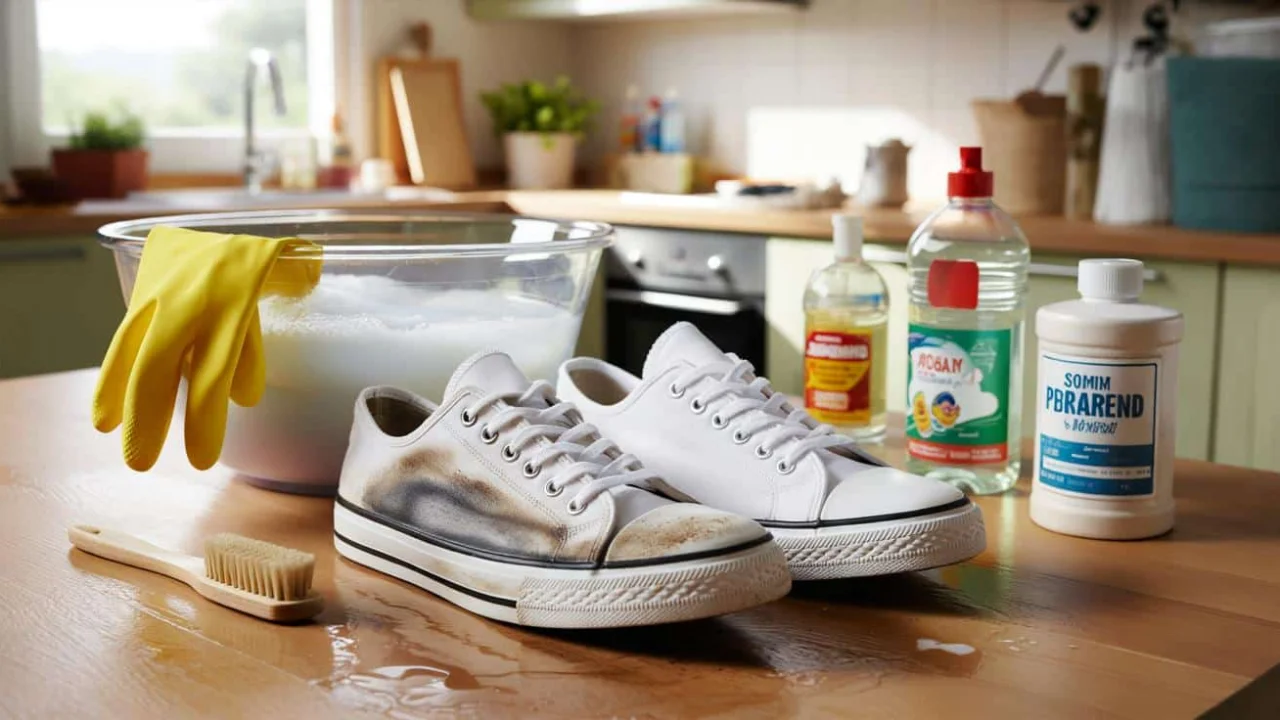
Are your once-pristine white trainers now looking embarrassingly grey and dingy? Do you find yourself hiding your feet because those expensive sneakers you loved now look like they’ve been through a mud wrestling match? The frustration of watching your favorite footwear deteriorate despite your best cleaning efforts is about to end.
A revolutionary trainer cleaning method is quietly spreading among cleaning enthusiasts, and it doesn’t involve the usual suspects of bleach or baking soda. This two-step approach promises to restore your trainers to near-original condition without the risks of fabric damage or yellowing that plague traditional cleaning methods.
| Method Component | Purpose | Safety Level |
|---|---|---|
| Household Ammonia + Dish Soap | Degreases and lifts embedded grime | Moderate – requires ventilation |
| Sodium Percarbonate Soak | Whitens and brightens fabric | High – gentle oxygen bleaching |
| Controlled Temperature | Prevents glue weakening | High – preserves shoe structure |
Which Shoe Owners Need This Revolutionary Method Most
This trainer cleaning breakthrough particularly benefits several groups of footwear enthusiasts:
- White sneaker collectors who refuse to accept the inevitable grey tinge
- Office workers whose canvas shoes face daily city grime and coffee spills
- Parents dealing with children’s rapidly-soiling school trainers
- Fitness enthusiasts whose gym shoes accumulate sweat and odor
- Anyone who’s watched expensive trainers become unwearable after failed machine washing attempts
How Traditional Cleaning Methods Destroy Your Favorite Trainers
The reason most people struggle with trainer cleaning lies in their approach. Machine washing seems convenient, but it systematically destroys trainers through several mechanisms:
- High-temperature cycles deform the sole and toe box permanently
- Aggressive spinning loosens glued components and decorative trims
- Heavy detergents create yellow halos on white fabric
- Mixed materials react differently, causing color bleeding and texture changes
- Heat drying shrinks materials and weakens adhesive bonds
Bleach presents equally serious problems despite its popularity. While it initially appears effective, chlorine bleach yellows fabrics over time, weakens fibers, and can damage embroidered logos or colored panels.
| Cleaning Method | Effectiveness Score | Damage Risk | Long-term Results |
|---|---|---|---|
| Machine Washing | 6/10 | High | Shape distortion, glue failure |
| Bleach Treatment | 7/10 | Very High | Yellowing, fabric weakness |
| Baking Soda Only | 4/10 | Low | Inadequate for deep stains |
| Ammonia-Percarbonate Method | 9/10 | Low-Moderate | Restored appearance, preserved structure |
“The biggest mistake people make is treating trainers like regular laundry. These shoes require specialized care that respects both the materials and construction methods,” says a textile restoration specialist.
The Science Behind This Game-Changing Cleaning Formula
The two-step process works by targeting different types of contamination sequentially. Urban grime, sweat residues, and greasy stains require different chemical approaches than the overall graying that makes white trainers look aged.
Step one combines household ammonia with ordinary washing-up liquid in a controlled soak. Ammonia acts as a powerful degreaser when properly diluted, breaking down the oily films that trap dirt particles. The dish soap provides surfactant action, lifting embedded grime from fabric fibers.
The process involves filling a basin with three liters of warm water, adding equal measures of dishwashing liquid and household ammonia, then soaking removed laces and trainers for at least one hour. Gentle brushing during the soak helps dislodge stubborn stains from high-wear areas.
Step two addresses the subtle discoloration that remains after surface cleaning. Sodium percarbonate, often marketed as eco-friendly oxygen bleach, releases active oxygen when dissolved in hot water above 40°C. This oxidation process brightens fabrics without the harsh effects of chlorine bleach.
“Sodium percarbonate offers the whitening power of bleach without the fabric damage. It’s particularly effective on canvas and synthetic materials that make up most modern trainers,” explains a cleaning product chemist.
Material Compatibility and Safety Precautions
Different trainer materials respond differently to this trainer cleaning method. White canvas and synthetic mesh show excellent results with proper precautions against color bleeding from trim elements. Smooth leather requires limited contact time followed by conditioning with leather cream.
Suede and nubuck materials should avoid this method entirely, as moisture can cause permanent staining and stiffening. These materials require specialized dry cleaning approaches with dedicated rubber brushes and erasers.
Safety considerations include using both products in well-ventilated areas and wearing protective gloves. Household ammonia produces pungent fumes that can irritate eyes and airways. Never mix ammonia with chlorine bleach or bleach-containing products, as this combination releases toxic gases.
Sodium percarbonate can cause slight skin drying and may lighten colored fabrics with extended contact. Always test on hidden areas first, particularly around colored logos or decorative panels.
Frequently Asked Questions About This Cleaning Method
How often should I deep-clean my trainers using this method?
For casual city wear, deep clean every two to three months. Gym shoes need monthly light cleaning with deep cleaning every two months.
Can I use this method on colored trainers?
Test on hidden areas first. The ammonia step is generally safe, but sodium percarbonate may lighten colors with extended exposure.
What if my trainers have leather components?
Use minimal contact time and wipe rather than soak. Follow immediately with leather conditioner to prevent cracking or stiffening.
Is household ammonia the same as industrial ammonia?
No. Only use household ammonia, which is already diluted. Industrial-strength ammonia is dangerous and unsuitable for home use.
Can I speed up the process with hotter water or longer soaking?
Avoid excessive heat which can damage glue. Longer soaking won’t improve results and may risk color bleeding or material damage.
What should I do if the smell lingers after cleaning?
Ensure thorough rinsing and complete air drying. Sprinkle baking soda inside overnight to absorb residual odors before wearing.
“This method represents a perfect balance between cleaning effectiveness and material preservation. It’s become our go-to recommendation for customers who want to extend their trainers’ lifespan,” notes a shoe repair professional.
Take Action to Save Your Trainer Collection Today
Your white trainers don’t have to become garden shoes or landfill waste. This proven cleaning method offers a realistic path back to respectability for footwear you thought was beyond saving.
Start by gathering your supplies: household ammonia, dishwashing liquid, and sodium percarbonate from your local hardware or cleaning supply store. Test the method on your least valuable pair first to build confidence before treating expensive favorites.
Remember that prevention remains the best strategy. Wipe spills immediately, brush off dried mud before it embeds, and rotate pairs to allow complete drying between wears. Your future self will thank you for these simple habits that dramatically extend trainer lifespan.