“These competition images force us to confront nature’s raw reality while celebrating its incredible beauty,” says Dr. Sarah Mitchell, wildlife photography curator at the Natural History Museum.
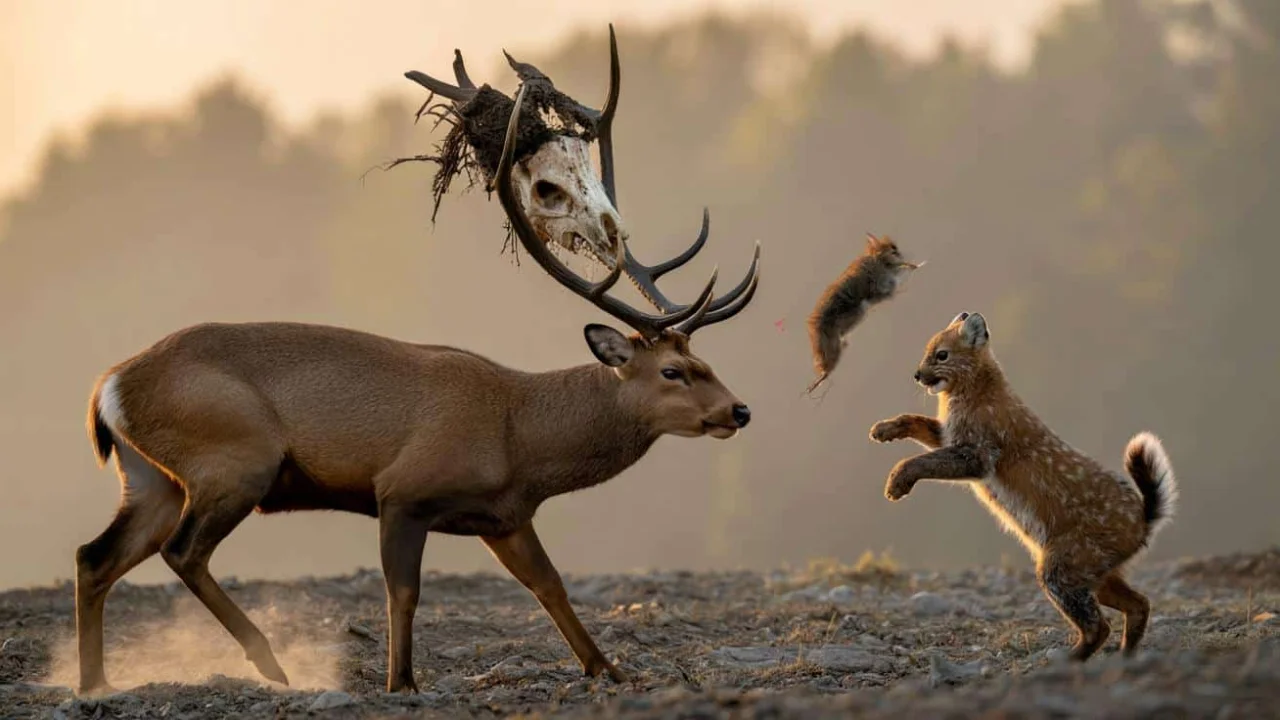
The latest shortlist for the wildlife photographer of the year Nuveen People’s Choice Award has stunned viewers worldwide with images that capture nature at its most visceral and captivating. Among the most talked-about photographs is a haunting scene of a Japanese sika deer carrying the severed head of its defeated rival, locked permanently in its antlers like a grim trophy.
This year’s selection reveals photography’s power to document moments so extraordinary they seem almost mythical. From a lynx playfully tossing its prey into the air to polar bear families struggling in a warming Arctic, these images compress complex wildlife stories into single, unforgettable frames.
Competition Overview and Timeline
| Detail | Information |
|---|---|
| Voting Opens | Now through March 18, 2026 |
| Winner Announcement | March 25, 2026 |
| Exhibition Location | Natural History Museum, South Kensington |
| Exhibition Duration | Through July 2026 |
| Total Images Featured | 100+ photographs from latest edition |
Images That Challenge Our Perception of Nature
The shortlisted photographs span emotional extremes, from tender moments to brutal realities. Japanese photographer Kohei Nagira’s “Never-Ending Struggle” shows nature’s unforgiving side with shocking clarity.
The sika deer in Nagira’s image reportedly dragged the entire corpse of its rival for days before the body deteriorated enough to tear free at the neck. Only the skull and antlers remained, permanently fused to the victor’s own antlers through the twisted physics of their final battle.
- Mating Competition: The original fight centered on access to a female during breeding season
- Physical Entanglement: Antlers locked so tightly that separation became impossible
- Prolonged Burden: The living deer carried its dead rival’s weight across its territory
- Partial Freedom: Body decay eventually freed the deer from the full corpse
- Permanent Trophy: Skull and antlers remain fixed as a grisly reminder
The Science Behind Deadly Antler Combat
Male deer battles typically end when one animal retreats, but antler entanglement creates deadly scenarios that highlight evolution’s double-edged innovations. These branching bone structures serve as both weapons and potential death traps.
- Annual Growth: Antlers regenerate yearly, growing larger until old age sets in
- Combat Function: Designed for charging, clashing, and shoving contests with rivals
- Locking Risk: Complex branching creates multiple points where antlers can intertwine
- Fatal Outcomes: Locked pairs may both die from exhaustion, starvation, or predation
- Remote Locations: Human intervention rarely occurs in wilderness breeding grounds
“What makes these images so powerful is how they capture behaviors that happen far from human eyes, in moments of pure survival instinct,” explains Dr. James Richardson, animal behavior specialist.
Public Response and Voting Statistics
| Category | Details |
|---|---|
| Global Participation | Worldwide voting access via internet |
| Most Discussed Images | Deer combat aftermath and lynx prey-play |
| Emotional Range | From tender family moments to brutal competition |
| Conservation Themes | Climate change, habitat loss, human impact |
| Educational Impact | Drives discussions on wildlife behavior and threats |
How Photography Competitions Influence Conservation Awareness
The wildlife photographer of the year competition does more than celebrate technical skill. These images become powerful tools for environmental education, often reaching audiences that scientific papers never touch.
A single photograph of a struggling polar bear family can generate more public engagement than volumes of climate data. The emotional connection viewers form with these images often translates into concrete conservation actions.
Josef Stefan’s “Flying Rodent” captures a young lynx mid-toss with its prey, blending what appears to be playful behavior with deadly serious hunting practice. The image reveals how predator training unfolds in the wild, where play serves as preparation for survival.
Beyond the Shocking Headlines
While the deer and lynx images dominate discussions, the full shortlist reveals photography’s range in documenting both beauty and environmental crisis. “Solar Waves” by Francesco Russo shows renewable energy infrastructure rippling across landscapes like water, questioning how modern technology can coexist with natural habitats.
Other standout entries include spinner dolphins coordinating massive feeding groups in Pacific waters, a rare leucistic otter displaying unusual genetic traits in Brazil, and rangers standing before mountains of confiscated poaching snares.
“These photographs serve as both celebration and warning, showing us what we stand to lose if we don’t act on conservation challenges,” notes Dr. Elena Vasquez, environmental photography researcher.
The Educational Value of Uncomfortable Images
Museum curators face delicate decisions when selecting images that balance shock value with educational merit. The current wildlife photographer of the year shortlist walks this line carefully, presenting nature’s complexity without sensationalizing violence.
Understanding the science behind these dramatic moments adds depth to initial emotional reactions. The sika deer’s predicament illustrates how evolutionary adaptations can become liabilities under specific circumstances, while the lynx’s behavior demonstrates the sophisticated learning processes that ensure predator success.
Frequently Asked Questions
How long do deer typically carry dead rivals after antler entanglement?
Usually several days to weeks, until body decomposition allows separation or partial freedom from the corpse.
Is the lynx actually playing with its prey or practicing hunting skills?
Young predators use prey-handling as skill development, combining learning with instinctive play behaviors for survival preparation.
Why don’t humans intervene when deer become locked together?
These events typically occur in remote wilderness areas where human presence is minimal or prohibited.
How does the People’s Choice Award differ from the main competition?
Public voting determines this category winner, while expert judges select main competition winners using technical criteria.
What happens to wildlife photography competition images after judging?
Winning and notable images tour global exhibitions, appear in publications, and support conservation education programs worldwide.
The Broader Impact of Wildlife Photography
These competition images often mark the closest encounter most people will have with wild lynx, deer battles, or Arctic wildlife. That distance doesn’t diminish their impact on public perception and conservation support.
Museum visitors frequently leave exhibitions asking how they can personally contribute to wildlife protection. Simple actions like supporting local conservation groups, choosing responsible tourism, or documenting urban wildlife can channel the same curiosity and patience that created these award-worthy images.
The wildlife photographer of the year competition continues proving that single photographs can accomplish what extensive reports sometimes cannot: creating lasting emotional connections between humans and the natural world we share.
“The most powerful wildlife photographs don’t just document behavior—they inspire viewers to see themselves as part of the conservation story,” concludes Dr. Mitchell, reflecting on this year’s remarkable shortlist.